
Mohembo flood readings are valuable because the station sits where the Okavango enters Botswana, upstream of the Delta’s spreading channels. They show the incoming pulse. They do not show the water depth at every camp, lagoon or road farther south.
The distinction matters. Water takes time to move through a very flat, branching system, and local rainfall can temporarily make a dry area wet before the main flood arrives. Read Mohembo as one signal in a chain, not as a booking forecast.
Last checked
19 September 2026. Conditions, rules and operator arrangements can change. Confirm volatile details with the responsible authority or operator before travelling.
In this guide
Mohembo flood readings: What Mohembo measures
A gauge can report water level, discharge or both. Level is the height at that station; discharge estimates the volume moving past it over time. The two are related through a rating curve, but they are not interchangeable, especially when channel conditions change.
Compare like with like. A level this year should be compared with historical levels at the same station and time of year, not with a depth quoted from a lodge lagoon. Note the unit, date and whether the value is observed, provisional or modelled.
Why the Delta responds later
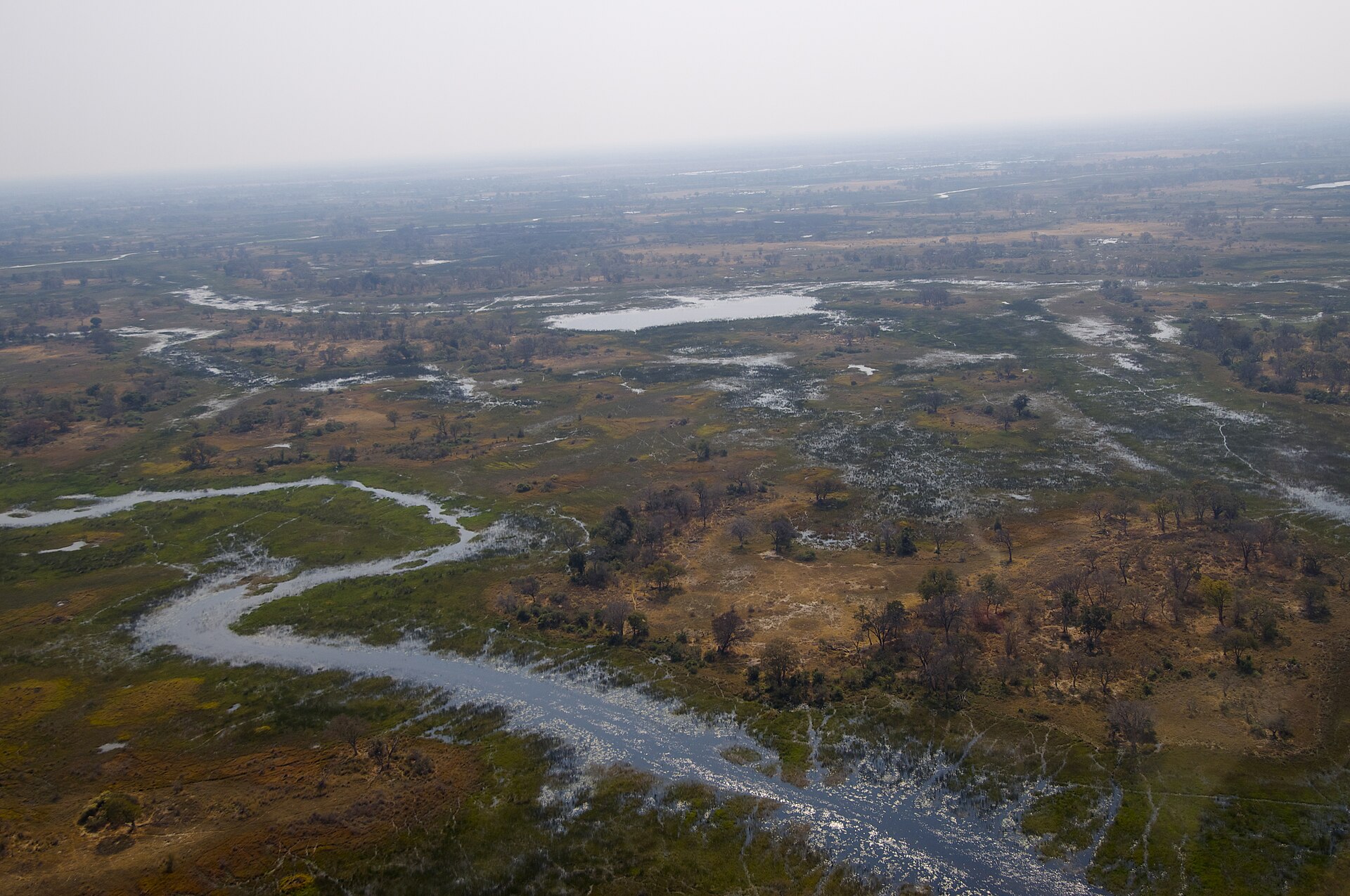
Most of the river’s water comes from the Angolan highlands. The flood wave travels south and then spreads slowly through channels, floodplains and swamps. UNESCO describes the unusual result: the annual flood progressively inundates parts of the Delta during Botswana’s dry season.
There is no single travel time. Channel distribution, antecedent wetness, vegetation, evaporation and local rainfall all affect propagation. A strong rise at Mohembo supports the expectation of more inflow; it does not supply a precise arrival date for a named camp.
Choose the Delta experience by activity
A flood reading becomes useful when it is tied to what you want to do: boating, mokoro travel, game drives or a mixed stay. Compare regions and camp types before treating “the Delta” as one uniform product.
Separate rain flood from river flood
The local rainy season usually precedes the main river flood. Heavy rain around Maun, Moremi or Khwai can flood tracks quickly even while the upstream pulse is still travelling. Conversely, a clear local week does not remove floodwater already moving through the system.
When assessing travel, ask two questions: what has fallen locally in the past few days, and what is arriving from upstream over the coming weeks? The first affects roads immediately. The second shapes the broader seasonal expansion of water.
Turn a graph into useful questions
Look for the direction and rate of change, not a dramatic single value. Compare the current curve with several previous years. Ask whether the rise began early or late, whether it is sustained, and how the current date aligns with historical peaks.
Then move from basin scale to destination scale. Ask the operator which activities are running, which transfer point is used, whether boating reaches the camp and whether road access has changed. Those answers are more actionable than a regional adjective such as “high flood”.
What no reading can promise
Mohembo cannot guarantee a mokoro route, wildlife sighting or dry vehicle transfer months ahead. The Delta is spatially uneven, and the same inflow can produce different local outcomes depending on the channel network.
Use forecasts as ranges and update them. The most honest itinerary pairs a broad hydrological expectation with a close-to-travel operational check. That approach respects both the science and the traveller’s need for a practical answer.
A sensible Mohembo flood readings plan keeps a clear fallback for changing conditions, timing or availability.
Mohembo flood readings: interpret a sequence, not one number
Mohembo flood readings become useful when several dates are viewed together. Record the level, the date and whether the series is rising, flattening or falling. A single high number does not say when water will reach a particular part of the Delta, and a low number does not prove that every southern channel will be dry. The direction and pace of change are the first signal; the local channel network supplies the context.
Compare Mohembo flood readings from the same source and gauge whenever possible. Mixing figures from different stations or informal social posts can create a false trend. Note missing days and abrupt jumps, and check whether the publisher has explained a gauge or reporting problem. Then compare the current curve with a previous year cautiously: rainfall, channel blockages and antecedent conditions can change how the pulse travels.
For trip planning, translate Mohembo flood readings into questions for the operator at the exact camp or activity base. Ask whether boat access is operating, whether mokoro routes are connected, which airstrip transfers are affected and what the fallback activity would be. Operators can observe local water, but they cannot promise the future crest. Keep the hydrological signal separate from a wildlife guarantee.
- Use a dated series from one gauge.
- Mark the trend as rising, steady or falling.
- Allow for a substantial travel lag through the Delta.
- Ask the local operator about the exact channel system.
- Keep Mohembo flood readings separate from sighting promises.
Mohembo flood readings: practical checklist
- Record the station, unit, date and source of each reading.
- Compare the curve with several historical years.
- Check recent local rain separately from upstream inflow.
- Ask the operator about current activities and transfer logistics.
- Update the check near travel rather than relying on an early forecast.
Before relying on this guide for Mohembo flood readings, confirm the details that can change with the responsible authority or operator.
Sources for Mohembo flood readings
The main references used for this article were UNESCO’s Okavango Delta documentation, OKACOM stream-flow information, Okavango Delta Management Plan 2021–2028. Where a source is old, incomplete or silent on an operational detail, the article says so instead of presenting an assumption as a rule.
For the ecological context, read our Okavango Delta guide and wildlife and seasons section.
Mohembo flood readings are a strong early signal. Their value increases when the reader preserves the uncertainty instead of forcing the gauge to answer a local question it was never designed to settle.