
Chobe National Park
The riverfront, Savuti and Linyanti — three very different places inside one boundary, and the rules that apply in each.
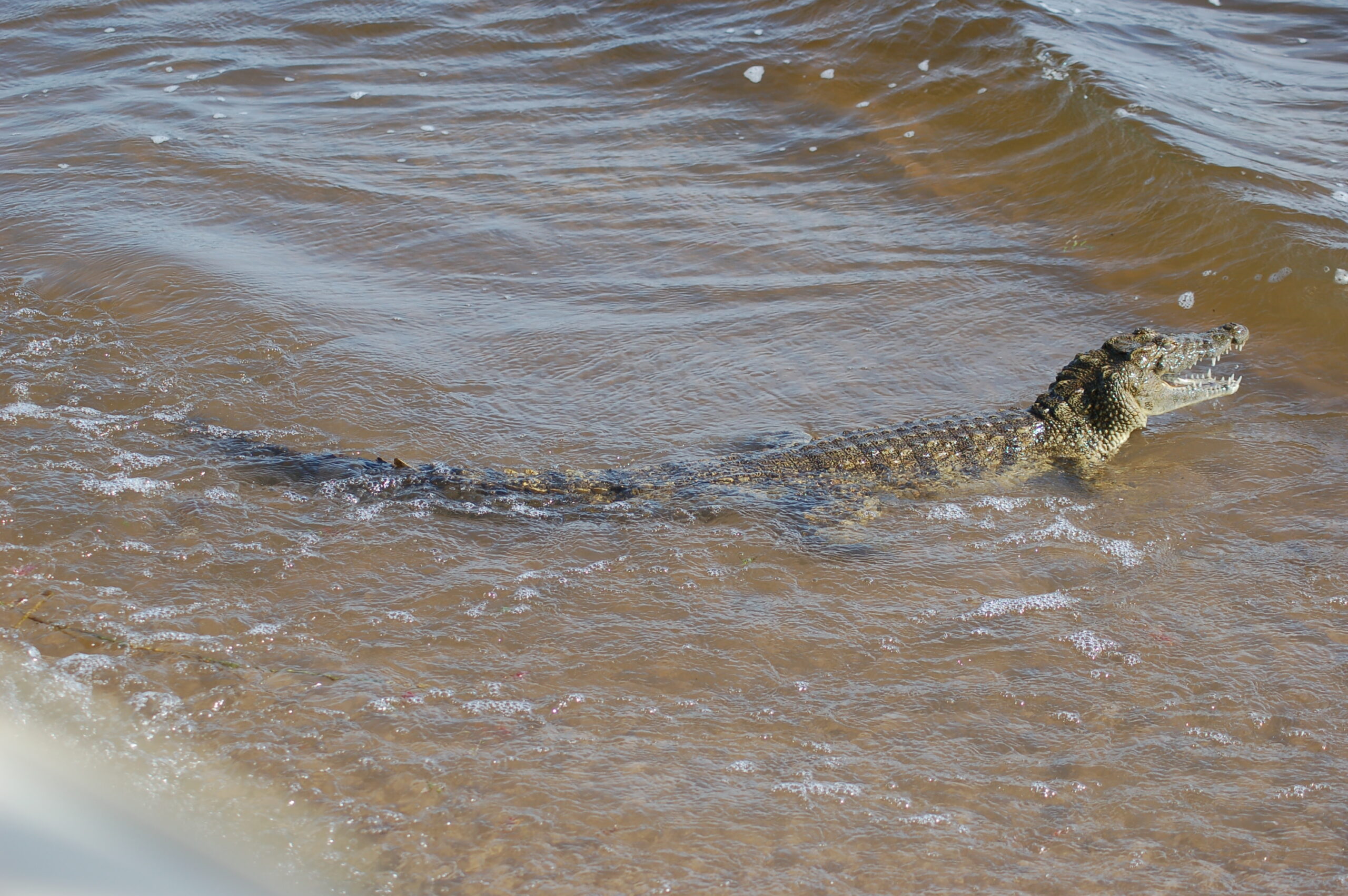
Chobe & Kasane regionAll parks and reservesA crocodile on the bank of the Chobe River, Chobe National Park, Botswana. Photo: Joachim Huber, CC BY-SA 2.0, via Wikimedia Commons.
Chobe National Park is the most accessible of Botswana’s great wildlife areas and the one whose character changes most through the year. It runs from the Chobe River in the far north-east into deep Kalahari sand at Savuti, and a visitor who sees only the riverfront has seen a small part of it. This guide covers the four sections, the wildlife, gates and fees, and what self-drivers should expect.
Chobe National Park at a glance
- Designation: national park, administered by the Department of Wildlife and National Parks under the 1992 Act.
- Established: 1968.
- Size: around 11,700 km² according to Botswana Tourism.
- Region: far northern Botswana, Chobe District; the Chobe River is the northern boundary.
- Gates: Sedudu near Kasane, Ngoma towards Namibia, Mababe in the south towards Maun and Ghoha north of Savuti — see the caveat under getting there.
- Self-drive: yes, throughout.
- 4×4: required — deep sand is the norm away from the riverfront.
- Accommodation: both — government campsites inside plus private camps around Savuti, with most lodges outside at Kasane, west along the river and in the concessions.
- Best months: July to October for riverfront concentrations, peaking in September; November to March for birds and newborn antelope.
In this guide
- Why go, and who it suits
- The four sections
- Wildlife and what to expect
- Seasons month by month
- Getting there
- Driving inside the park
- Park entry and camping
- Where to stay
- Responsible visiting
- Nearby
- Frequently asked questions
Why go, and who it suits
Chobe is the easiest serious game viewing in Botswana. Sedudu Gate is about ten kilometres from Kasane, which has an airport, fuel, banks and three international borders within an hour, so the park is reachable without a charter flight — rare in a country built around fly-in camps.
It suits first-time visitors wanting a short, high-yield introduction; self-drivers, who can do the riverfront from Kasane and take Savuti as a harder second act; and photographers, for whom the river’s boat-based angles are unlike anything from a vehicle. Solitude, less so.
The four sections of the park
Botswana Tourism recognises four sections — effectively four destinations sharing a boundary.
Chobe Riverfront (Serondela)
The north-eastern strip along the river, entered from Kasane through Sedudu Gate. The most developed and most visited part of the park, worked by vehicle and by boat, and where the dry-season elephant and buffalo concentrations happen. Distances are short and the tracks the easiest.
Savuti (Savuté)
The south-western section, centred on the Savuti Marsh and Channel. The channel runs roughly 100 km from the Linyanti River into the marsh and the Mababe Depression, and over the past century has dried up and resumed flowing several times, killing stands of trees and later regenerating them. Open country, deep sand and, in season, exceptional predator viewing.
Linyanti
The remote north-western section, on the Linyanti Swamps fed by the Kwando River, which rises in Angola; sitatunga occur here. Immediately outside the park lie the private Linyanti, Selinda and Kwando concessions — Botswana Tourism gives Selinda as around 1,350 km² and Linyanti around 1,250 km² — fly-in, camp-based and closed to self-drive. Government campsites are inside the park, not the concessions.
Nogatsaa and Ngwezumba
The central and southern pans country: undeveloped, little visited and genuinely wild. Game viewing depends on whether the pans hold water; tracks are poor and self-sufficiency essential.
Wildlife and what you can realistically expect
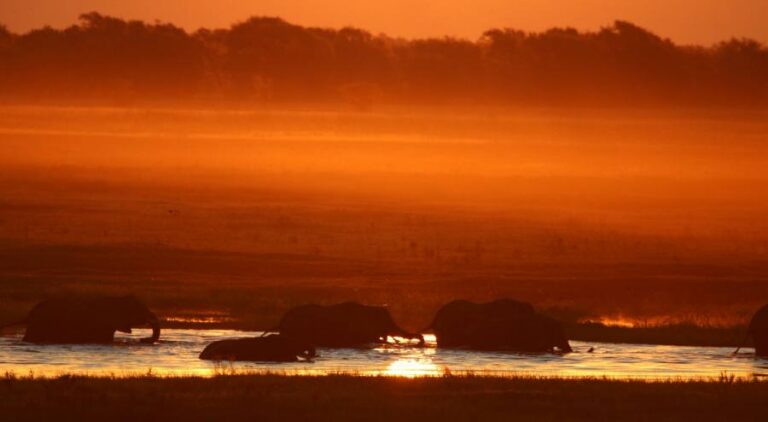
Chobe’s reputation rests on elephants. The 2022 KAZA Elephant Survey estimated 227,900 elephants (±16,743) across the Kavango–Zambezi landscape, of which Botswana held 131,909, about 58%. The trend is contested: Elephants Without Borders’ analysis of 2010–2022 surveys found northern Botswana essentially unchanged, growing around 1% a year, against government figures nearer 6%. The same survey recorded roughly 26,641 carcasses, about 10.47% of the live count. More in our wildlife section.
Buffalo form very large dry-season herds on the riverfront and disperse in the rains. Puku are the local speciality, essentially confined in Botswana to this area, and Botswana Tourism records 460-plus bird species including Pel’s fishing owl. Sable and roan occur in the drier woodlands towards Linyanti but are uncommon — a bonus, not an expectation. Northern Botswana also holds globally significant numbers of African wild dog.
We cannot promise you rhino, and neither should anyone else. Botswana suffered serious rhino poaching from 2018, animals were moved out of the north for security, and whether free-roaming rhino remain is unresolved. Treat any “Big Five” framing of Chobe as dated.
The Savuti lions and elephants
Savuti’s reputation for lions killing elephants is real, peer-reviewed and routinely oversold. The primary study, published in African Zoology in 2009 and building on observations from 1993–1996, found predation on elephants increased in the late dry season, roughly August to November, and became more frequent across 1985–2005; victims were mostly elephants aged about four to eleven, young males especially, hunted by a pride of around thirty lions.
The behaviour is seasonal and site-specific, arising where elephants were forced onto scarce water, and the research does not extend past 2005, while the channel’s flow and the local prides have changed since. Go for dry-season predator viewing and treat the rest as a possibility.
Seasons month by month
- January to March — the wettest period in Botswana’s wettest corner: Kasane averages around 160 mm in January and 135 mm in February. Green, with newborn antelope and migrant birds, but game is dispersed inland. Savuti and the pans can become impassable while the riverfront stays workable.
- April and May — the country dries, grass thins and concentrations build. Quiet, and underrated.
- June to August — dry and effectively rainless, with minima of 9–12 °C that make a dawn drive or boat cruise genuinely cold. Animals commit to the permanent rivers.
- September and October — the peak for riverfront elephant and buffalo, and the hottest months, around 36 °C at Kasane, which pins game to water harder still. Busiest and dearest.
- November and December — the rains break, animals disperse inland including into Zimbabwe and Namibia, and the riverfront empties by comparison.
These are tendencies, not guarantees: recent years have brought both severe drought and an exceptionally high-water season.
Getting there
Most visitors arrive at Kasane, whose airport lies 4 km south of town, served by Air Botswana from Gaborone, Airlink from Johannesburg and charters to the bush strips; road transfers from Victoria Falls, 80 km away, are common. By road, Francistown–Kasane is roughly 480 km and Maun–Kasane about 600 km of tar via Nata; the short line from Maun through Moremi and Savuti is a demanding 4×4 track, not a road, and was flood-closed for much of the 2026 wet season.
The gates in general use are Sedudu (Kasane, for the riverfront), Ngoma (towards Namibia), Mababe (south, towards Maun and Moremi) and Ghoha (north of Savuti); a further gate near Nogatsaa is reported as exit-only. These gate names, statuses and hours come from third-party guides rather than a published DWNP source, and one is inconsistently described. Confirm which gates are open, and when, before building a route around them.
Driving inside the park
Botswana Tourism’s guidance is explicit: the speed limit inside national parks is 40 km/h and you must stay on the established tracks. Off-road driving is not permitted.
A 4×4 is required. The riverfront is the gentlest driving here but still has soft patches; Savuti and the Mababe route are deep sand over long distances, and the crossing to Moremi is a serious undertaking rather than a shortcut. There is no fuel, water or food inside the park and no reliable signal away from Kasane; Botswana Tourism advises carrying at least 100 litres of fuel and 20 litres of water per person. More in our self-drive section.
Park entry and camping
We publish the structure of the fees, not the amounts: they have been under review and we cannot confirm current figures against a DWNP source.
- Entry is per person per day. Parks fall into two categories, with Chobe in the higher one, and the tariff is banded by residency — citizen, resident, non-resident. A separate, lower tariff applies to clients of registered tour operators.
- Vehicle fees are separate and daily, banded by weight, by Botswana or foreign registration and by private or commercial use.
- Camping is separate again, per person per night, higher at wilderness sites.
There is no single national reservations body. The wildlife department collects entry fees and runs some campsites; many others are managed by private concessionaires and booked directly, so the campsite booking and the entry fee are separate transactions. Book far ahead — a year in advance is common advice for peak-season campsites. Gate payment has historically required cash in pula, with card pre-payment possible at wildlife department offices, and a fee increase proposed for April 2026 was postponed: confirm amounts and payment methods before travelling.
Where to stay
Inside the park there are government campsites with basic facilities plus private camps around Savuti — how self-drivers get out at first light. Outside, Kasane and Kazungula hold northern Botswana’s densest concentration of lodges, hotels and guesthouses, with houseboats a distinctive local option; more line the river west of the park in the Chobe Enclave, and the concessions hold small all-inclusive fly-in camps. We publish no rates, availability or ratings; see our accommodation overview.
Responsible visiting
Stay on the tracks and keep to 40 km/h: both are rules, not suggestions. Give elephants room, particularly bulls and cows with calves, never put a vehicle between an animal and water, and avoid boat operators who crowd a sighting. Communities here carry the real costs of living with elephants — crop damage, property loss, injury — while wildlife revenue is shared unevenly. Botswana’s community trust model was pioneered by the Chobe Enclave Conservation Trust in 1993–94; spending locally is one of the few direct levers a visitor has.
Nearby
- Kasane — the gateway town, 10 km from Sedudu Gate, with three international borders close by, and Victoria Falls 80 km beyond.
- Moremi and the Okavango Delta — the classic pairing, usually flown one way and driven the other.
- Nata and the Makgadikgadi — south on the A33, the junction every northern itinerary passes through.
Plan the rest of your trip
- Parks and reserves and the destinations index.
- Itineraries — combining Chobe with the Delta and the Kalahari.
- Self-drive — vehicles, fuel, campsites and route status — and Maun to Kasane, the 4×4 crossing that arrives through Savuti.
- Kasane and accommodation in Kasane, the base for the riverfront.
- Victoria Falls from Kasane — 80 km and two borders from the park gate.
- Travel planning, camping in Botswana, accommodation and wildlife.
Frequently asked questions
Can I self-drive in Chobe National Park?
Yes, throughout, in a properly equipped 4×4. The riverfront is manageable as day trips from Kasane. Savuti and the Mababe route are deep sand over long distances with no fuel or supplies, and are not a first 4×4 experience.
Will I see rhino in Chobe?
You should not plan on it. Rhino were heavily poached from 2018 and animals were removed from the north for security; whether free-roaming rhino remain is unresolved publicly. Khama Rhino Sanctuary near Serowe is the honest recommendation.
Is one day on the riverfront enough?
A morning drive and an afternoon boat cruise give a genuine sense of the riverfront in the dry season; two or three days lets you see how the game moves. Night drives and walking safaris are not permitted inside the park — a good reason to spend part of a trip in the surrounding concessions.
Where to stay for Chobe
Riverfront lodges at Kasane and Kazungula, the campsites, and the lodges on the western and Savuti sides.
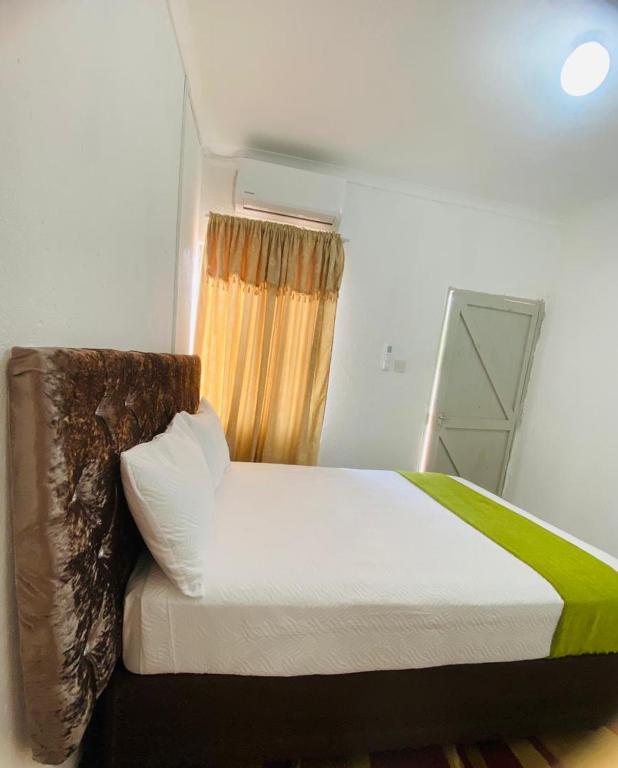

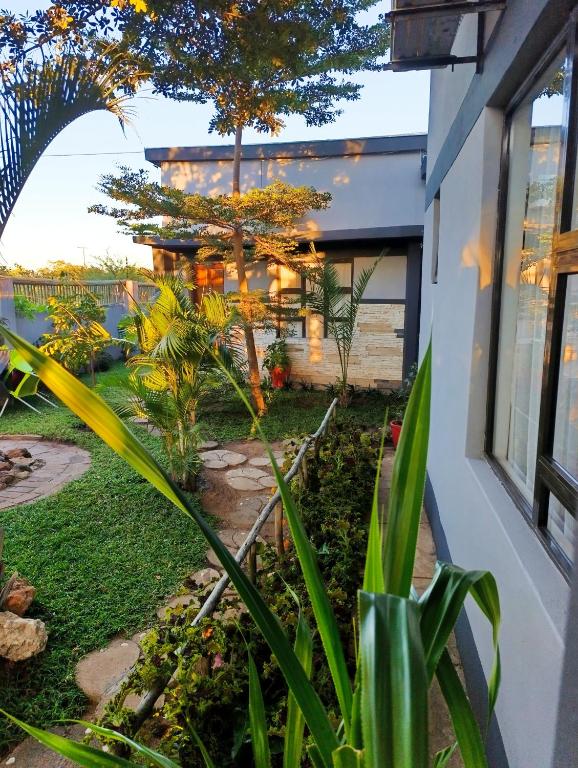
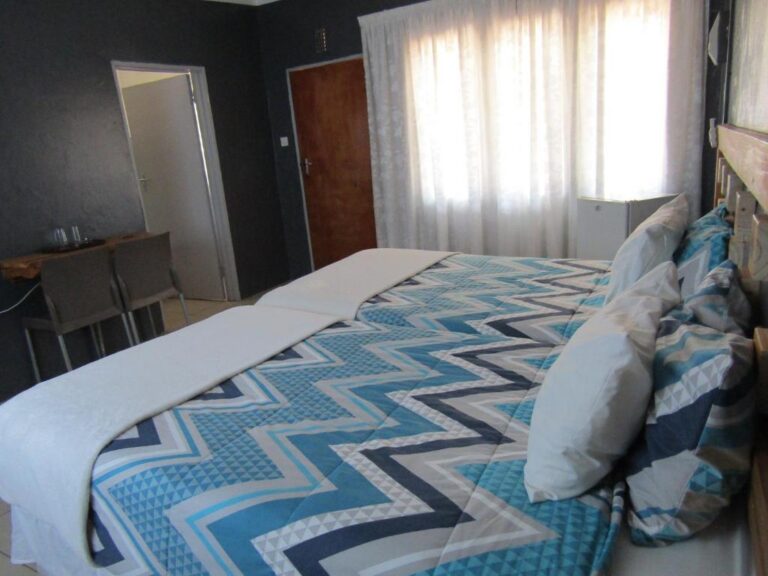
View all 54 Chobe and Kasane propertiesAll Chobe and Kasane accommodation
Every card opens our own property page first. We publish no rates, no availability and no ratings of our own.
Game drives and boat safaris in Chobe
Guided drives into the riverfront and boat cruises on the Chobe, bookable for a fixed date.

Every card opens our own tour page first. Booking happens on the operator’s site, where the live price and availability are.
Sources and references
- Botswana Tourism — Chobe National Park and Savuti and Linyanti
- Botswana Tourism — self-drive and camping, climate, the Government of Botswana on park and campsite bookings and the 1992 Act
- KAZA Elephant Survey 2022 and Elephants Without Borders — population trends
- Power & Compion, African Zoology — lion predation on elephants in the Savuti
- International Rhino Foundation — State of the Rhino and Ecology & Society — the Chobe Enclave trust
- BIOFIN — protected area fee reform and Botswana Daily News — 2026 fee review
Continue planning
What the boat shows that the vehicle cannot, why the drive goes first, and the trips that do both.
Open →Chobe & KasaneThe far north, three international borders, and the town that serves the park.
Open →Moremi Game ReserveThe Delta’s drivable reserve, and how a week there compares with Chobe.
Open →Safaris & activitiesGame drives, boat cruises, mokoro and walking — and where each one is allowed.
Open →One boundary, four different trips.
Riverfront, Savuti, Linyanti and Nogatsaa are not interchangeable, and the month decides which one works.
Chobe & Kasane regionAll parks and reservesBotswana and Victoria FallsWhat the falls add to a Chobe trip, and the border reality of getting there.
Open →