
Maun to Kasane: tar via Nata, or 4×4 through Moremi and Savuti?
These are not two versions of the same journey. One is a 600 km tar drive you can do in a day in a saloon car. The other is a three- to five-day expedition through national park sand that will strand an unprepared vehicle. Choose deliberately.
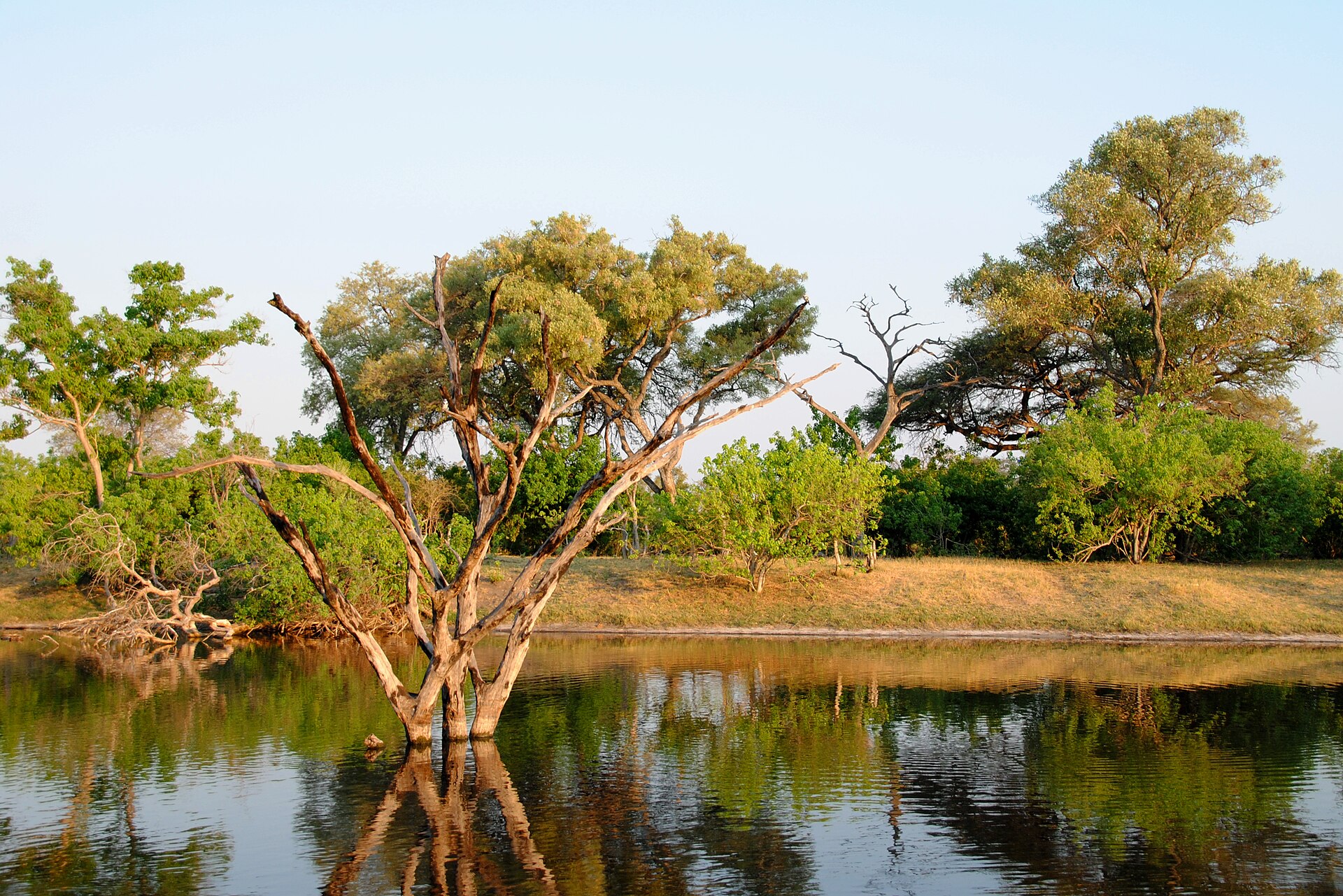
Self-drive Botswana4×4 requirementsThe Savuti Channel. Photo: diego_cue, CC BY-SA 3.0, via Wikimedia Commons.
The short answer
Take the tar. Roughly 600 km, Maun east to Nata on the A3 and then north on the A33 to Kasane, all sealed, doable in one long day and comfortable in two. Any hire car will do it. This is what most people should book, and it is what almost every itinerary assumes when it says “Maun to Kasane”.
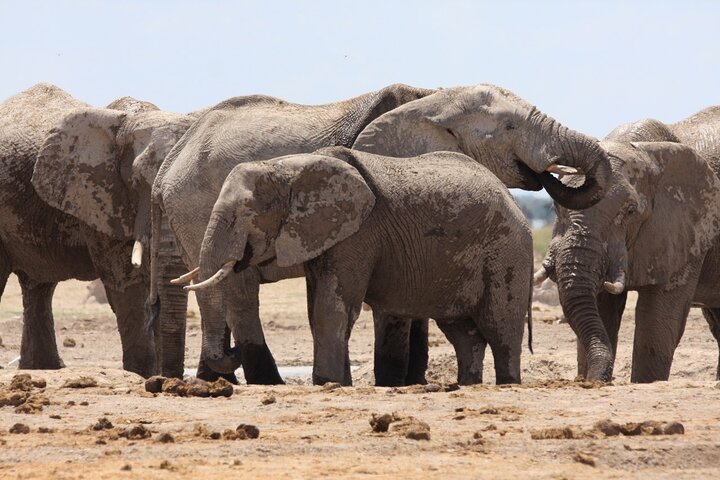
Take the 4×4 route through Moremi, Khwai, Savuti and Chobe only if the drive is the safari. It is not a shortcut — it is longer in time, far more expensive once park fees and camping are counted, and it requires a properly equipped high-clearance 4×4 with low range, a driver who has driven deep sand before, and campsites booked months ahead. Done properly it is one of the great self-drive routes in Africa. Done casually it is how people end up dug in at dusk, 60 km from help, in a park where you may not drive at night.
In this guide
- Maun to Kasane on tar, in detail
- The 4×4 route through the parks
- Maun to Kasane: the honest comparison
- Which Maun to Kasane route is right for you
- Fees, gates and bookings on the park route
- Doing it in the other direction
Maun to Kasane on tar, in detail
Two legs, one junction town.
Leg one: Maun to Nata, about 300 km on the A3. East out of Maun through Gweta and across the northern edge of the Makgadikgadi. Fuel and services are thin between the two ends, livestock on unfenced road is the real hazard, and there is more to stop for than the map suggests. We have written this leg up on its own: Maun to Nata.
Leg two: Nata to Kasane, about 300 km on the A33. North from the junction at Nata, through the elephant country either side of the road, to Kazungula and Kasane. This leg forms the northern half of our A3 and A33 corridor guide, which covers the fuel stops, the veterinary control fences and the stretches where elephants cross.
Doing it in one day is realistic but not relaxed: leave Maun early, refuel at Nata, and plan to be in Kasane before dark. Botswana’s national tar speed limit is 120 km/h and 60 km/h through settlements, but the practical average is a good deal lower once you allow for livestock, donkeys and the villages the road runs through.
Doing it in two means a night at Nata, which is a better idea than it sounds. Nata Bird Sanctuary is on the edge of Sowa Pan, and the town exists precisely because three roads meet there. See accommodation in Nata.
The 4×4 route through the parks
The Maun to Kasane park route is not a single road. It is a sequence of park sections, each with its own gates, fees and campsites, strung together roughly like this:
- Maun to Moremi South Gate — about 92 km, the last part unsealed. Into the Mopane Tongue, out through North Gate at Khwai.
- Khwai to Mababe Gate and on to Savuti — roughly 200 km from Maun by the time you reach Savuti, and commonly five hours or more of actual driving. Sand tracks and seasonal water through the Mababe Depression.
- Savuti to Kasane via Ghoha Gate — roughly 220 km, four hours and up, on to the Linyanti transfer road and out through Sedudu Gate at Kasane. The reputation of this leg is earned: sources describing it consistently warn of deep loose sand over tens of kilometres, taken in low range with tyre pressures dropped.
Two things follow from that. First, this is a minimum three-night route and is usually done in four or five, because you are paying park fees to be there and driving straight through wastes the reason for coming. Second, the 40 km/h park speed limit is not the constraint — the sand is. Plan on covering ground at a fraction of the tar rate.
Vehicle standard is not negotiable. High and low range, genuine ground clearance, all-terrain tyres, recovery gear, and the fuel and water margins Botswana Tourism sets out for remote-area travel — around 100 litres of fuel and 20 litres of water per person. Our 4×4 requirements page covers what that means in practice.
Travelling in a single vehicle on this route is a decision, not a default. Two vehicles in convoy is the standard advice for the Savuti sand, and it is the difference between an inconvenience and a serious problem.
Maun to Kasane: the honest comparison
| Tar via Nata | 4×4 via Moremi and Savuti | |
|---|---|---|
| Distance | ~600 km | ~420 km of park tracks, plus the approach |
| Time | One long day, or two easy ones | Three to five days, minimum |
| Vehicle | Any road car | Equipped 4×4, low range, ideally two vehicles |
| Cost beyond fuel | One night in Nata if you split it | Park entry and vehicle fees for every day inside, plus camping fees at every site |
| Booking lead time | None | Months, for the campsites |
| What you see | Makgadikgadi edge, elephant country on the A33 | Moremi, Khwai, Savuti and the Chobe interior |
| Failure mode | Livestock, a late arrival | Bogged in sand, no signal, no night driving permitted |
The Maun to Kasane comparison people get wrong is cost. The tar route is a tank of fuel. The park route is several days of per-person entry fees, per-vehicle daily fees and per-person camping fees, on top of a 4×4 hire rate. Treated as a safari it is good value. Treated as transport it is not.
Which Maun to Kasane route is right for you
- Flying into Maun, out of Kasane, with a week. Tar. Spend the days you save on Moremi and Chobe instead of on the road between them.
- Experienced self-drivers with three weeks and a proper vehicle. The park route, and take five days over it.
- First time in Botswana, hired 4×4, no deep-sand experience. Tar. Then do Moremi and Chobe as guided day and overnight trips from each end. This is the combination we would recommend to most people asking the question.
- Travelling in the wet season, roughly December to March. Tar, and without much hesitation. Park tracks in the north can be impassable, and black cotton soil in the Mababe area is a different problem from sand.
- Not driving at all. There are scheduled flights between Maun and Kasane, and multi-day guided safaris that run the park route with the logistics handled. Several of the trips we list do exactly that.
Guided multi-day safaris on this route
Moremi, Khwai, Savuti and Chobe with the driving, camping and park bookings handled. Each card opens our own page first.
Every card opens our own tour page first. Booking happens on the operator’s site, where the live price and availability are.
Fees, gates and bookings on the park route
Three separate charges apply inside Botswana’s parks: a daily entry fee per person, a daily vehicle fee, and a per-person camping fee per night. They are not collected by one body, which is the part that catches self-drivers out. Our parks and reserves hub explains the structure.
Camping is booked with the operator of the specific site, not centrally. Along this route Savuti and Linyanti campsites are run by one concessionaire and Ihaha on the Chobe riverfront by another, with Moremi’s sites split between three more. Expect several separate transactions, and expect the sites to be full in the dry season if you book late.
Gate hours matter because you may not drive in the parks at night. Sedudu Gate at the Kasane end has been published as opening around 06:00 and closing 18:30 from April to September, with a slightly wider window from October to March. Treat those as indicative and confirm on the day — arriving after closing is a genuine problem when the alternative is a night in the vehicle.
Fuel: there is none inside. Maun and Kasane are the ends, and the tanks you leave with are the tanks you have.
Where to stay at the Kasane end
Riverfront lodges, town guesthouses and campsites at Kasane and Kazungula, at the top of both routes.
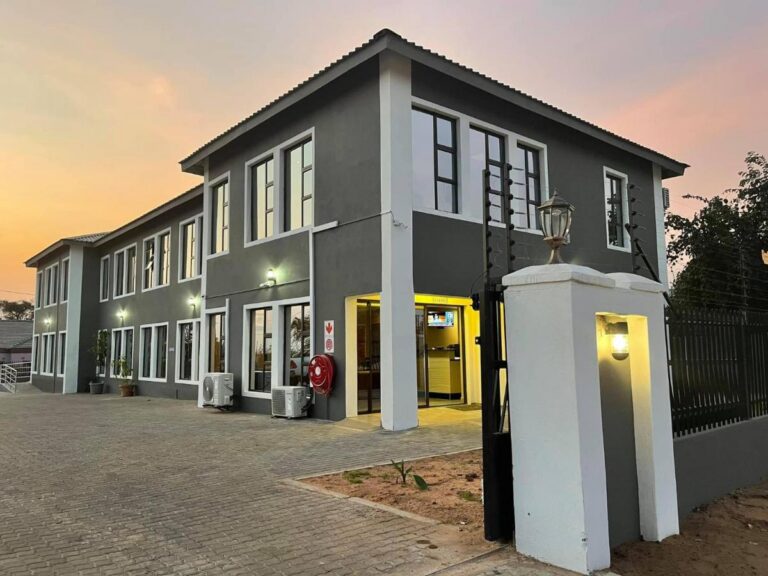
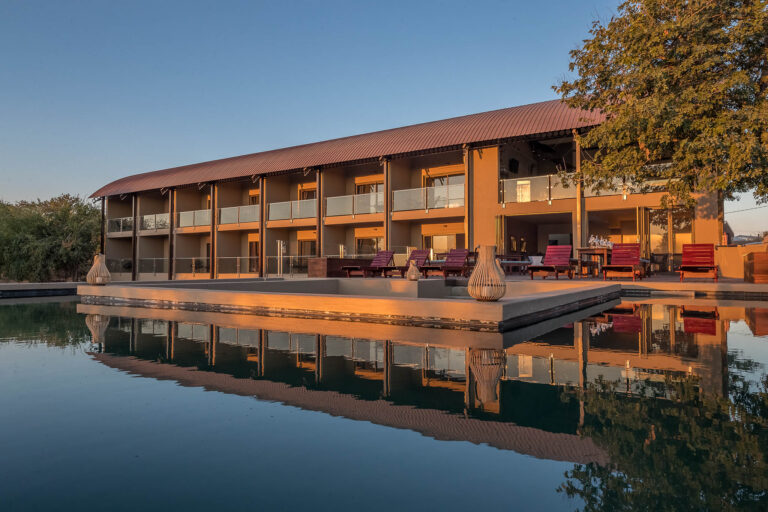
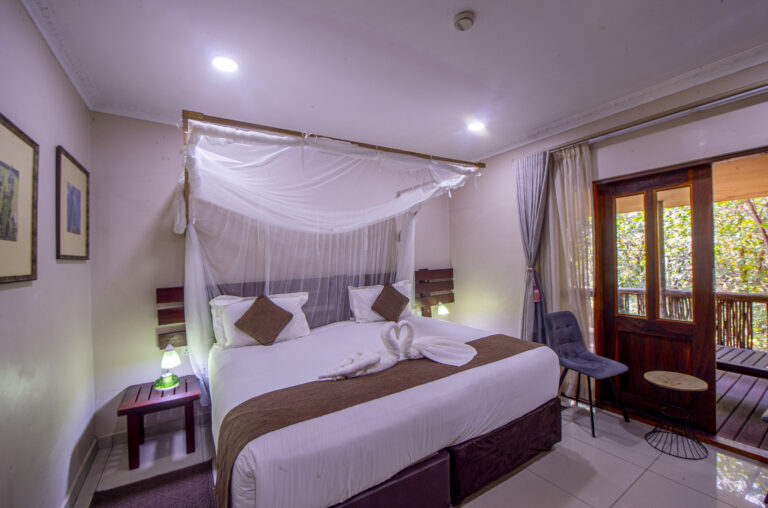
View all 79 Chobe and Kasane properties
Every card opens our own property page first. We publish no rates, no availability and no ratings of our own.
Doing it in the other direction
Kasane to Maun is the same road as Maun to Kasane with one practical difference: you are leaving a town with a border, an airport and full services, and arriving in one that is the assembly point for everything in the Okavango. If you are picking up a hire vehicle in Kasane and dropping it in Maun, do the shopping in Kasane.
On the park route, south-bound has a real advantage: you clear the Savuti sand earlier in the trip, while you and the vehicle are fresh, and you finish in Moremi rather than starting there. Several operators prefer this direction for exactly that reason.
Plan the rest of your trip
- Maun to Nata and the A3 and A33 corridor — the two legs of the tar route.
- Moremi Game Reserve, Khwai and Chobe National Park — the parks the 4×4 route crosses.
- Maun and Kasane, with accommodation in Maun and accommodation in Kasane.
- Camping in Botswana — how park and private camping actually work.
- Self-drive Botswana and itineraries.
Sources and references
- Botswana Tourism — self-drive and camping, for the fuel and water margins and remote-area advice
- Botswana Tourism — Chobe National Park, for the park’s sections and access
- Getaway — booking campsites in Botswana’s national parks, for the concessionaire split at Savuti, Linyanti and Ihaha
- A3 road, Botswana, for the route through Nata, Gweta and Maun
Gate hours, park fees, campsite operators and route conditions change, and the northern park tracks change with the season. Confirm the current position before you commit to the 4×4 route, and do not plan it from a source that does not state when it was last checked.
One is transport. The other is the safari.
If you need to be in Kasane, drive the tar and book your game viewing at each end. If you want to spend four days crossing three protected areas in your own vehicle, that is a magnificent trip — but plan it as a trip, not as a way of getting somewhere.