
Moremi: day trip from Maun, or multi-day safari?
A Moremi day trip spends four of its hours driving to and from the gate. A multi-day camping safari puts you inside the reserve at the two times of day that matter. Here is how to tell which one your trip actually needs.
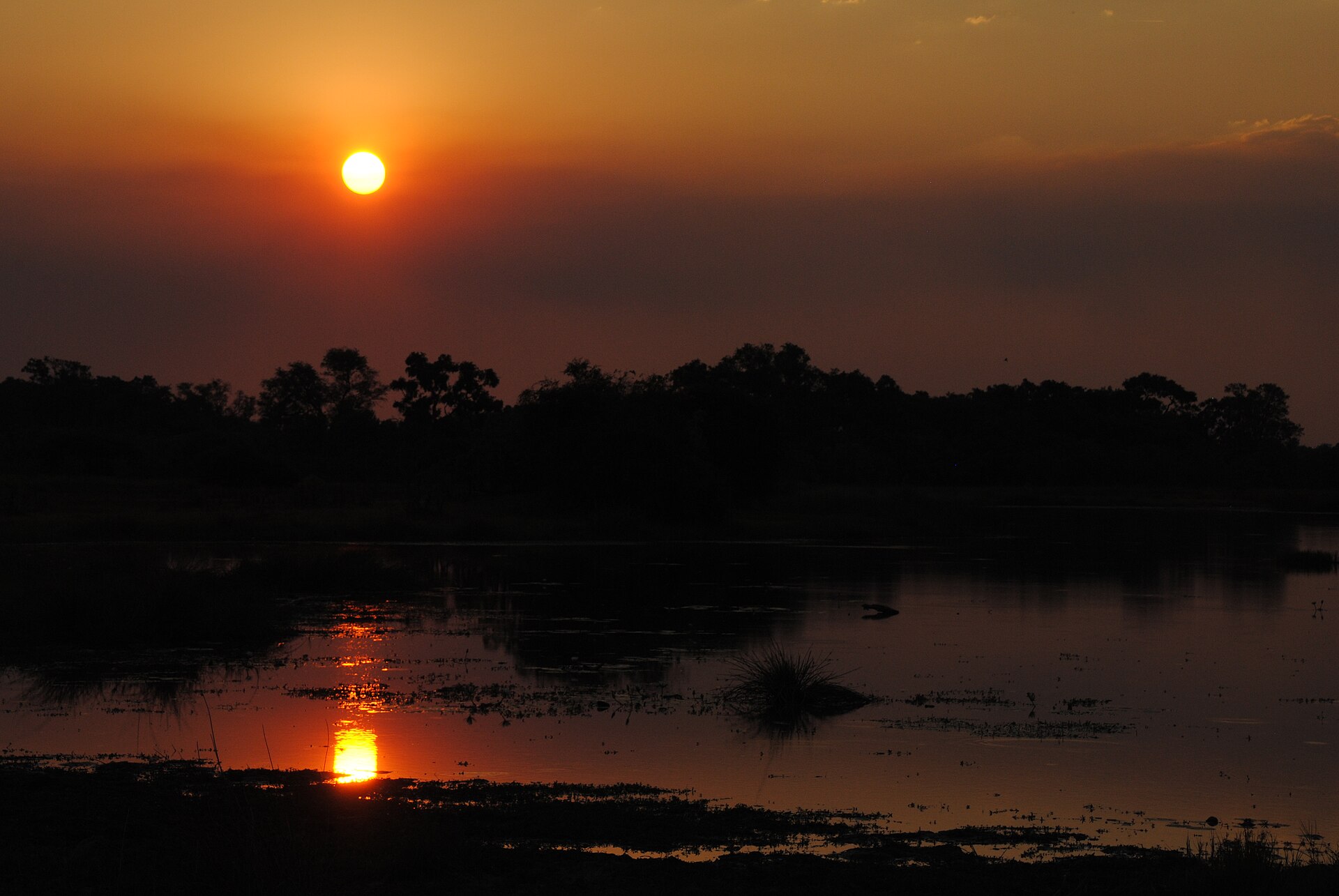
Moremi safaris we listMoremi park guideSunset in Moremi Game Reserve. Photo: diego_cue, CC BY-SA 3.0, via Wikimedia Commons.
The short answer
Take the Moremi day trip if the reserve is one item on a broad Botswana itinerary, you are flying in and out of Maun on tight dates, or you are travelling with people who will not camp. You will see Moremi. You will see it in the middle of the day.
Take the multi-day safari if Moremi is a reason you came. Sleeping inside the reserve is not a comfort upgrade — it is the only way to be on the tracks at first light and at last light, which is when the reserve behaves differently from every photograph taken at noon.
Two nights is the smallest version that changes the experience. Three to four gets you from the South Gate end of the Tongue up to Xakanaxa and Khwai without spending the trip driving.
In this guide
- Why the distances decide this
- What a Moremi day trip actually is
- What the multi-day safari adds
- How many days in Moremi
- Guided safari or self-drive?
- Moremi or the Okavango Delta?
- Booking, fees and the current access position
Why the distances decide this
South Gate (Maqwee) is about 92 km from Maun, and the last stretch is not tar. North Gate sits at Khwai on the reserve’s north-eastern flank. Between them is the Mopane Tongue, the peninsula of dry land that carries nearly all of the self-drive and safari-vehicle routing, with Third Bridge and Xakanaxa out at its tip.
The speed limit inside is 40 km/h, and the tracks are sand. That combination is what makes the day-trip arithmetic difficult: a return road transfer plus a gate-to-Tongue drive plus 40 km/h inside means a large share of a twelve-hour day is spent getting to the game rather than watching it.
It also means the reserve has no fuel, no shop and no reliable signal. Maun is the last dependable stop in either direction, whichever trip shape you choose.
What a Moremi day trip actually is
The Moremi day trip options in our catalogue run roughly twelve hours door to door from Maun. The structure is consistent: an early road transfer to South Gate, a game drive along the Tongue, a packed lunch somewhere with shade, an afternoon loop, and a return before the gate closes.
What a Moremi day trip delivers honestly: elephant, giraffe, zebra, impala, kudu, hippo in the channels, and a real chance of the reserve’s birdlife. What it delivers less reliably: predators. Lion, leopard and wild dog move at dawn and dusk, and a day trip is inside the reserve for neither.
Some operators sell a Moremi day trip combined with a mokoro morning, which is the best use of a single day if variety matters more than depth. If your priority is variety over depth, that pairing is a better use of one day than two half-committed activities — see mokoro safaris in the Okavango Delta.
What the multi-day safari adds
The multi-day trips are camping safaris. You sleep at the public campsites inside the reserve or at Khwai, the operator carries the kit, and the day is built around the two windows when animals move.
Three things change:
- First and last light. You are already inside when the gates open to everyone else, and still inside when they leave. This is the single biggest difference and the reason predator sightings are on a different footing.
- Ground covered. A two- or three-night trip reaches Third Bridge and Xakanaxa, which are the water end of the reserve and a genuinely different habitat from the mopane at South Gate.
- Khwai. Most multi-day itineraries continue into or past the Khwai community area, where the rules differ — night drives are permitted at Khwai and are not permitted inside Moremi itself.
The trade-off is real and worth stating plainly. Public campsites inside Moremi are unfenced, ablutions are basic, and animals walk through camp. That is the arrangement, not a fault in it.
Moremi safaris we list
Day trips from Maun and multi-day camping safaris through the Tongue and Khwai. Each card opens our own page first.
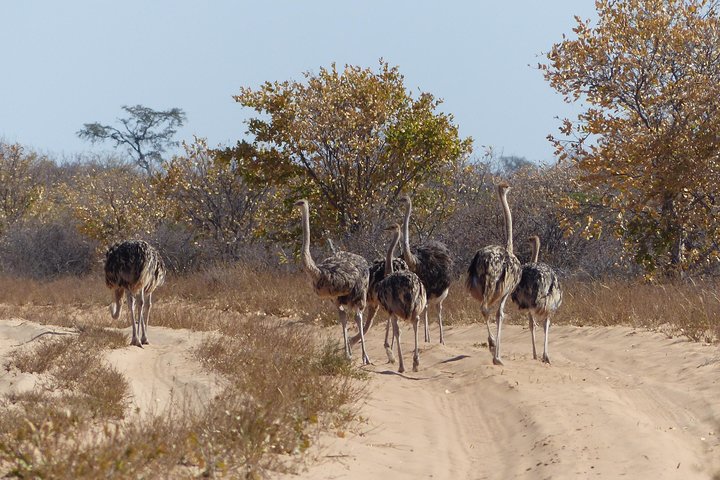
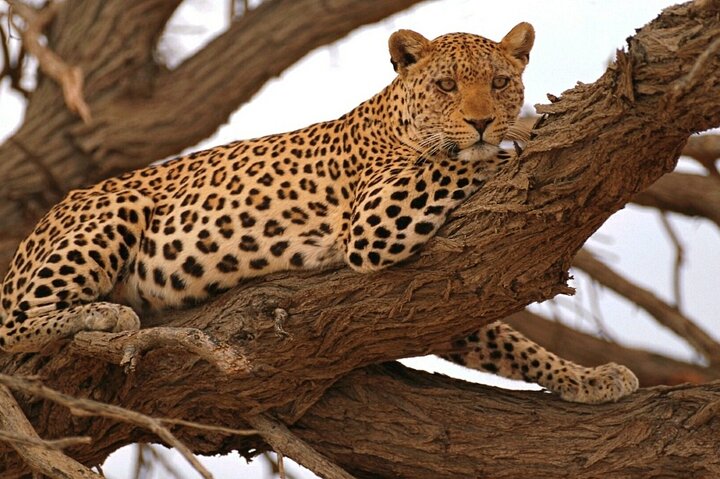
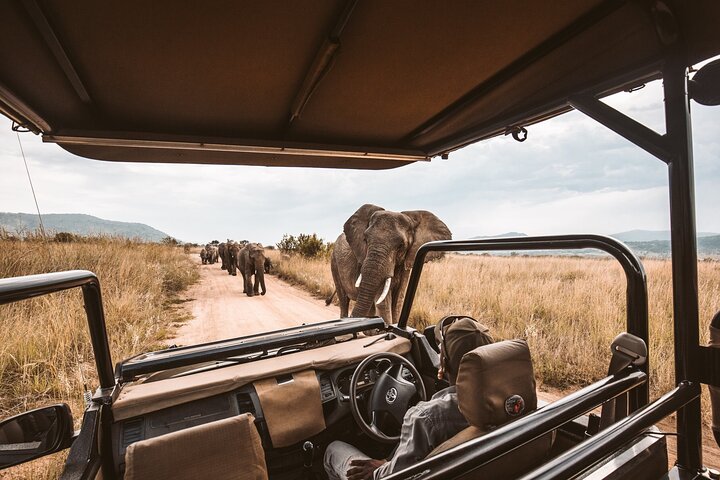
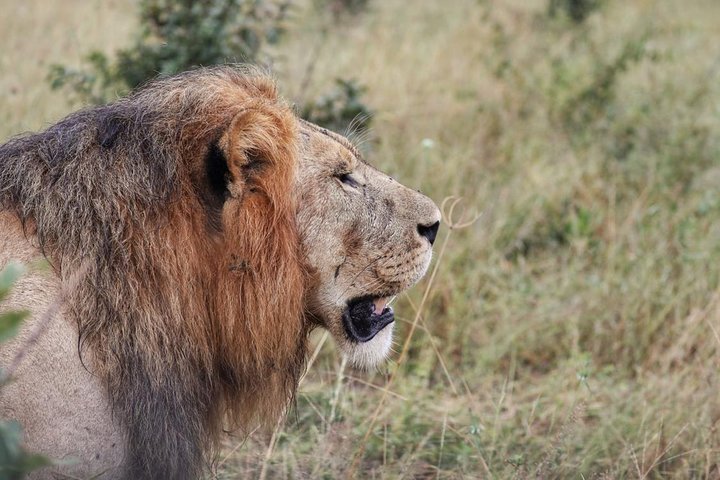
Every card opens our own tour page first. Booking happens on the operator’s site, where the live price and availability are.
How many days in Moremi
- One day. A Moremi day trip reaches the South Gate end of the Tongue, in daylight. Enough to have seen Moremi; not enough to have watched it.
- Two nights. The threshold. Two dawns and two dusks inside the reserve, and enough time to reach the water at Xakanaxa without rushing.
- Three to four nights. South Gate to Third Bridge to Xakanaxa to Khwai, at a pace that allows sitting at a sighting rather than driving past it. This is what most of the multi-day itineraries in our catalogue are built around.
- Longer. Usually because Moremi is being combined with Savuti and Chobe on the way to Kasane — which is its own decision, covered in Maun to Kasane: tar or 4×4.
Guided safari or self-drive?
Self-drive in Moremi is permitted and popular, and it is the cheapest way to spend several days inside the reserve. It is also the version with the highest failure cost: sand tracks, water crossings whose depth changes through the season, no fuel inside, no recovery service, and a hard requirement for a properly equipped 4×4. Our 4×4 requirements page sets out what that actually means.
A guided safari removes the routing risk and adds the thing a first visit benefits from most: someone who knows where the animals were yesterday. If you have never driven sand, or you are travelling in one vehicle without a second in convoy, guided is the honest recommendation for a first Moremi trip.
Self-drivers should read the Moremi park guide and camping in Botswana before booking anything — the gate positions, the permitted and prohibited activities, and the campsite booking structure all matter more here than in most parks.
The costs are not comparable in the way people assume. A self-drive party pays a 4×4 hire rate, fuel, daily park entry per person, a daily vehicle fee and a per-person camping fee at every site, and books each campsite separately with whichever operator runs it. A guided camping safari bundles all of that into one price with a guide, a cook and the kit. Once two or three people are in the vehicle, the gap is smaller than the sticker prices suggest, and the guided version carries none of the booking risk.
Three things decide it honestly:
- Have you driven deep sand before? Not gravel, not a farm track — sand, in low range, with tyres down. The Tongue is sand for most of its length and the Khwai side has water crossings whose depth changes through the season.
- Are you in one vehicle or two? A single vehicle with no convoy, no winch and no signal is the arrangement that turns a stuck afternoon into a serious problem. There is no recovery service inside the reserve.
- Did you get the campsites you wanted? Self-drive only works if the sites line up into a route. In the dry season they are booked months ahead, and a missing night in the middle collapses the itinerary. A guided operator has already solved that.
If all three answers are comfortable, self-drive is the better trip and the cheaper one. If any of them is not, the guided version is not a compromise — it is the version that actually works.
Moremi or the Okavango Delta?
This confuses people because Moremi is in the Okavango Delta — it covers the eastern third of it, including part of Chief’s Island. The distinction that matters is access, not geography.
Moremi is the part of the Delta you can drive into. The water-based heart of the Delta — the private concessions, the fly-in camps, the deep permanent channels — is reached by light aircraft and is not on any road network. Chief’s Island itself lies inside the reserve boundary but is not part of the self-drive system.
So: if you want game drives, Moremi is the Delta you book. If you want water, mekoro and the fly-in camp experience, that is the wider Okavango, and it is a different budget. Many itineraries do both, with Maun as the hinge.
Booking, fees and the current access position
Moremi charges are structured like the rest of Botswana’s protected areas: a daily entry fee per person, a daily vehicle fee, and a separate per-person camping fee per night if you are staying inside. Our parks and reserves hub explains how the three interact and why there is no single website that books all of it.
The public campsites are not run centrally. South Gate and Xakanaxa, Third Bridge, and North Gate at Khwai are operated by different concessionaires, and camping is booked with the operator of that specific site before park fees are settled. On a guided safari the operator handles all of this; self-drivers should expect to make several separate bookings.
Access has been disrupted during 2026. The Moremi park guide carries the current status, including which routes remain restricted after the flooding. Check it before you commit to a self-drive route, and treat any third-party itinerary that does not mention the situation as out of date.
Where to stay in Maun
The base for both trip shapes — riverside lodges, town hotels, guesthouses and campsites, minutes from the airstrip.
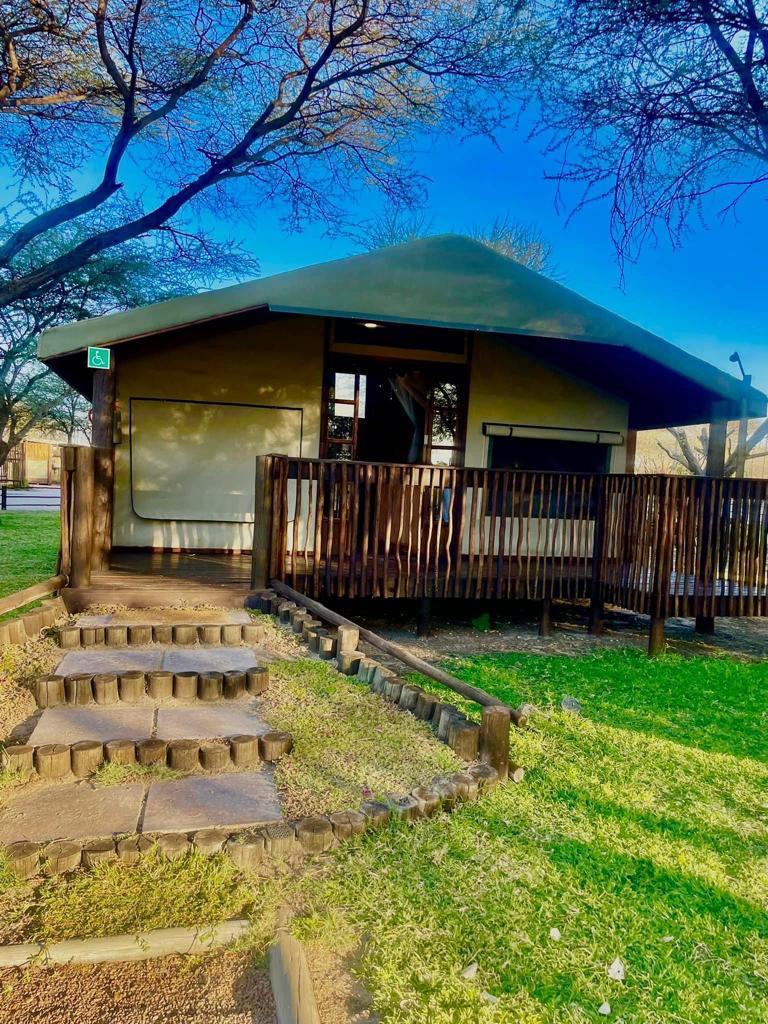
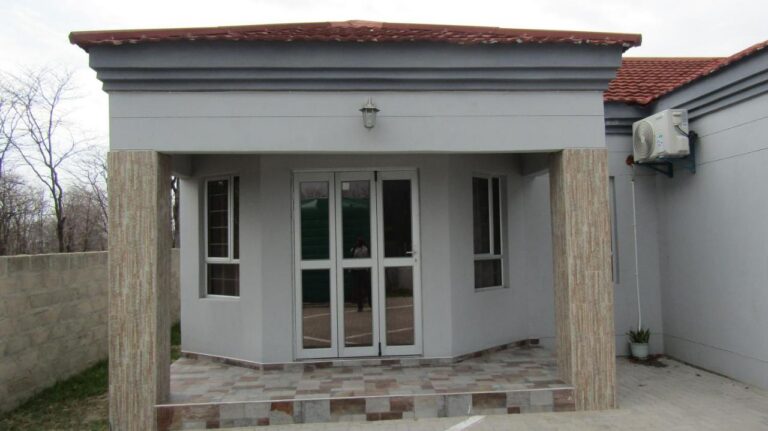
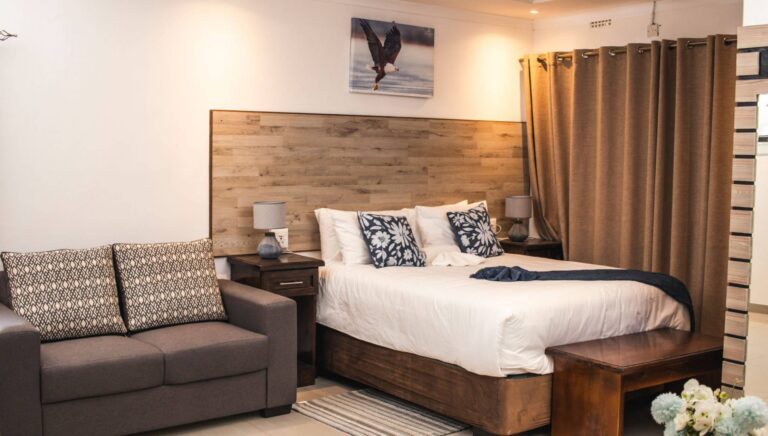
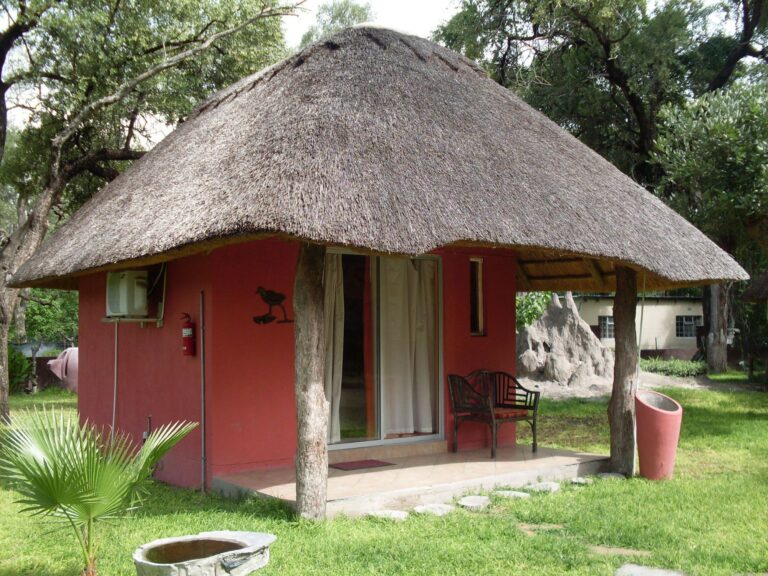
Every card opens our own property page first. We publish no rates, no availability and no ratings of our own.
Plan the rest of your trip
- Moremi Game Reserve — gates, rules, campsites and current access.
- Maun, accommodation in Maun and the Okavango Delta guide.
- Khwai — the community area where the rules differ.
- Mokoro safaris and safaris and activities in Botswana.
- Self-drive Botswana and 4×4 requirements.
Sources and references
- Botswana Tourism — Moremi Game Reserve, for the reserve’s description and permitted activities
- Botswana Tourism — self-drive and camping advice, for the fuel, water and equipment guidance
- Getaway — how to book campsites in Botswana’s national parks, for the concessionaire split across South Gate, Third Bridge, Xakanaxa and North Gate
Gate hours, route restrictions, campsite operators and fees change. Confirm the current position with the operator or the Department of Wildlife and National Parks before travelling, and treat the seasonal patterns on this page as patterns rather than guarantees.
Sleep inside, or accept the middle of the day.
Everything on this page reduces to one thing: Moremi’s best hours are the two the day trip cannot reach. If those hours matter to you, the extra night is not a luxury — it is the whole purchase.