
Mokoro safaris in the Okavango Delta
What a mokoro trip actually is, the places you can genuinely do one, and the two decisions that matter before you book: Maun edge or deep water, and a day out or a night under canvas.
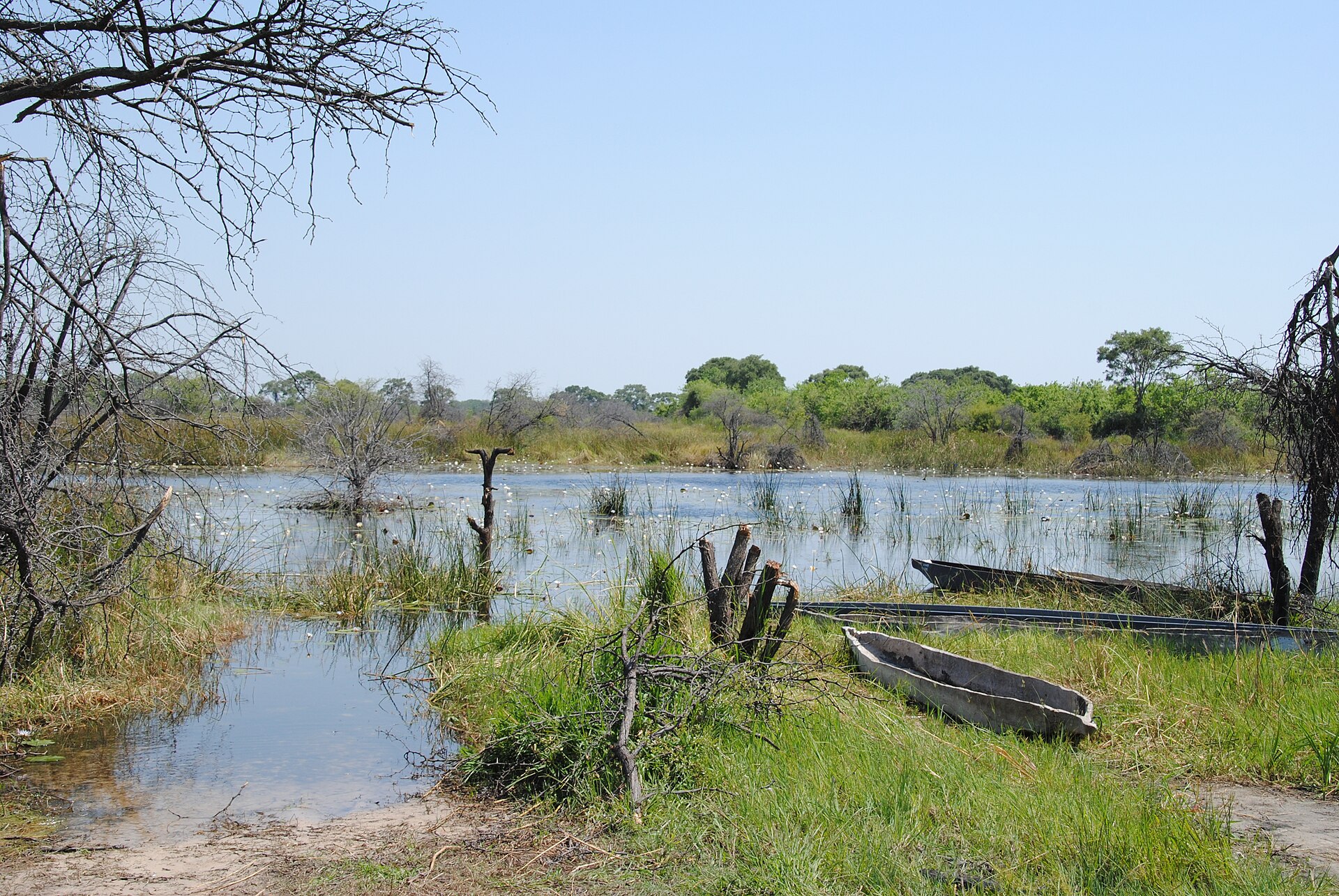
Mokoro trips we listOkavango Delta guideMekoro on the Okavango Delta channels. Photo: diego_cue, CC BY-SA 3.0, via Wikimedia Commons.
The short answer
A mokoro safari is the quietest way to be in the Okavango, and the one activity in Botswana that is genuinely unlike anything you can do elsewhere. It is not a game drive on water. You sit low, you move slowly, and what you get is reeds, frogs, birds, water lilies and the occasional large animal seen at a respectful distance.
If you have one day and you are based in Maun, take a day mokoro trip and accept that you are seeing the eastern edge of the system rather than its heart. If you have two days and the flood is up, the overnight trip is a different experience altogether, because the Delta at night is the point. If you want reliable big-game sightings, book a Moremi game drive as well, not instead of asking a mokoro to do a job it cannot do.
In this guide
- What a mokoro actually is
- Where you can do a mokoro safari
- Mokoro from Maun, or inside the Delta?
- Day mokoro safari or overnight?
- Mokoro or game drive?
- When there is water to pole on
- Practical points for a mokoro safari
What a mokoro actually is
A mokoro is a shallow-draught canoe poled from a standing position in the stern, the pole pushed against the bed rather than the water. The plural you will see written is mekoro or makoro. It was traditionally a dugout, hollowed from a single large hardwood — ebony and the sausage tree are the trees usually named — and the shift to fibreglass hulls over recent decades was driven by the obvious problem with that: a boat per tree does not scale, and the Delta’s big trees are not replaceable on a human timescale.
Most of what you will be poled in today is fibreglass moulded to the traditional shape. This is not a downgrade. It is lighter, it lasts, and it is the reason the activity still exists at the volume it does.
The poler is the guide. Two passengers per mokoro is the normal load, sitting on cushions or a low seat with your gear between your feet, and the water under you is often no more than knee to waist deep. That shallowness is the whole design: a mokoro goes where a motorboat cannot, through channels kept open by hippo movement and by the polers themselves.
Where you can do a mokoro safari
Not everywhere in the Okavango, and not at all times of year. In practice there are four settings, and they are not interchangeable.
- The Maun edge. Short, close, reliably accessible, and honest about what it is. The guided trips in the Maun Educational Park sit on the Thamalakane side of town and work as an introduction or a half-day filler between flights. You are on Delta water, at the very bottom of the system.
- The poling stations south-west of Maun. This is where most day and overnight mokoro trips actually start: a road transfer out of town to a station on a channel, then poling from there. Boro is the station named most often in the trips we list, and the overnight camping trips run to islands out from it.
- Inside the Delta, from a camp. Fly-in camps and the water concessions run mekoro as one activity among several. You are not buying a mokoro trip here; you are buying a stay that includes one, and the water is far better.
- The Panhandle and the community trusts. Up at the top of the system around Seronga and Gudigwa the water is permanent, and the community trusts run both poling and camping. Shakawe is the usual road base for this end of the Delta. This is the least visited of the four.
Khwai sits slightly apart: it is a community area on the north-eastern edge of the Delta with its own rules, and mokoro is available there but is not what most people go for.
Mokoro from Maun, or inside the Delta?
This is the decision most people get wrong, and it is worth being blunt about.
A mokoro trip out of Maun is affordable, bookable at short notice, and requires nothing of you beyond a morning. It is also at the dry end of a system that is 300 km long. In a poor flood year the channels near town can be thin, and what you get is a pleasant hour of poling through reeds rather than the open lagoons in the photographs.
A mokoro from inside the Delta — from a camp on a concession, reached by light aircraft — is a different product at a different price. The water is deeper and more reliable, the poling is longer, and the wildlife around you is genuinely wild rather than habituated to a road transfer. You do not book this as an activity. You book a camp, and the mokoro comes with it.
The practical rule: if the mokoro is the reason for the trip, budget for the Delta interior and accept the flight. If the mokoro is one thing on a list that also includes Moremi and Chobe, do it from Maun and spend the money on the game drives.
Day mokoro safari or overnight?
Of the mokoro safari trips in our catalogue, seven are day trips and five run overnight or longer. That split is roughly what the market looks like, and the two products are not versions of the same thing.
The day trip is a road transfer out of Maun, one to three hours of poling with a stop on an island for a walk, and a return the same afternoon. It is the right choice if you are between flights, travelling with people who will not enjoy a bush camp, or simply want to have done it.
The overnight trip adds the part that most people remember: a camp on an island, no fence, no generator, and the sound of the Delta after dark. The one-night version is the smallest sensible commitment. The two- and three-night trips get you further out and away from the day-trip channels. You carry your own bedding and water in the mokoro, the camp is basic, and there is no plumbing.
If you are on the fence, the honest test is whether you are comfortable with a bush toilet and no lighting. If you are, take the night. If not, the day trip is not a consolation prize — it is the same water.
Mokoro trips we list
Day trips and overnight camping trips from Maun and the Okavango. Each card opens our own page first.
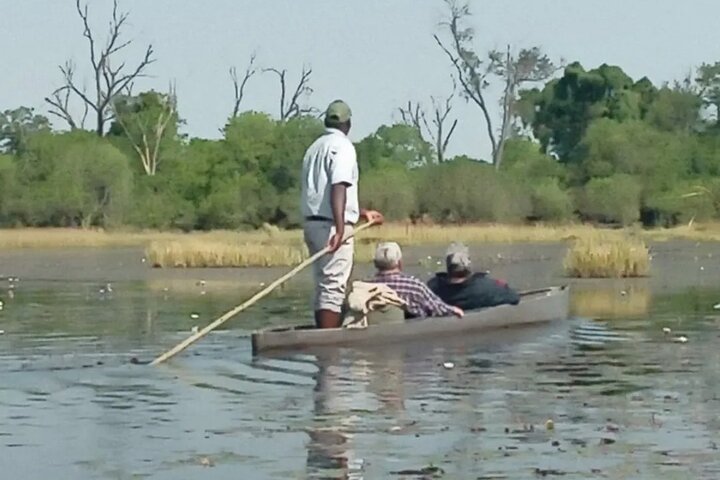
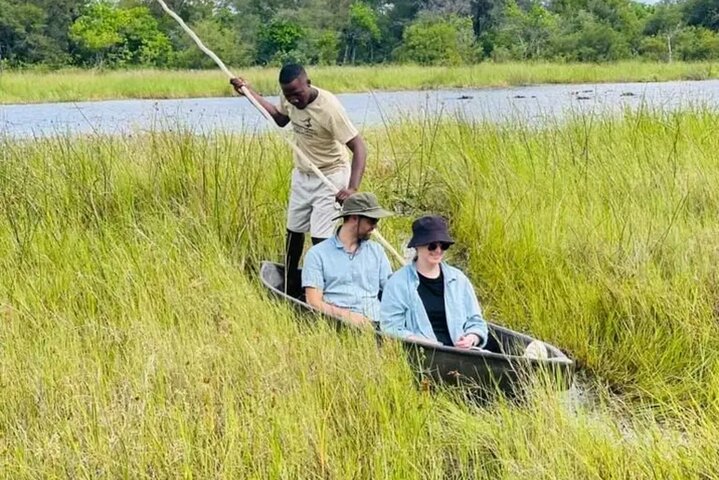

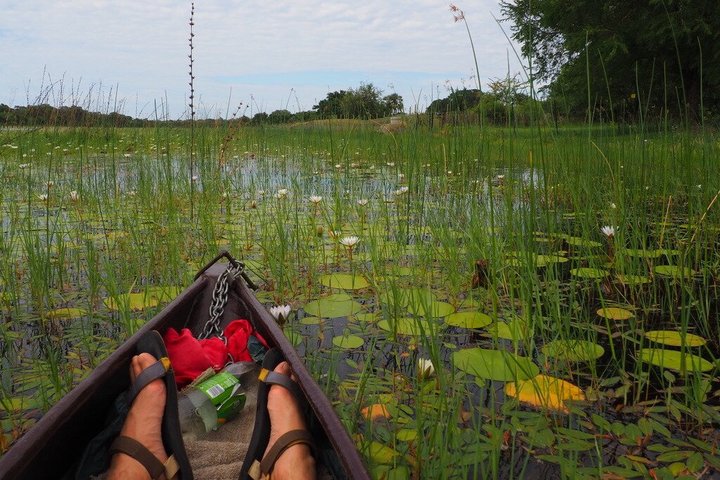
Every card opens our own tour page first. Booking happens on the operator’s site, where the live price and availability are.
Mokoro or game drive?
They answer different questions, and the Okavango is one of the few places where you can do both from the same base.
A mokoro shows you the Delta as a habitat: the reedbeds, the lilies, the small things at eye level, painted reed frogs on the stems, and birds that a vehicle would never let you near. Large mammals appear, but incidentally and at a distance the poler chooses. Elephants and hippos are the reason mokoro routes change; a good poler will read the water and go somewhere else.
A game drive in Moremi shows you predators, herds and the dry-land species list. It covers ground, it goes where the animals are, and it is what you book if a lion sighting is on the list.
If you only have one day near Maun and big game is the priority, take the Moremi day trip. If the water is the priority, take the mokoro. Doing both across two days is the standard answer for good reason.
When there is water to pole on
The Okavango flood is Angolan rain, and it arrives months late. Water falling on the Angolan highlands between roughly October and April reaches the Botswana panhandle around March to May and works down into the southern and eastern Delta around June to September — which is why the Delta is at its fullest in the middle of the dry season. Our Okavango flood cycle guide sets out the lag and the reasons forecasting the peak is genuinely uncertain.
For a mokoro booking, that means:
- Roughly June to September is the strongest window for poling in the southern and eastern Delta, including the trips that run out of Maun.
- March to May is the panhandle’s window, at the top of the system.
- The green season, roughly December to March, is when the southern channels are at their lowest despite the rain falling locally. This surprises people every year.
Flood volume varies year to year, and no operator can promise you a particular water level months ahead. If a specific mokoro experience is the point of the trip, ask the operator what the current water is doing rather than trusting a seasonal chart.
Practical points for a mokoro safari
- The poler is doing hard physical work. Poling a loaded mokoro for three hours in the sun is not a novelty ride. Tipping is customary and expected.
- There is no shade. A hat, long sleeves and sunscreen matter more than a camera lens.
- You will get wet. Not swamped, but a mokoro sits low and water comes in. Dry-bag anything that matters.
- Hippos are the real hazard. This is the reason polers avoid deep channels and open lagoons in some conditions, and the reason you follow instructions immediately rather than after a discussion.
- Weight and balance are real constraints. Two adults and light luggage is the load. On overnight trips the mokoro carries your camping kit, water and food as well.
- Do not expect a mokoro to substitute for a boat cruise. If you want a motorised boat with a cool box, that is a different activity, offered on the Chobe rather than in the Delta — see Chobe river cruise or game drive.
Where to stay in Maun
Riverside lodges, town hotels, guesthouses and campsites — the base almost every mokoro trip starts from.
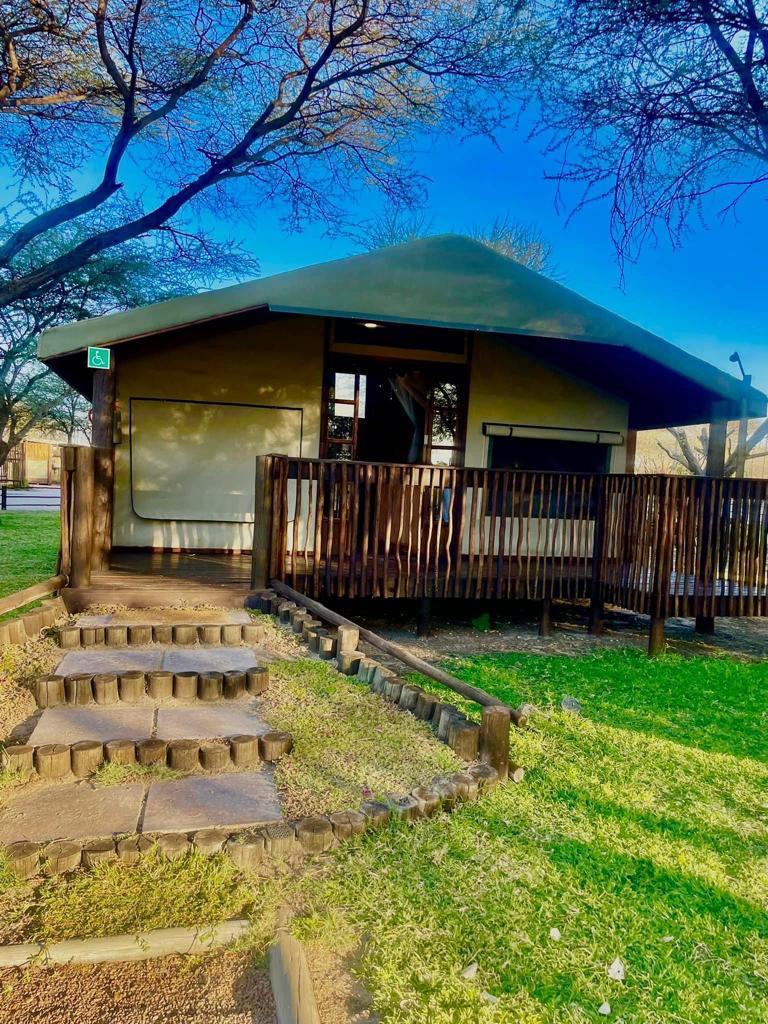
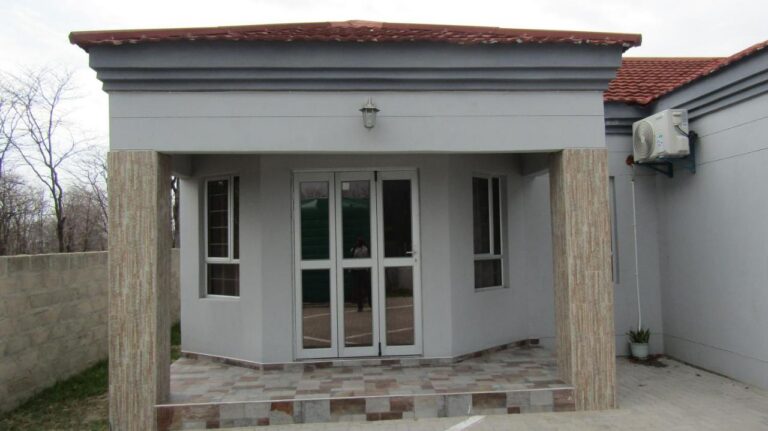
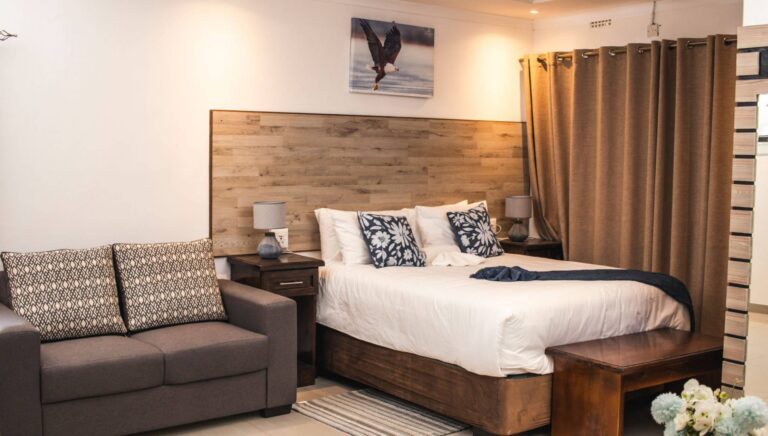
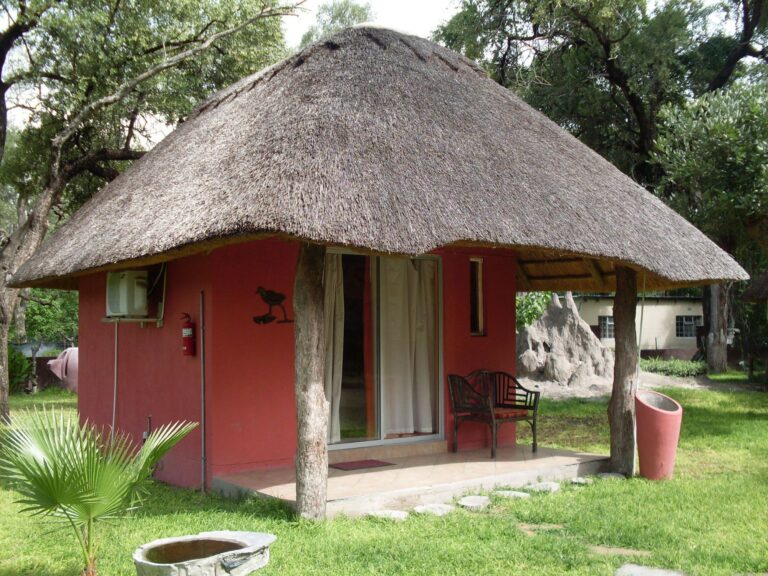
Every card opens our own property page first. We publish no rates, no availability and no ratings of our own.
Plan the rest of your trip
- Okavango Delta travel guide and the flood cycle behind the water levels.
- Maun, the gateway town, and accommodation in Maun.
- Moremi Game Reserve and the day trip or multi-day decision.
- Safaris and activities in Botswana — what is permitted where.
- Best time to visit Botswana and itineraries.
Sources and references
- Botswana Tourism — Okavango Delta, for the Delta’s status and the activities permitted on it
- UNESCO World Heritage Centre — Okavango Delta, for the inscription and the description of the flood pulse
- Wikimedia Commons, for the hero photograph and its licence
Water levels, poling routes and which stations are operating change from season to season. Treat anything seasonal on this page as a pattern rather than a promise, and confirm current conditions with the operator when you book.
Sit low, go slow.
A mokoro safari is not the activity that will fill your camera roll with cats. It is the one that will make you understand what the Okavango is, which is a very large amount of shallow water with a lot living in it — and the only way to be quiet enough to notice.