

Khwai
The community concession next door to Moremi — where night drives, walking and off-road driving are allowed, and the reserve does not allow any of them.
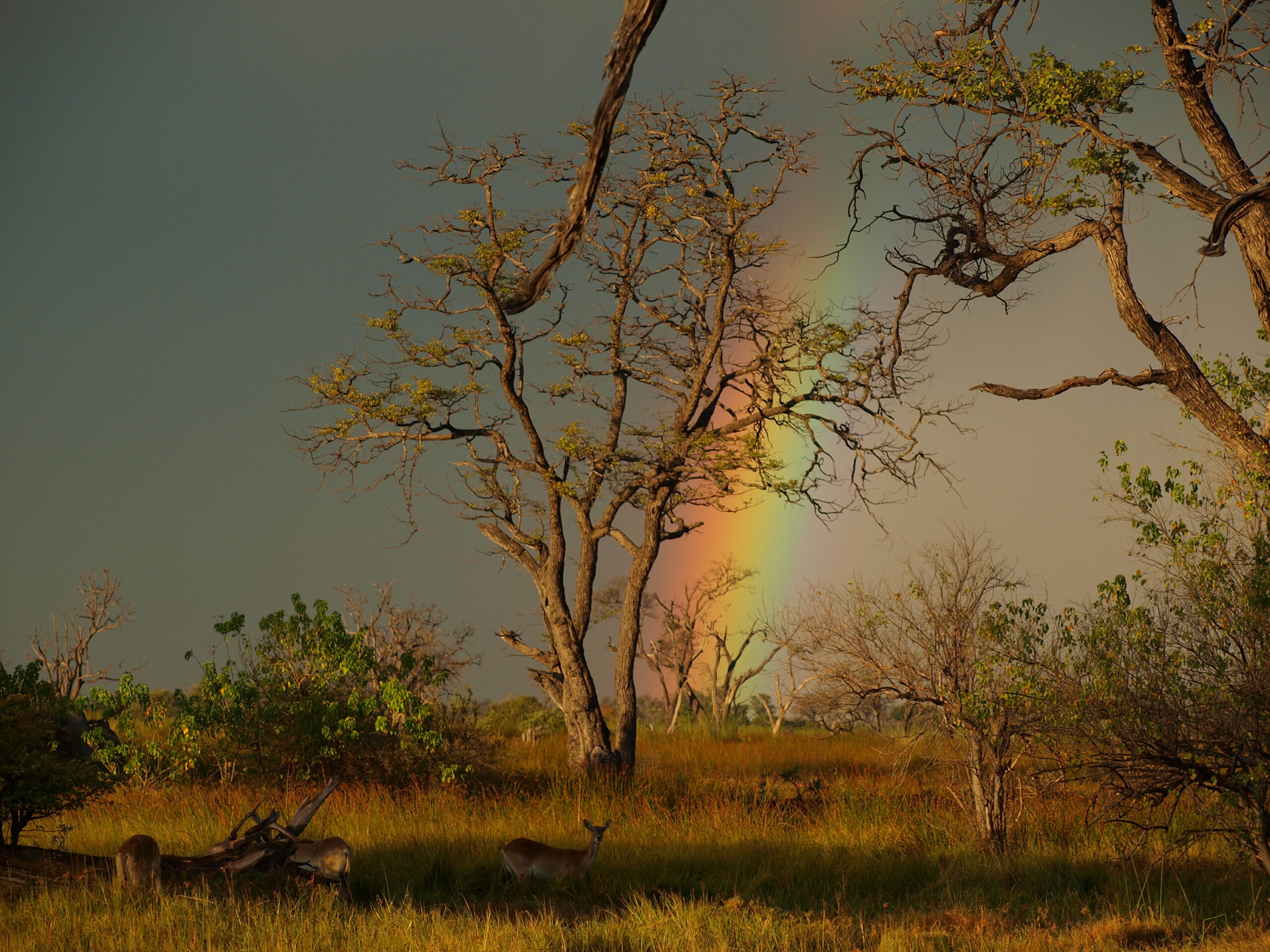
Okavango Delta regionMoremi Game ReserveA group of red lechwe on a floodplain at dawn in the Okavango Delta, Botswana. Photo: PanBK at English Wikipedia, CC BY-SA 3.0, via Wikimedia Commons.
Khwai is the strip of community-managed land on the north-eastern edge of the Okavango Delta, sharing a boundary with Moremi Game Reserve. Most travellers meet it as a line in an itinerary rather than a place, which undersells it: the rules that apply here are different from the rules inside the reserve, and that difference is the entire reason to spend nights on this side of the boundary.
It is also one of the most confused names in Botswana travel, because two adjacent concessions carry it. This page separates them, explains what Khwai permits that Moremi does not, and sets out how self-drivers actually reach it.
- Where
- North-eastern edge of the Okavango Delta, bordering Moremi
- Status
- NG19, the Khwai Community Concession, run by the Khwai Development Trust
- Known for
- Night drives, walking and off-road driving — none permitted inside Moremi
- Access
- Moremi North Gate (Khwai); genuinely self-drivable, 4×4 essential
- Fly-in
- Roughly half an hour from Maun to a Khwai-area airstrip
- Typical stay
- Two nights, paired with two in Moremi
In this guide
- What Khwai actually is
- NG19 and NG18: the two Khwais
- The rules difference, and why it decides your nights
- Wildlife, honestly
- Getting there and driving it
- Where to stay
- Where Khwai sits on a route
- When to go
What Khwai actually is
Khwai is not a national park, a game reserve or a town. It is a concession: leased land on which tourism operates under conditions set by the lease. In Ngamiland these blocks carry an NG prefix and a number, and the neighbours are recognisable to anyone who has read a Botswana camp brochure — NG14 Kwando, NG15 Linyanti, NG16 Selinda, NG34 Sankuyo.
Operators hold leases and are capped on lodges, rooms and beds. That cap is the mechanism behind Botswana’s low-volume, high-value tourism model, and it is why a concession can feel empty in a way a national park rarely does. One practical consequence: lease assignments turn over, so it is worth verifying who currently runs a camp when you book rather than trusting an older guide.
NG19 and NG18: the two Khwais
This is the distinction that causes the most trouble, and it is worth getting straight before you book anything.
NG19, the Khwai Community Concession, is run by the Khwai Development Trust. It borders Moremi, it permits night drives and walking, and it is genuinely self-drivable. This is the Khwai that appears in self-drive itineraries and the one most people mean.
NG18, the Khwai Private Reserve, is camp-based. It is a different proposition with different access, and the two are constantly confused — including by booking sites. If a page offers you a Khwai camp, establish which block it sits in before assuming you can drive yourself there.
The rules difference, and why it decides your nights
Moremi is a game reserve, and as a national reserve it prohibits night drives, walking safaris and off-road driving. Daytime driving happens on established tracks at 40 km/h. Those rules are not an inconvenience to be worked around; they are what keeps the reserve the way it is.
Khwai, sitting outside the reserve, permits all three. That single fact is why a well-built Delta week puts nights on both sides of the boundary rather than four nights in one. Two nights in Moremi buys you the reserve habitat and its road network; two nights in Khwai buys you the evening drive, the walk and the ability to leave a track when something is worth following.
If you only have nights for one, choose by activity rather than by name. Reserve habitat and a fly-in budget you do not have point to Moremi. Night drives and walking point to Khwai.
Wildlife, honestly
Khwai has a reputation for leopard, and the reputation is deserved — but the reason is worth stating plainly, because most guides omit it. Moremi and neighbouring Khwai are the conventional leopard recommendation because of access, not density. Khwai permits off-road driving and night drives; Moremi does not. Inside the reserve, a leopard that leaves the track is one you stop watching. Across the boundary, it is one you can follow.
Khwai also sits in the part of Africa that matters most for African wild dog. The largest remaining populations are in southern Africa, particularly northern Botswana, which puts the Okavango, Khwai, Linyanti and Selinda among the best places on Earth to look for them. Denning, in the dry months, ties a pack to one place for a period — which is the difference between a chance encounter and a reasonable prospect.
We publish no population figures for either species. Numbers of that kind circulate widely and are rarely sourced; a concession-level figure you can actually rely on generally does not exist.
Getting there and driving it
Khwai is reached through Moremi’s North Gate, which is the gate that carries its name. Coming from Maun, the usual approach is South Gate (Maqwee), about 92 km from town — a long half-day in a loaded 4×4 rather than an hour drive, because the surface deteriorates well before the gate — and then north through the reserve.
A 4×4 is required, non-negotiably, for Moremi, Khwai and anything else off the tar. Khwai is genuinely self-drivable, but its roads deteriorate badly in the rains, and this is not a route to attempt in a saloon or on optimism. Maun is the last dependable fuel, cash and provisioning point; there is no fuel, no shop and no reliable signal once you are in. Our 4×4 and vehicle requirements page sets out what Botswana Tourism expects a self-drive camper to carry.
Current access, and why it matters here. Moremi reopened on 13 April 2026 with restricted access: Third Bridge closed until further notice, the Khwai–Xakanaxa route deemed inaccessible, and Khwai–South Gate described as difficult and potentially hazardous, suitable for experienced off-road travellers only. This corridor is the first to close when rain and the Okavango flood coincide. Check current route and gate status immediately before you travel rather than relying on any guide, including this one.
If you would rather not drive it, the fly-in option is short: a hop from Maun to a Khwai-area airstrip runs to roughly half an hour, on Cessna Caravan-class aircraft of twelve seats or fewer. That is the basis of the most useful structural trick in Botswana planning — drive one leg and fly the other, rather than repeating a hard route in both directions.
Where to stay
Three broad options sit here. Public campsites at Khwai and North Gate are the self-drive standard, booked in advance and self-sufficient. Camps and campsites on community land are common around Khwai; facilities are generally better than the public sites, and rules are set by the owner rather than by park regulations, which is often why night activities are available. Private camps operate under the concession lease with the bed caps described above.
Community accommodation is worth understanding rather than just booking. Camps and campsites owned or co-owned by community trusts — principally at Khwai and Sankuyo — return revenue to those trusts through lease fees and bed-night levies. Where you sleep here has a more direct bearing on who benefits than it does in a national park. Our accommodation guide covers the categories in full.
Where Khwai sits on a route
Khwai is a link in the classic northern run: Maun – Moremi – Khwai – Savuti – Chobe. It is also the traditional second leg of a mobile camping safari, where an operator moves camp with you using public campsites and links Moremi, Khwai, Savuti and Chobe overland.
In practice that means Khwai rarely stands alone. It works as the second base after Moremi, and as the point at which a Delta trip either turns north towards the Chobe river or turns back to Maun.
- Botswana 7 day itinerary — two nights in Moremi, two in Khwai, out and back from Maun.
- Botswana 10 day itinerary — the same start, then north through Savuti to Kasane.
- Botswana 14 day itinerary — the northern loop plus the salt pans.
When to go
The dry months are the straightforward choice. They concentrate wildlife, keep the tracks predictable, and are when denning ties wild dog packs to one place. For the neighbouring reserve, June to October is the conventional window, with December to March bringing the rain.
The green season is not a mistake here, but it is a different trip with real access risk attached, and Khwai’s roads are among the first to suffer. If you are travelling then, build flexibility into the route and treat any single-track plan as provisional. Best time to visit Botswana sets out the trade-offs region by region, and the Okavango flood cycle explains why the water arrives when it does.
Nearby and next
- Moremi Game Reserve — the reserve across the boundary, its gates and its rules.
- Okavango Delta and Maun — the region, and how the concession system works.
- Maun — the hinge town, provisioning and charter flights.
- Self-drive Botswana — distances, road types and what the country demands, and Maun to Kasane, the 4×4 crossing that passes this way.
- Mokoro safaris — available at Khwai, though it is not what most people come here for.
- Camping in Botswana — including the Khwai campsite at Moremi North Gate, and how community-area camping differs from park camping.
- Accommodation in Maun — where almost every Khwai trip provisions and sleeps either side.
Where to stay around Khwai
Concession camps on the Khwai side of the Delta and the Moremi water camps, all written up here.
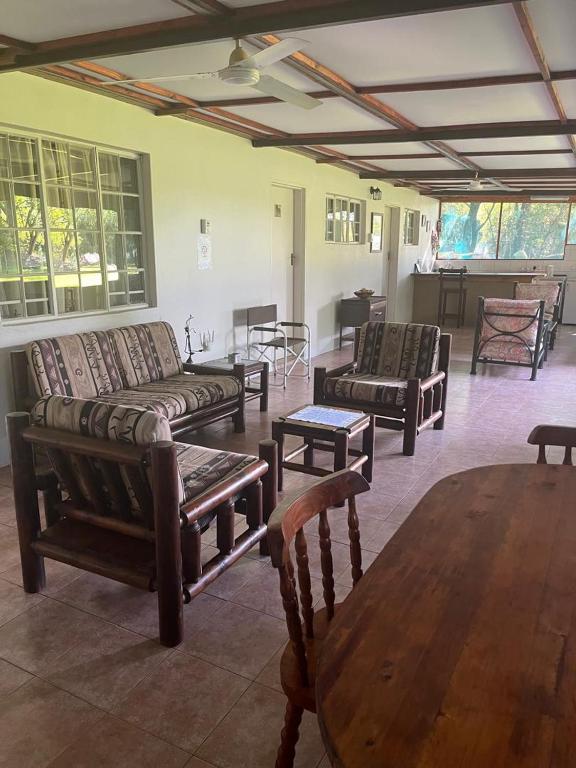
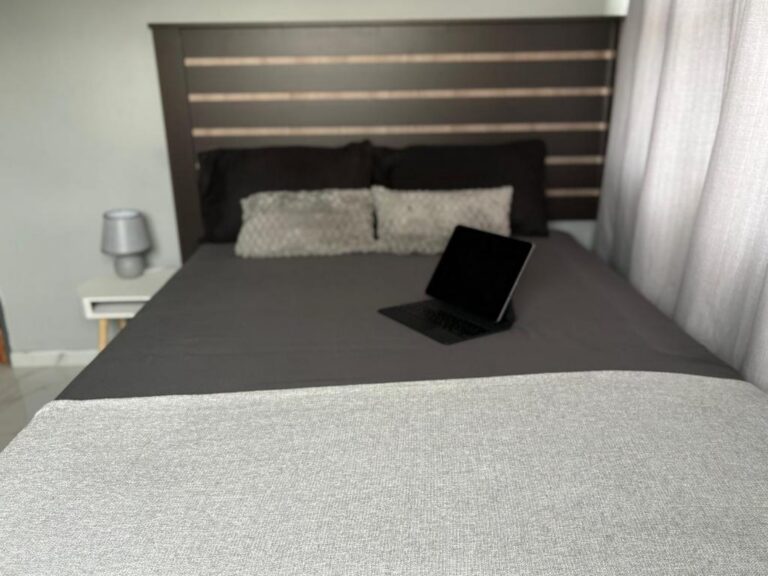
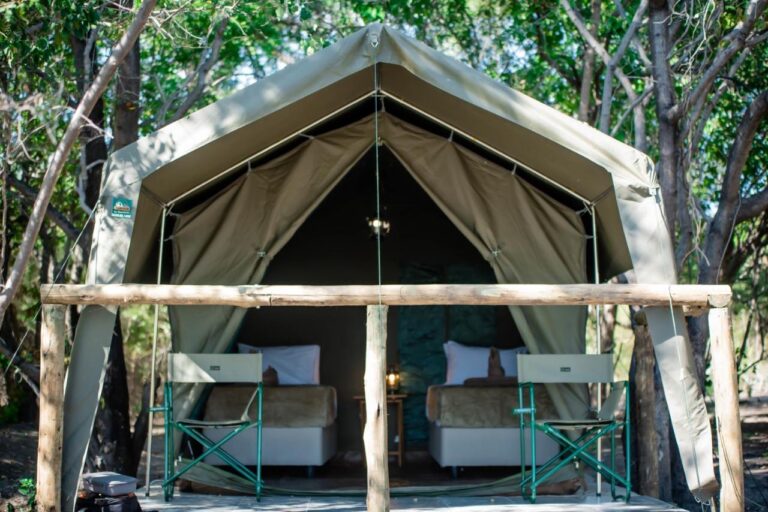

View all 7 Okavango Delta propertiesAll Okavango Delta accommodation
Every card opens our own property page first. We publish no rates, no availability and no ratings of our own.
Safaris that run through Khwai and Moremi
Guided trips that use the North Gate and the Khwai concession, with fixed departure dates.

Every card opens our own tour page first. Booking happens on the operator’s site, where the live price and availability are.
Sources and references
- Botswana Tourism Organisation — Moremi Game Reserve (gates, permitted activities and access)
- Botswana Tourism Organisation — Climate (seasons and travel windows)
Reviewed August 2026. Concession leases, camp operators, road status and gate arrangements change; if something here is out of date, tell us.
View all accommodation in the Okavango Delta — every property we have published there, each with our own write-up before any booking route.