
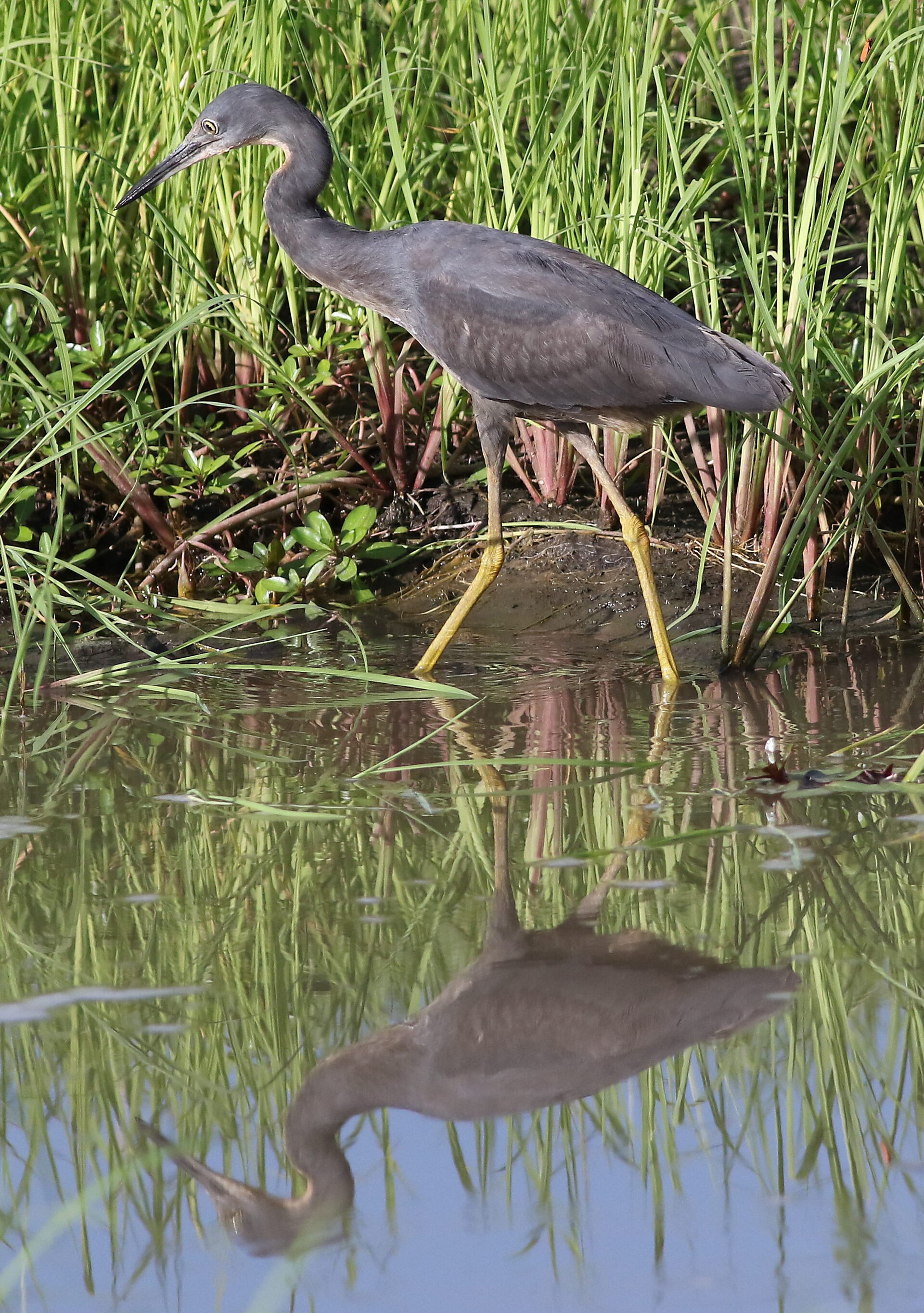
Slaty egrets are closely associated with the shallow wetlands of northern Botswana and the wider KAZA region. BirdLife Botswana says about 80% of the species’ population is restricted to the Okavango Delta, making the Delta central to both birding and conservation.
A range statistic still does not provide a reliable sighting point. Water depth, flooded grass, disturbance, fire and seasonal movement determine whether apparently suitable habitat is being used when you arrive.
Last checked
21 September 2026. Conditions, rules and operator arrangements can change. Confirm the details that affect your trip with the responsible authority or operator before travelling.
In this guide
Begin slaty egrets with identification
The bird’s dark slate plumage, yellow legs and reddish throat can be subtle in poor light. Compare it carefully with dark morphs and other small egrets. A specialist guide reduces rushed or incorrect identifications.
Turn that into a practical check: What field marks will separate a slaty egret from the similar birds present today? Ask for a dated answer, note who supplied it, and keep it with the booking or route plan. That small record is more useful than an undated recommendation copied from another trip.
Search shallow, seasonally flooded habitat
Slaty egrets feed in shallow water, flooded grass and wetland edges rather than every open channel. A boat route that passes deep water may be less useful than a slower excursion through the right fringe habitat.
Turn that into a practical check: Which accessible sites currently have shallow feeding habitat rather than simply permanent water? Ask for a dated answer, note who supplied it, and keep it with the booking or route plan. That small record is more useful than an undated recommendation copied from another trip.
Choose a guide who reads wetland habitat
A specialist birding guide can adjust the day to water level, light and current sightings instead of repeating a generic boat route.
Let water level refine the season
Calendar months alone are too blunt for a flood-driven wetland. Ask how the current flood and local rain have shaped grass depth and feeding areas. The useful season is where suitable water and access overlap.
Turn that into a practical check: How does this year’s water pattern compare with the habitat used on recent sightings? Ask for a dated answer, note who supplied it, and keep it with the booking or route plan. That small record is more useful than an undated recommendation copied from another trip.
Protect breeding and roosting areas
BirdLife identifies disturbance, fire and habitat loss among the threats. Do not press closer to a roost or suspected nest for a photograph. Follow guide instructions and keep boat noise and repeated approaches low.
Turn that into a practical check: Are any areas being avoided because birds are breeding, roosting or under monitoring? Ask for a dated answer, note who supplied it, and keep it with the booking or route plan. That small record is more useful than an undated recommendation copied from another trip.
Make a useful sighting record
Record date, location, number, behaviour and habitat without disturbing the bird. BirdLife Botswana invites reports to support knowledge of distribution and threats. A careful record can add value beyond a personal checklist.
Turn that into a practical check: What details and reporting channel will make the observation useful to local monitoring? Ask for a dated answer, note who supplied it, and keep it with the booking or route plan. That small record is more useful than an undated recommendation copied from another trip.
Practical checklist
- Learn the key field marks.
- Target shallow flooded grass.
- Ask about current water levels.
- Keep distance from roosts and nests.
- Record and report sightings responsibly.
Sources and verification
The main references used for this article were BirdLife Botswana Slaty Egret Project, BirdLife Botswana birding hotspots, UNEP Slaty Egret conservation report. The sources answer different parts of the question. Where an authority is silent, a rule is volatile or research does not support a neat conclusion, the article preserves that uncertainty.
Our wildlife and seasons section helps place the search inside the wider wetland year.
Slaty egrets reward attention to habitat more than confidence in a pin. Match water, vegetation and careful guidance, then accept that the bird may remain absent.