
Where Mokete sits
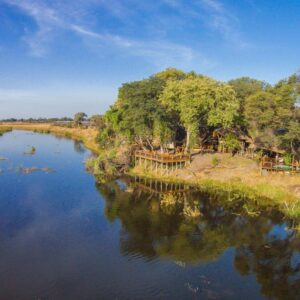
Mokete stands in the Mababe Depression, south of Chobe National Park and east of the Moremi Game Reserve. The Depression’s permanent marshland is fed by the perennial Mababe River and by the seasonal draining of the Okavango Delta, and in the dry season it becomes a water source for thousands of animals. Mokete is the only camp offering safaris in this area.
The tents
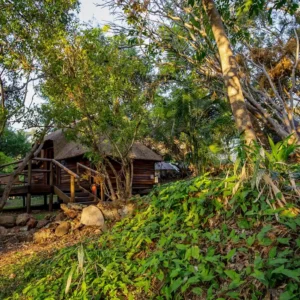
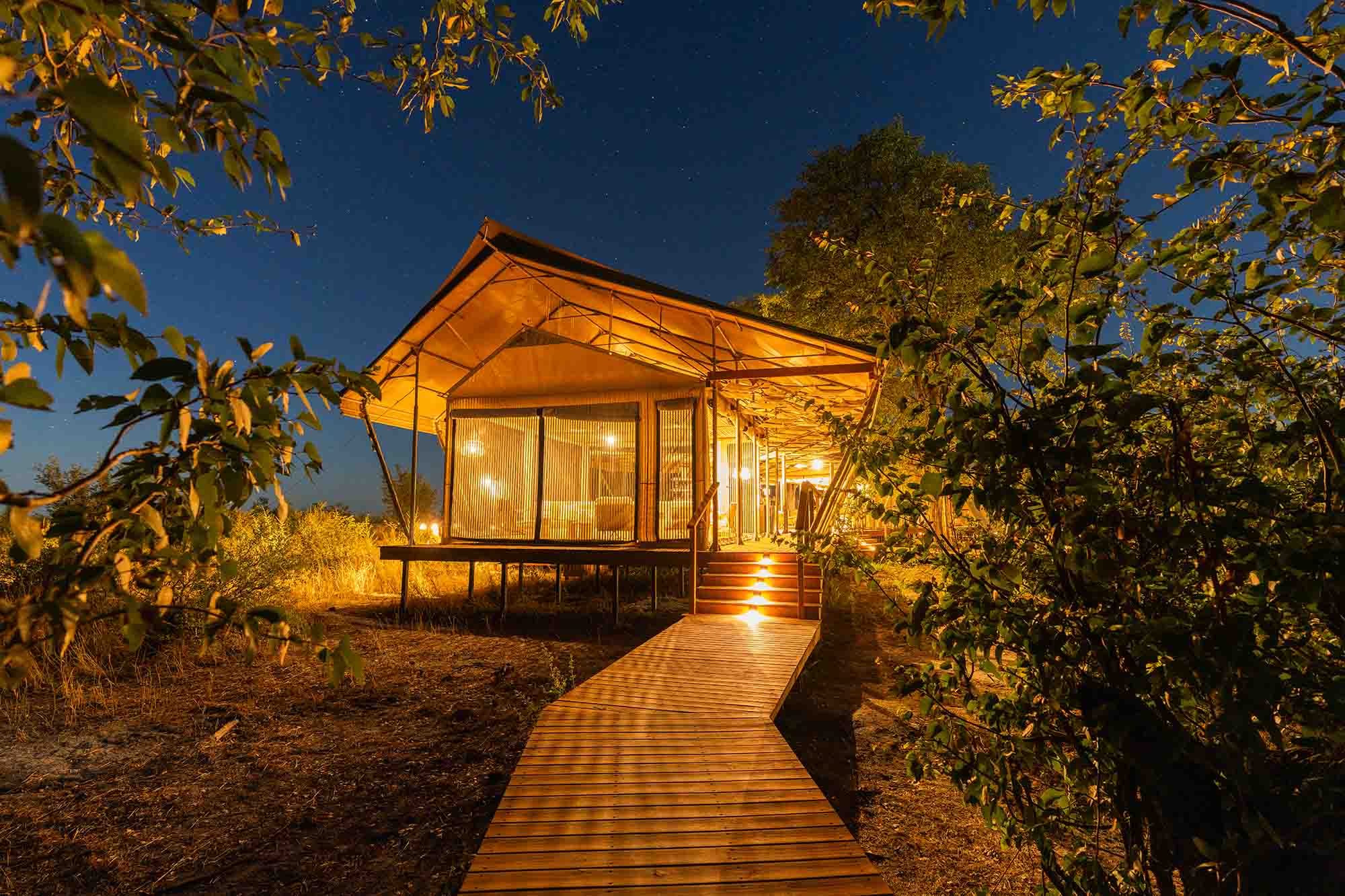
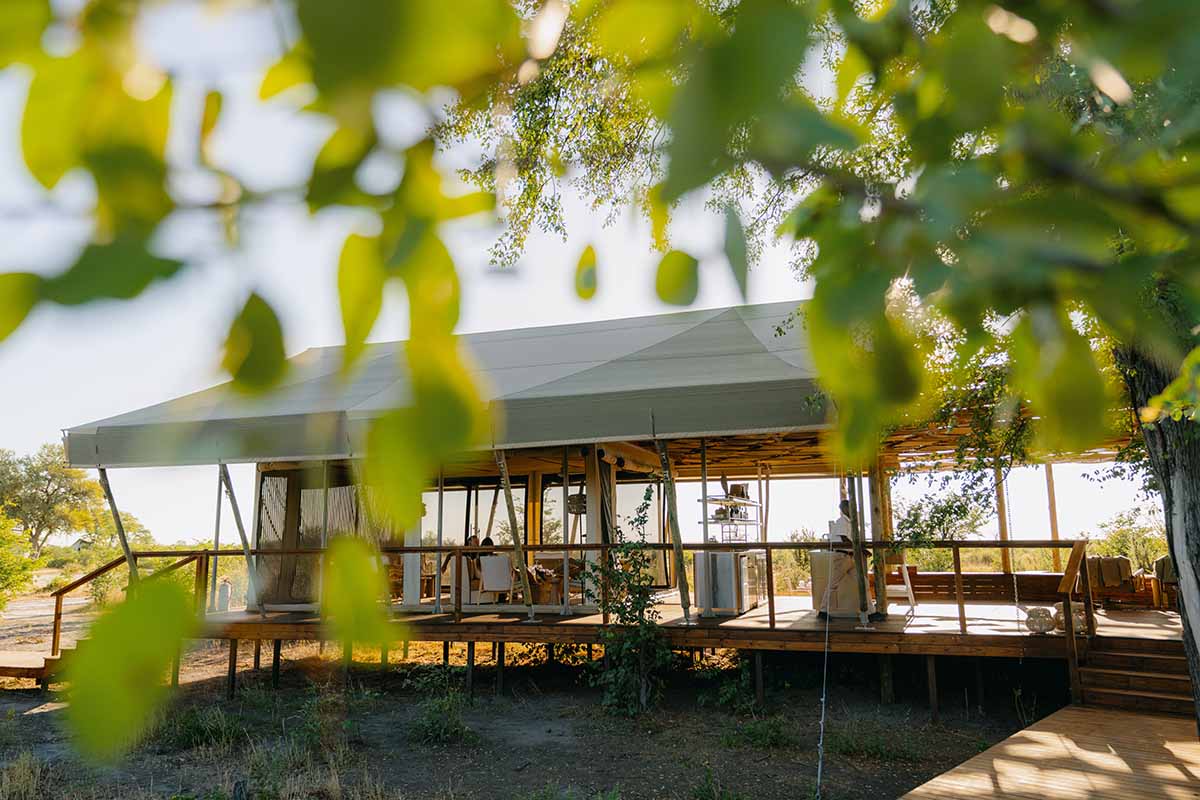
Nine tents take just eighteen guests. The design deliberately forgoes walls, with cantilevered canvas roofs that slide away to open the room to the stars. Each tent has an inverter air-conditioner for the middle of the day and a private plunge pool.
Minimalist by design
The camp is intentionally minimalist, built for the lightest possible footprint on the land, and runs entirely on solar. In an area with no other camps and no fixed infrastructure, that is a practical necessity as much as an aesthetic.
The sunken hide
A sunken hide on the permanent marsh puts guests at water level as the herds come down to drink. In the Mababe’s dry season the volume of animals moving to water is the main event, and the hide is the best seat for it.
The pool
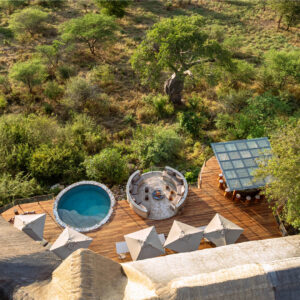
There is a camp pool positioned so that guests can cool off while the great herds come to water, as well as the private plunge pools at each suite.
Elephant
Mega-herds are frequently seen. The Mababe sits on the movement corridor between Chobe and the Delta, and elephant numbers here in the dry season are among the highest anywhere.
Predators
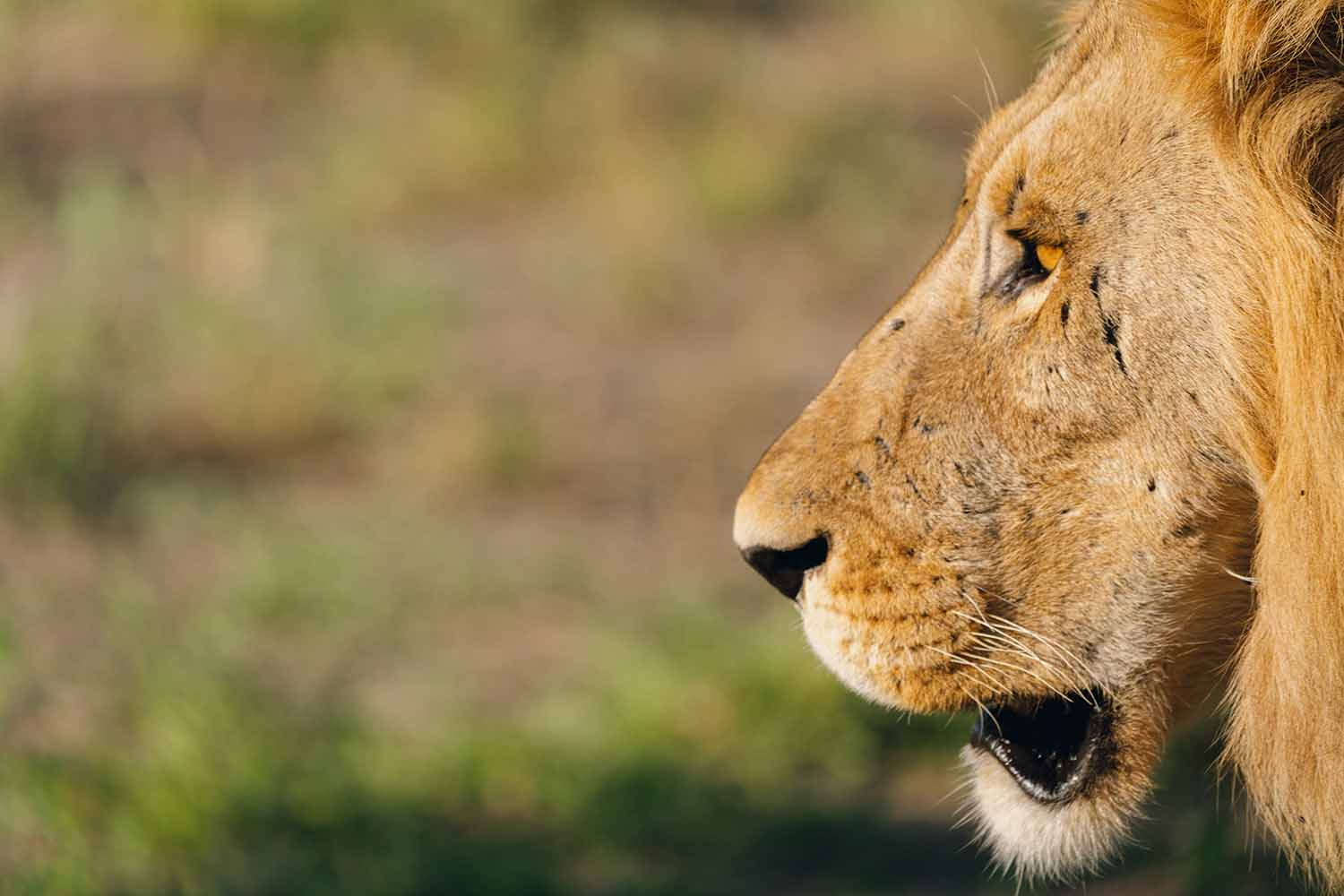
The area holds a number of very big, active lion prides, some of Botswana’s largest, hunting buffalo in open floodplain in daylight, along with leopard in the mopane woodland, matriarchal hyena clan dens near camp, wild dog packs that den between June and August, and cheetah. Smaller predators include bat-eared fox, jackal, African wild cat and serval.
Off the fixed itinerary
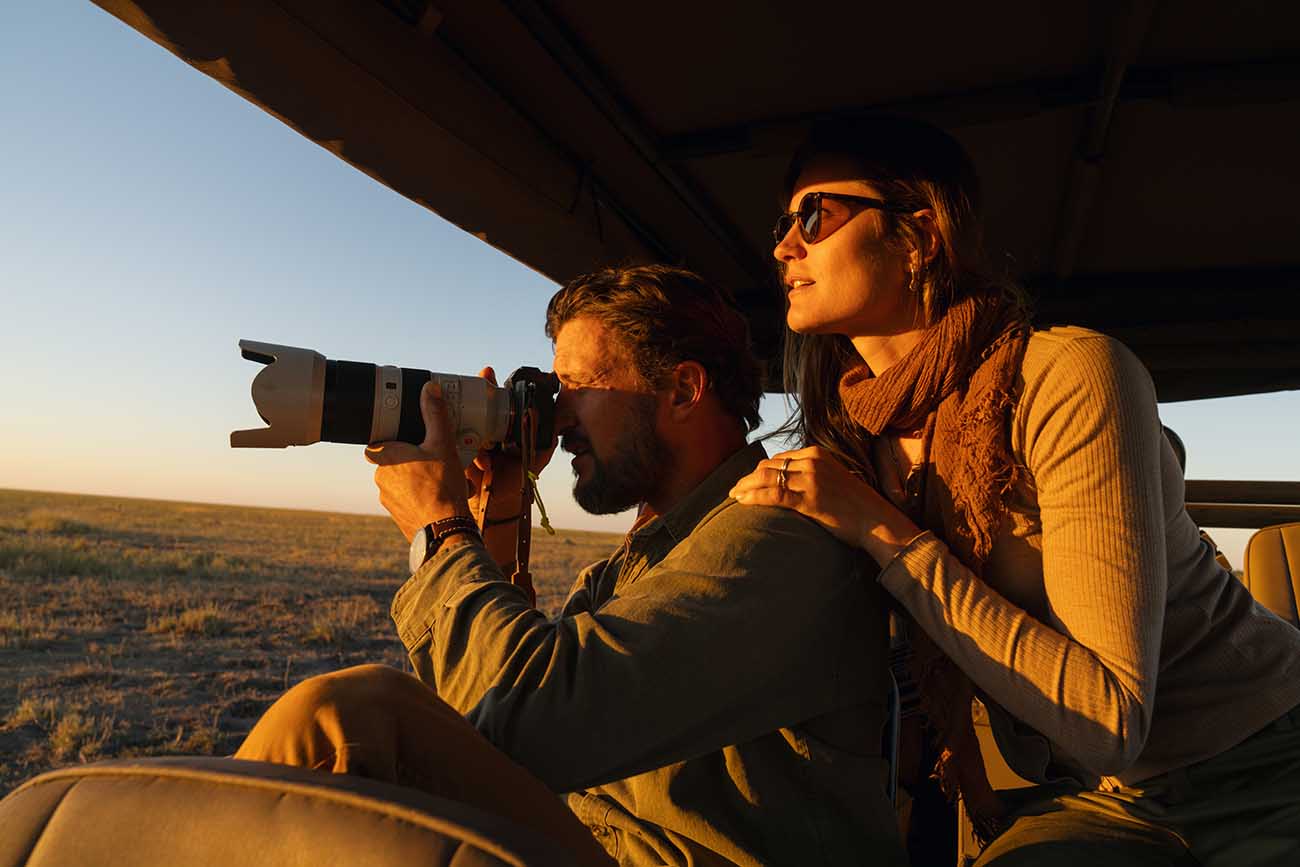
The camp describes itself as Botswana off the map, and runs without conventional safari timings: bush lunches are packed so guests can stay out with the game rather than return for a set mealtime.
Dining and the sky
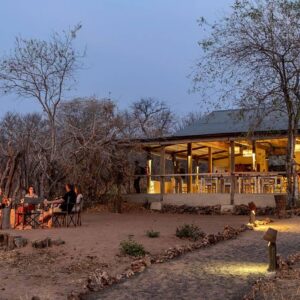
Sundowners look out over uninterrupted grassland, with the curvature of the earth visible on the horizon. Dining under the stars is part of the standard rhythm rather than a one-off event.
Who it suits
Travellers who want raw, uncrowded country and serious predator viewing, and who like the idea of sleeping with the roof open. It is a strong contrast partner to a water-based Delta camp.
Check availability around Maun
Compare available stays around Maun through our accommodation partner. The results cover the wider area rather than this property alone, and BTG publishes no rate here.
Botswana Travel Guide may earn a commission when you book through selected links, at no additional cost to you. It does not change what we list or what we say about it.