Where Chobe Elephant Camp sits
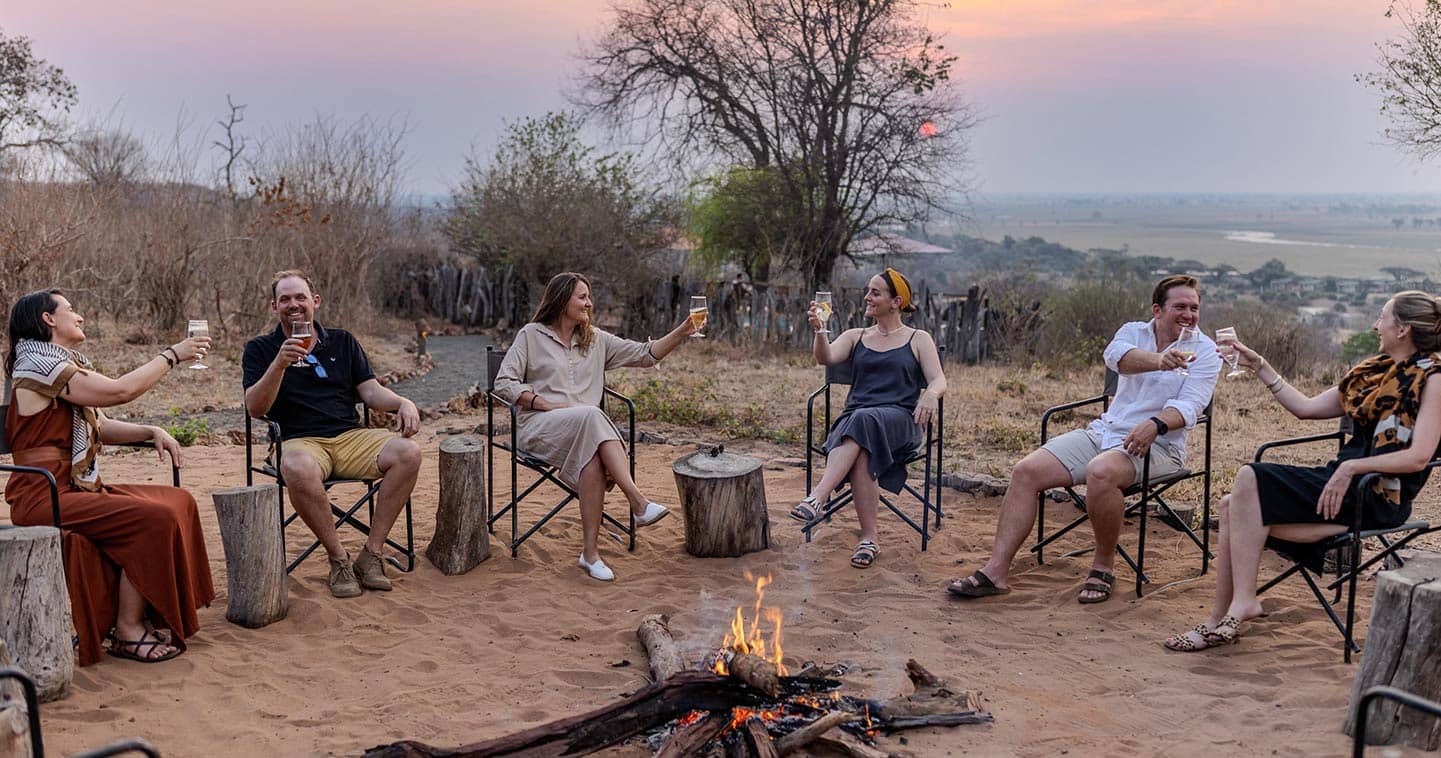
Chobe Elephant Camp stands on the western boundary of Chobe National Park, in the Chobe Forest Reserve, built high on a rocky ridge that looks out over the Chobe River floodplains. The position is the point of the camp: rather than sitting on the riverbank in the busy Kasane strip, it looks down on the floodplain from a distance, with the park below and in front of it.
Built from sandbags
The camp is unusual in construction. It is built from red Kalahari sand packed into sandbags, which act as a natural insulator against the heat — a genuinely different approach from the timber-and-canvas norm, and one that keeps the rooms cool through the middle of the day without heavy air-conditioning loads.
The rooms
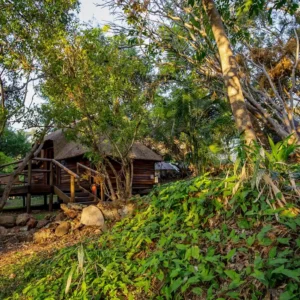
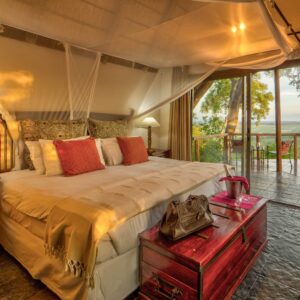
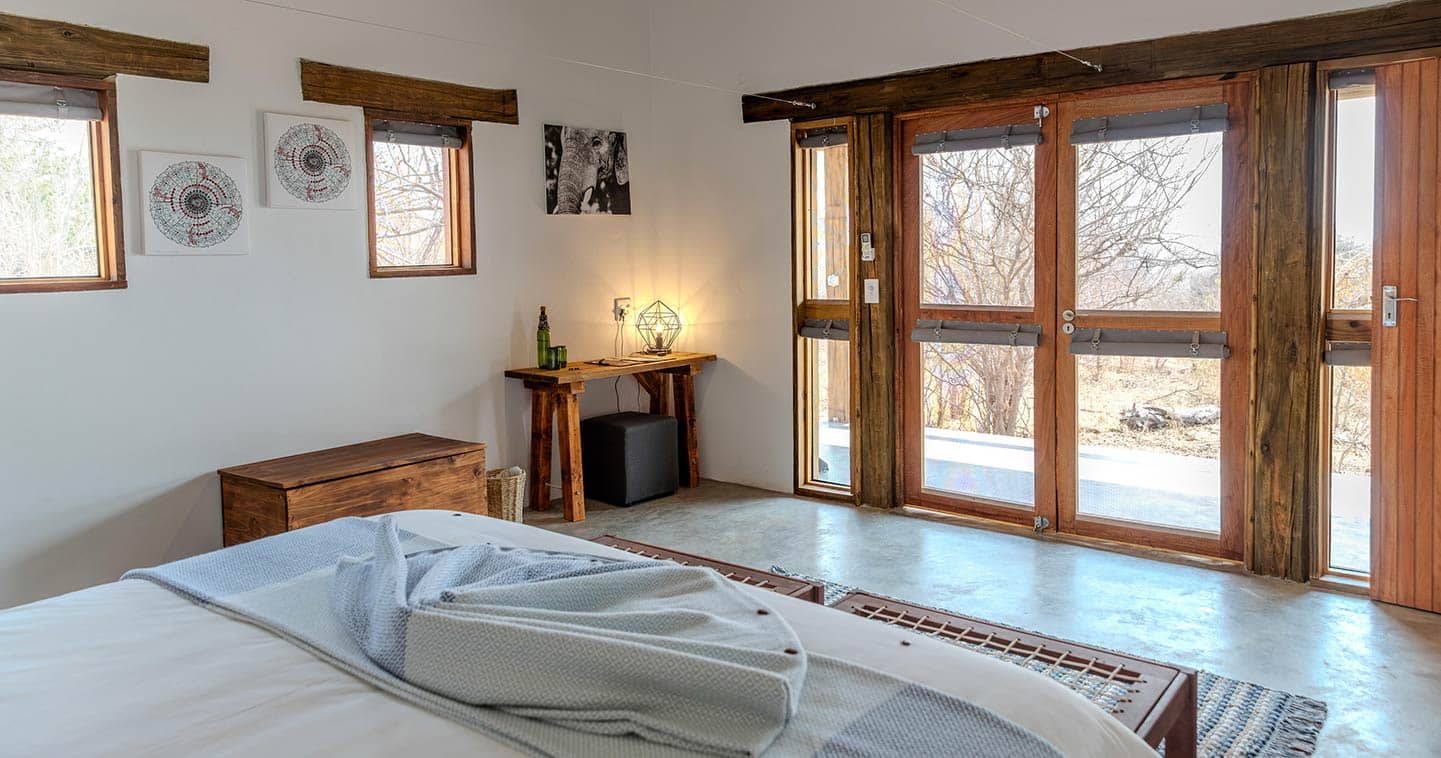
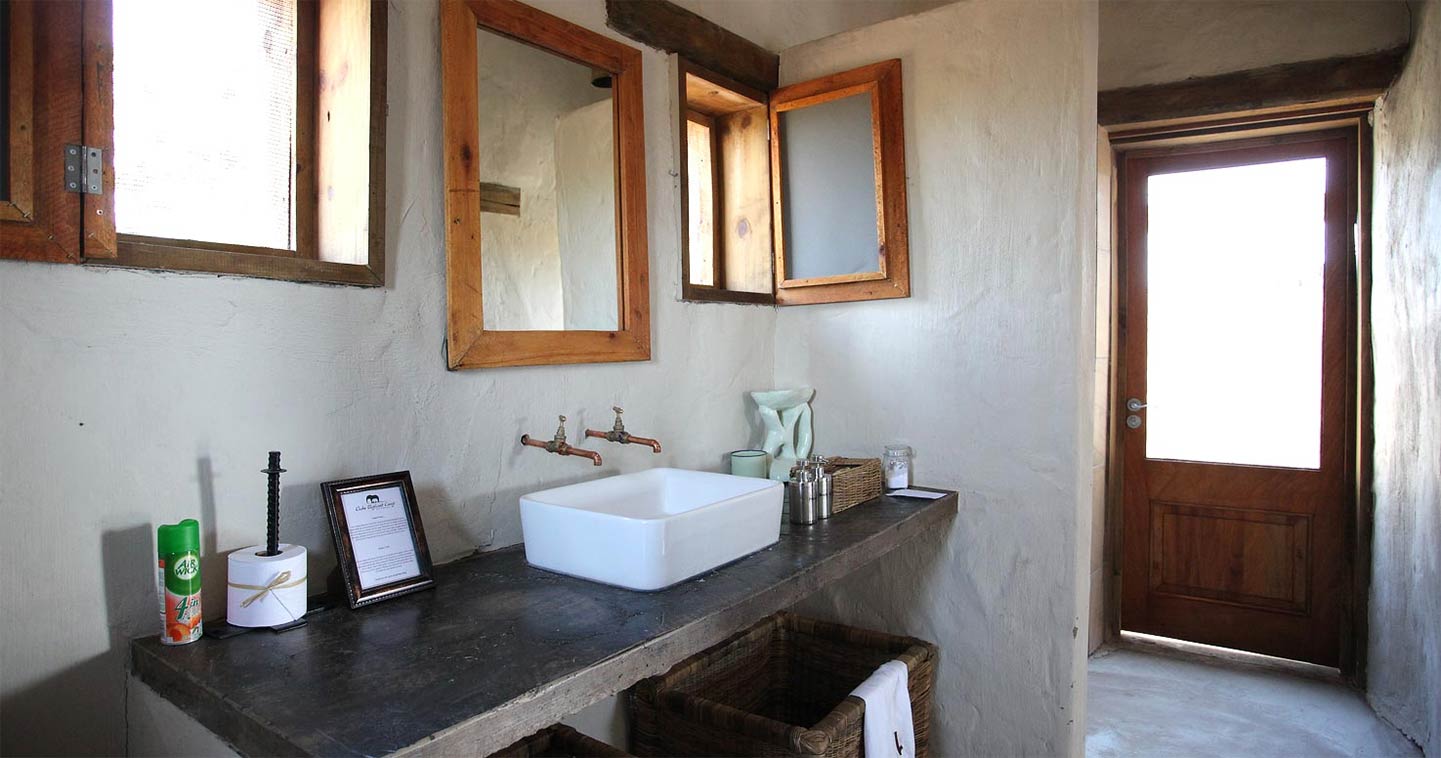
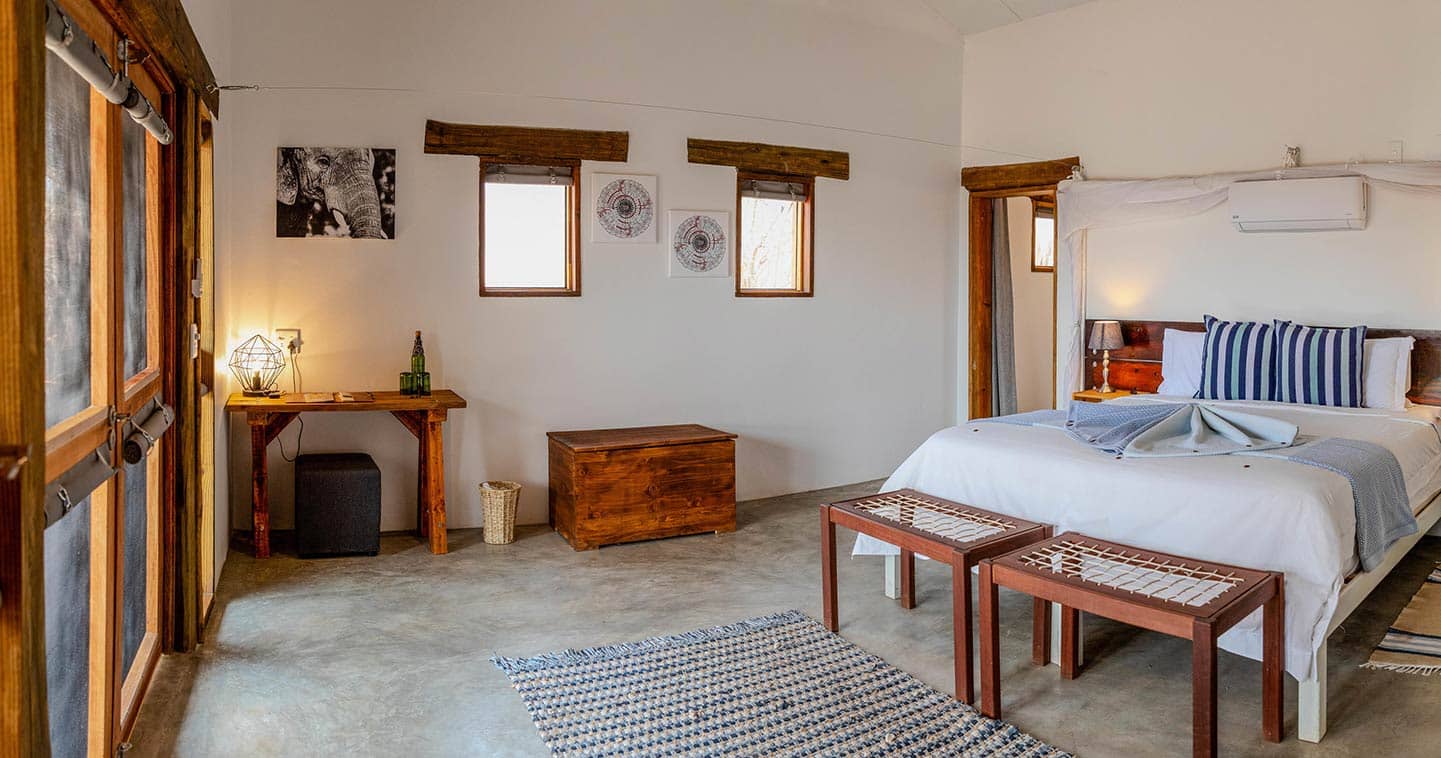
There are ten rooms and one family suite, taking twenty-four guests in total. All are en-suite, with both indoor and outdoor showers, polished floors, exposed wooden beams and weathered furniture, and each has a covered verandah facing the view. Sandy walkways link the rooms to the main area.
The main lodge
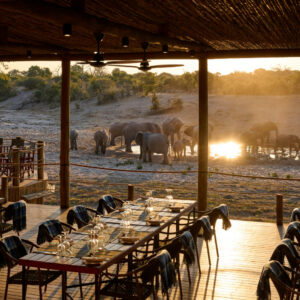
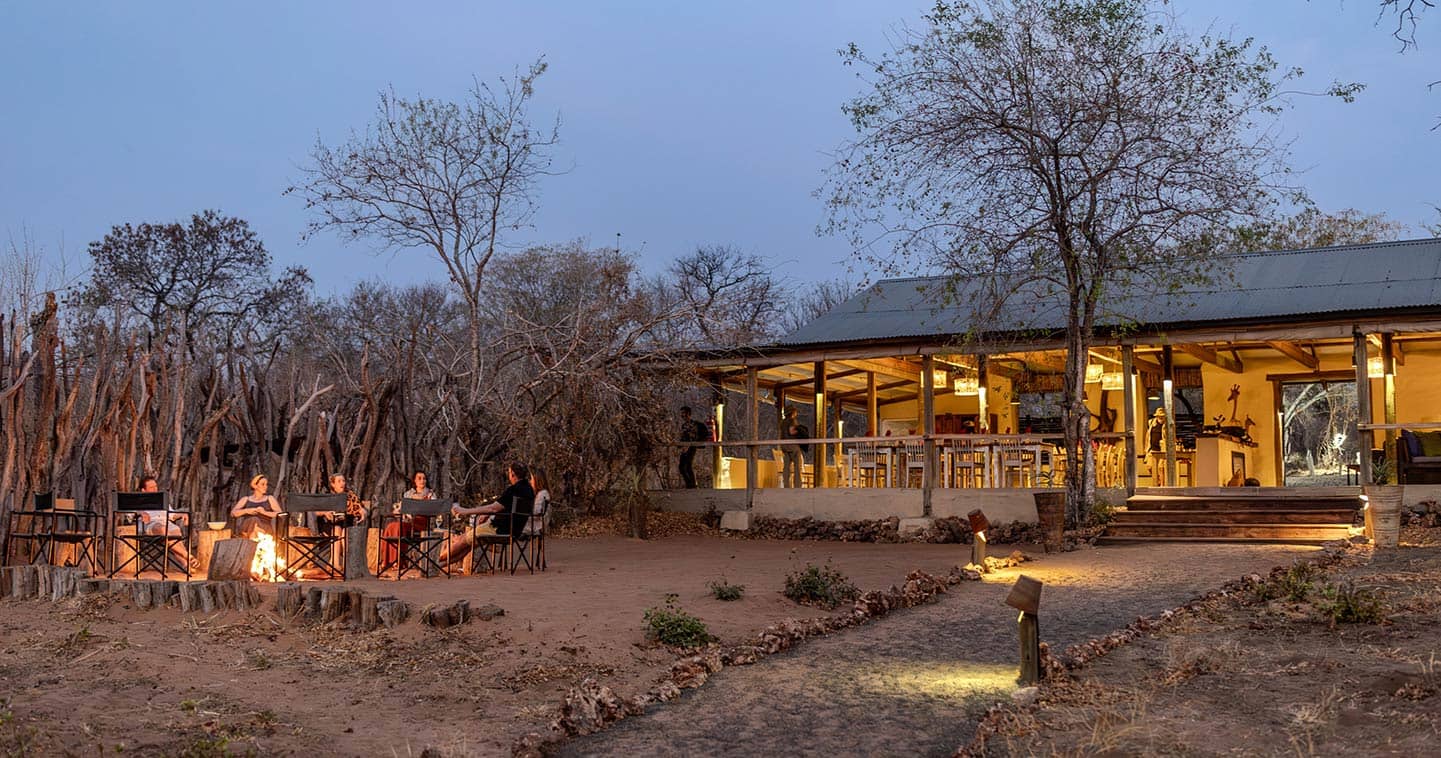
The main lodge holds the lounge, dining area, bar and a reading area, with a swimming pool set on raised decks. The layout keeps the communal space oriented outward to the floodplain rather than inward.
Game drives
Game drives run into Chobe National Park and the surrounding forest reserve. Chobe carries one of the densest elephant populations in Africa, and the dry-season concentrations along the river are the main event, but the forest reserve on the camp’s own side is quieter and productive in its own right.
River cruises
Boat cruises on the Chobe River are run as a standard activity. The river is where Chobe’s game viewing is at its most reliable — elephant crossing to the islands, buffalo herds on the floodplain, hippo and crocodile, and exceptional birding from the water.
Walking safaris
Guided safari walks are offered with professional guides. Note that the camp does not permit children under twelve on walking activities, and the minimum age at camp is two.
Village visits
Local village tours are offered alongside the wildlife activities, guided by camp staff. This is one of the few Chobe properties that builds a cultural component into the standard programme rather than treating it as an add-on.
When to visit
The dry months from May to October concentrate game on the river and are the strongest for classic Chobe viewing, with elephant numbers peaking late in the dry. The green season from November to April brings migrant birds, newborn game and dramatic skies, and the floodplain below the camp turns green.
Who it suits
Travellers who want Chobe’s game without staying in the Kasane hotel strip, and who value a view and a quieter setting over riverfront frontage. The sandbag construction and the ridge position make it a distinctive alternative to the conventional Chobe river lodge.