
Where Mokolwane sits
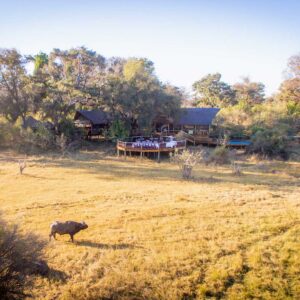
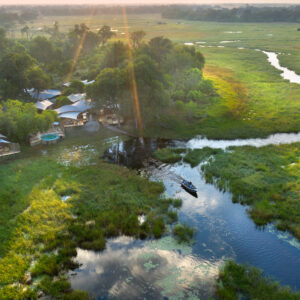
Mokolwane stands among a scattering of mokolwane palms in the Xudum concession, NG29, in the southern Okavango Delta. The concession runs to 180,000 hectares, and Mokolwane is the only camp for miles in any direction.
Leopard country
This is the camp’s defining fact: the Xudum concession carries the third-highest recorded density of leopard anywhere in Africa. Leopard are territorial and generally hard to see, so a place where they occur at this concentration is genuinely unusual.
Living With Leopards
The wildlife filmmaker Brad Bestelink worked extensively in this area filming the Netflix documentary “Living With Leopards”, which was shot here and received five Emmy nominations in 2025. The film is a fair preview of what the concession looks like.
The wider game
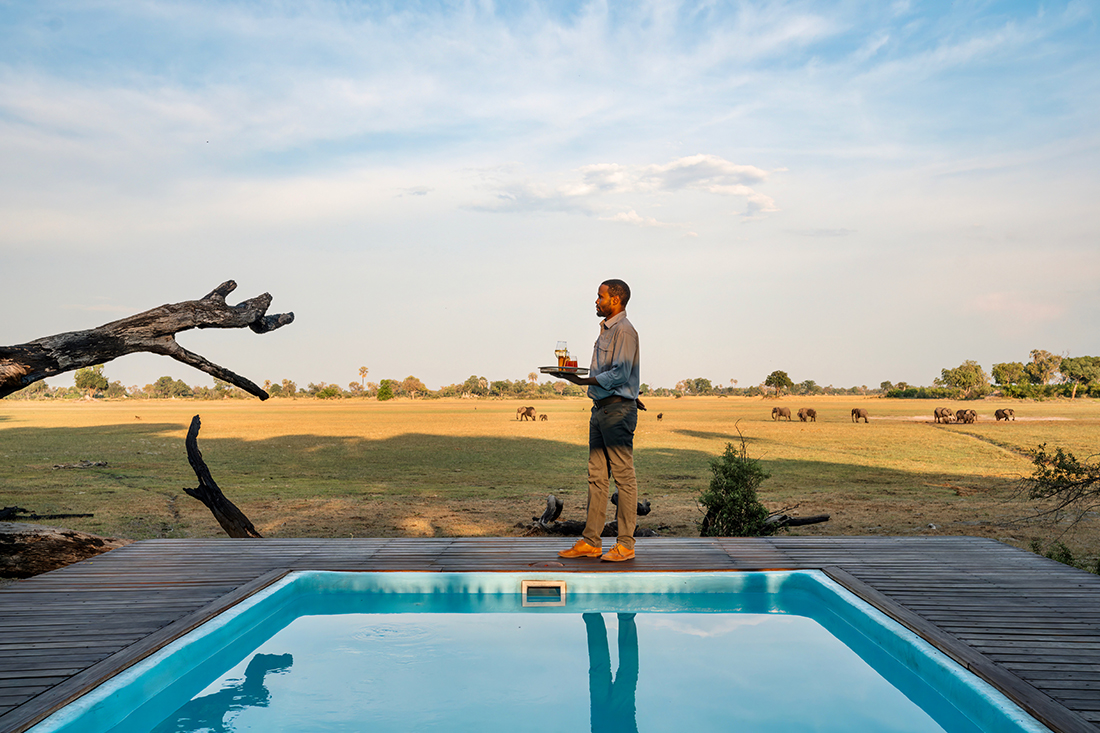
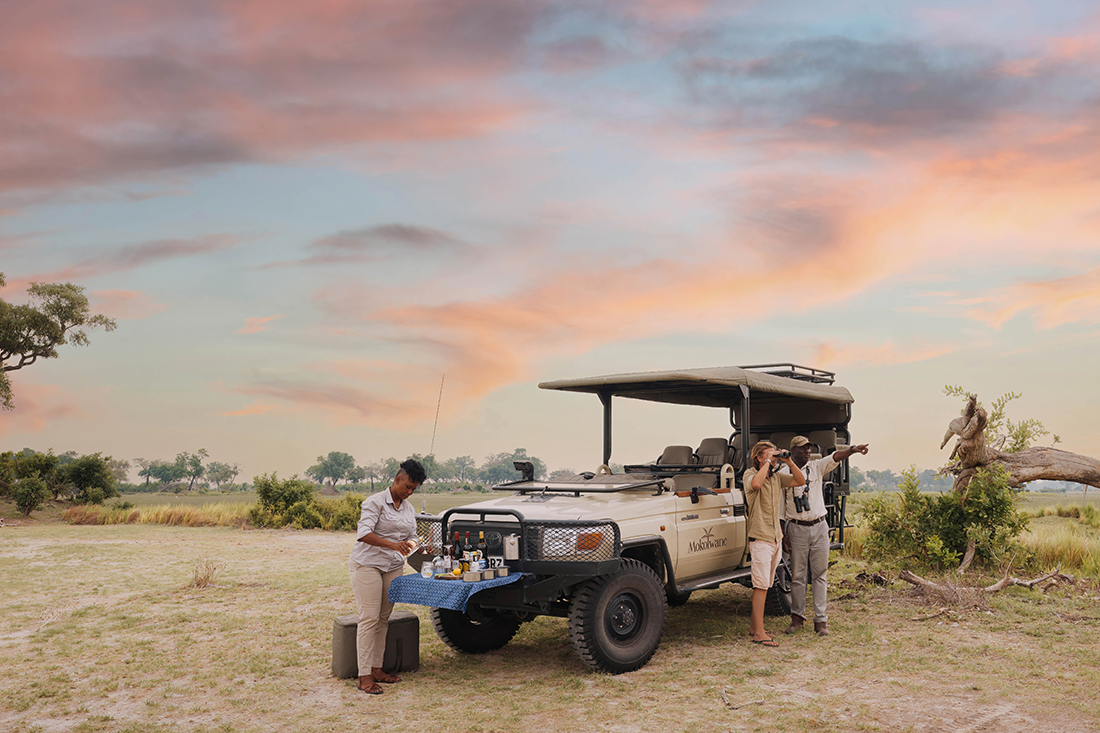
Beyond the leopard, the concession holds herds of elephant and buffalo and the full set of Okavango predators. The 180,000 hectares gives the animals room and gives the camp uncontested traversing.
The camp
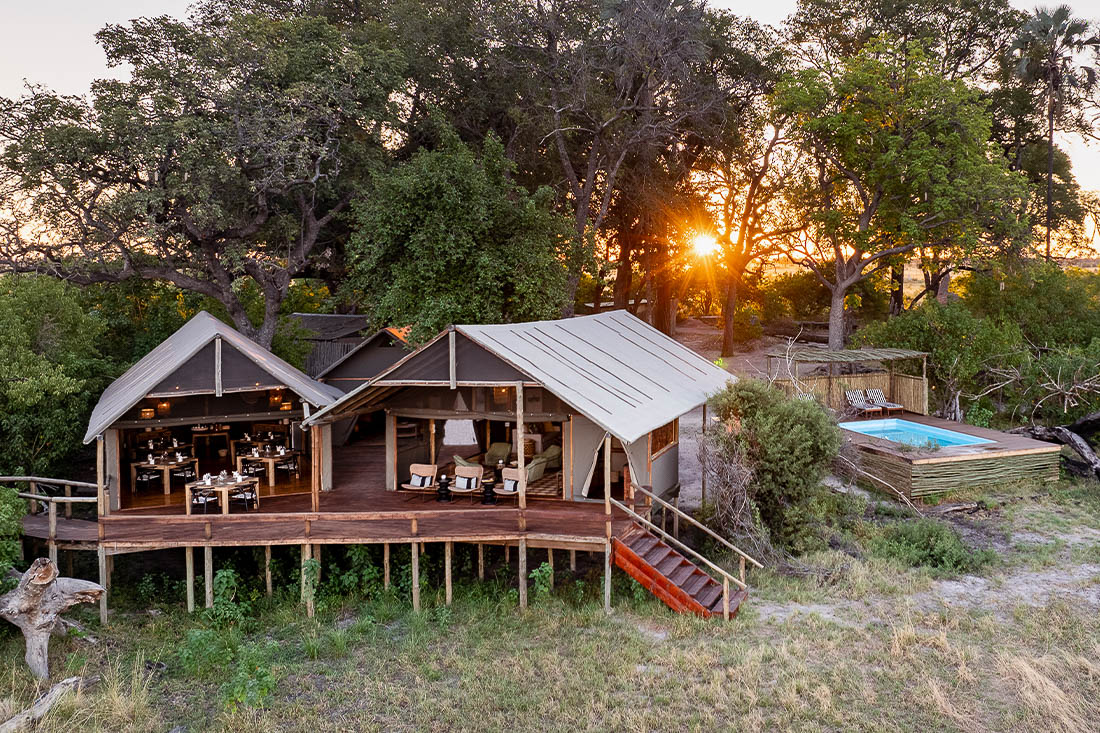
There are seven rooms. The operator describes it as a special little camp, big on adventure, and it is well suited to exclusive-use groups — seven rooms is a size a family or a group of friends can take over entirely.
Solitude
Being the only camp for miles around is the other thing guests notice. There are no other vehicles at a sighting and no other camp’s lights at night, which is increasingly rare in the Delta.
The main area
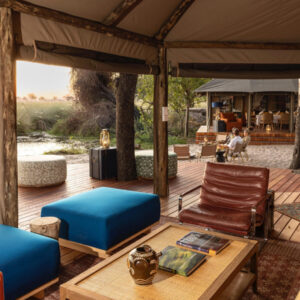
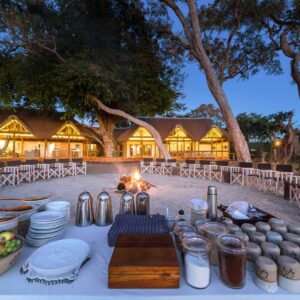
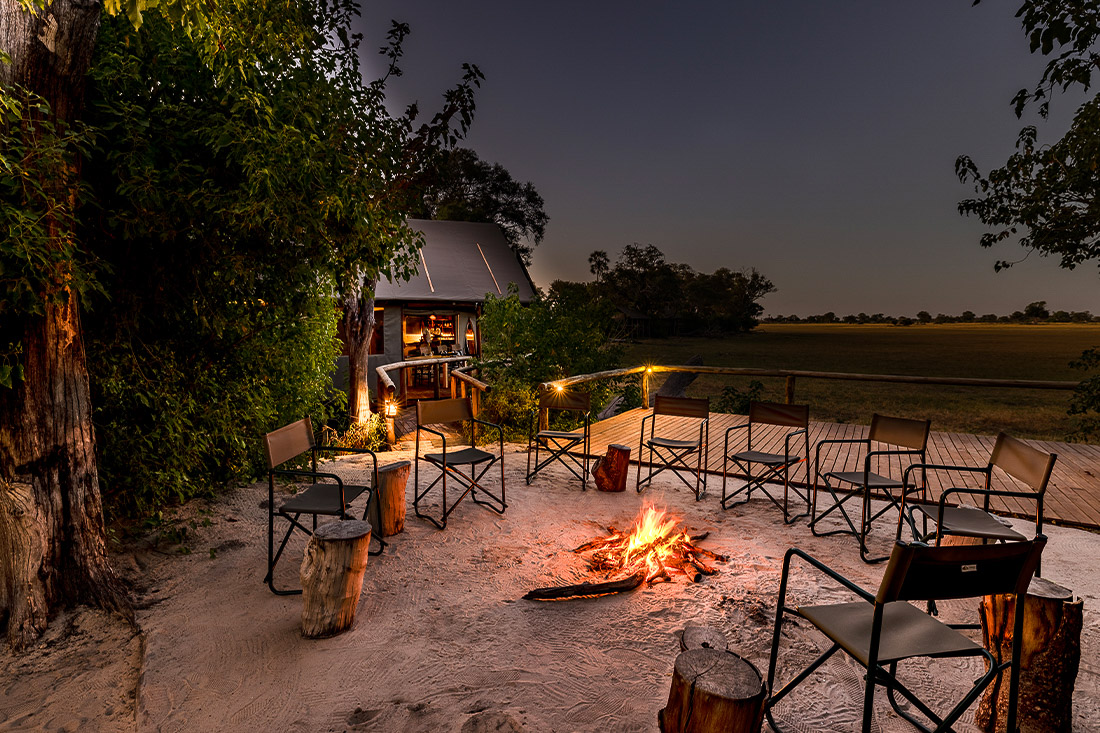
The camp has a main area, a viewing deck and a firepit set among the palms, arranged around the view rather than around a building.
The palms
Mokolwane is the local name for the real fan palm that gives the camp its name and defines the landscape here. The palm islands are characteristic of the southern Delta and are quite different in feel from the ebony and leadwood country further north.
Who it suits
Travellers whose priority is leopard, photographers, and groups looking for exclusive use of a small camp in a very large private area. It suits a stay of several nights rather than a single night, since leopard viewing rewards patience.
When to visit
The camp is open year-round. The dry months concentrate game and improve visibility as the bush thins; the green season is quieter and better for birds and newborn animals.