
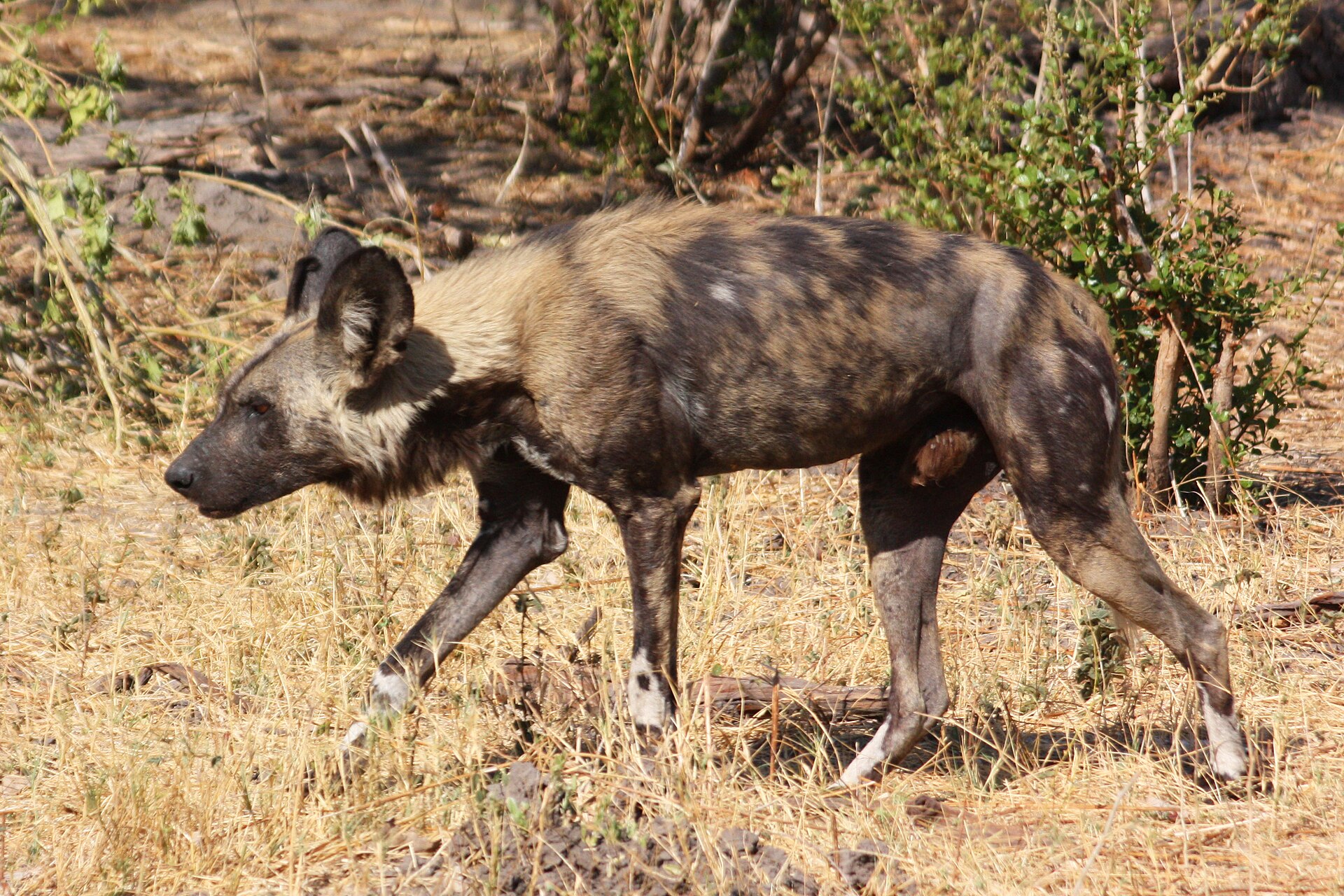
African wild dogs in Botswana range across large territories and can cover substantial distances in a day. That mobility is the reason a productive area can be quiet for several days and then produce an extended sighting when a pack returns.
Botswana remains an important country for the species, and UNESCO includes African wild dog among the endangered large mammals supported by the Okavango Delta. Importance is not the same as certainty. Honest planning improves the odds without converting a wild animal into an appointment.
Last checked
19 September 2026. Conditions, rules and operator arrangements can change. Confirm volatile details with the responsible authority or operator before travelling.
In this guide
African wild dogs in Botswana: Habitat matters more than a camp list
Wild dogs use varied savanna, woodland and floodplain mosaics where prey is available and packs can move. Northern Botswana, including the Okavango and adjacent landscapes, provides large connected areas that suit this ranging behaviour.
Ask guides about recent pack movements and denning history, but do not choose accommodation from an old sighting report alone. Packs change territory, split, merge and lose individuals.
Denning changes the pattern
During denning, a pack’s movements become more anchored because adults return to pups. This can increase local predictability, but responsible operators protect the den from crowding and disturbance.
Do not request an off-limits approach or share a precise den location publicly. A longer, quieter observation at a respectful distance is better for the animals and often better for understanding behaviour.
Choose time in habitat, not a promise
A guided stay in suitable northern Botswana habitat can improve the search while keeping expectations honest. Compare areas, activity rules and length of stay before choosing a base.
Season affects visibility, not existence
Shorter grass and concentration around remaining water can improve visibility in the dry season. In greener months, vegetation is thicker but young antelope, dramatic skies and dispersal across the landscape create different opportunities.
A pack may be present but beyond the road network. Private concession permissions can help guides respond to tracks, while public-reserve rules restrict driving to established routes. Neither setting guarantees contact.
How to improve the odds responsibly
Stay three or more nights in one suitable area, join early and late drives, and tell the guide the species is a priority without making it the only acceptable outcome. Tracks, calls and reports from other vehicles help shape a search.
Avoid constant relocation between camps. Time in one pack’s range is usually more useful than repeatedly resetting the search. A private vehicle can offer patience and flexibility, but only within the area’s rules.
Read the sighting as behaviour
Wild dogs are social hunters with complex greeting, resting and feeding behaviour. Give the pack space to choose its direction. Do not pressure a guide to block the animals or crowd a hunt.
Photography should not displace observation. Watch how individuals interact, how the pack responds to competitors and how quickly the scene changes. Even a brief sighting is richer when it is not reduced to a portrait.
A sensible African wild dogs in Botswana plan keeps a clear fallback for changing conditions, timing or availability.
African wild dogs in Botswana: improve the odds honestly
Searching for African wild dogs in Botswana begins with range, not a famous lodge name. Packs use large territories and can move far between mornings. Ask an operator whether the area has had recent pack activity, denning behaviour or only occasional passage, and when the information was recorded. A responsible answer describes probability and habitat without turning a recent sighting into a promise for your dates.
For African wild dogs in Botswana, early and late drives can be productive because packs may travel or hunt in cooler conditions. Listen to the guide’s explanation of tracks, alarm calls and direction of movement. Do not ask to race other vehicles or surround a pack. Space allows the dogs to choose their route, reduces pressure on a hunt and gives every vehicle a better chance of observing natural behaviour.
Judge a trip focused on African wild dogs in Botswana by the quality of the habitat and guiding even when the pack is absent. Learn to distinguish wild dogs from jackals and hyenas, notice the prey base and record other carnivores or scavengers. A multi-night stay in a suitable landscape improves opportunity, but no ethical operator can convert that opportunity into certainty.
- Ask when the latest local pack activity was recorded.
- Stay several nights in suitable connected habitat.
- Use tracks and behaviour as part of the experience.
- Never pressure a guide to crowd or chase a pack.
- Treat African wild dogs in Botswana as a probability, not a product.
African wild dogs in Botswana: practical checklist
- Choose connected habitat with recent, dated reports.
- Stay long enough for pack movement to work in your favour.
- Respect den buffers and never publish precise locations.
- Use a qualified guide and follow local driving rules.
- Treat any sighting as a privilege, not an entitlement.
Before relying on this guide for African wild dogs in Botswana, confirm the details that can change with the responsible authority or operator.
Sources for African wild dogs in Botswana
The main references used for this article were UNESCO’s Okavango Delta documentation, Botswana Tourism Organisation overview of wilderness and endangered species, IUCN Red List species account for Lycaon pictus. Where a source is old, incomplete or silent on an operational detail, the article says so instead of presenting an assumption as a rule.
Our wildlife and seasons guide places the species in the wider safari calendar.
The most accurate answer about African wild dogs in Botswana is probabilistic. Good habitat, enough nights and skilled guiding improve the odds, but the pack remains free to be somewhere else.