
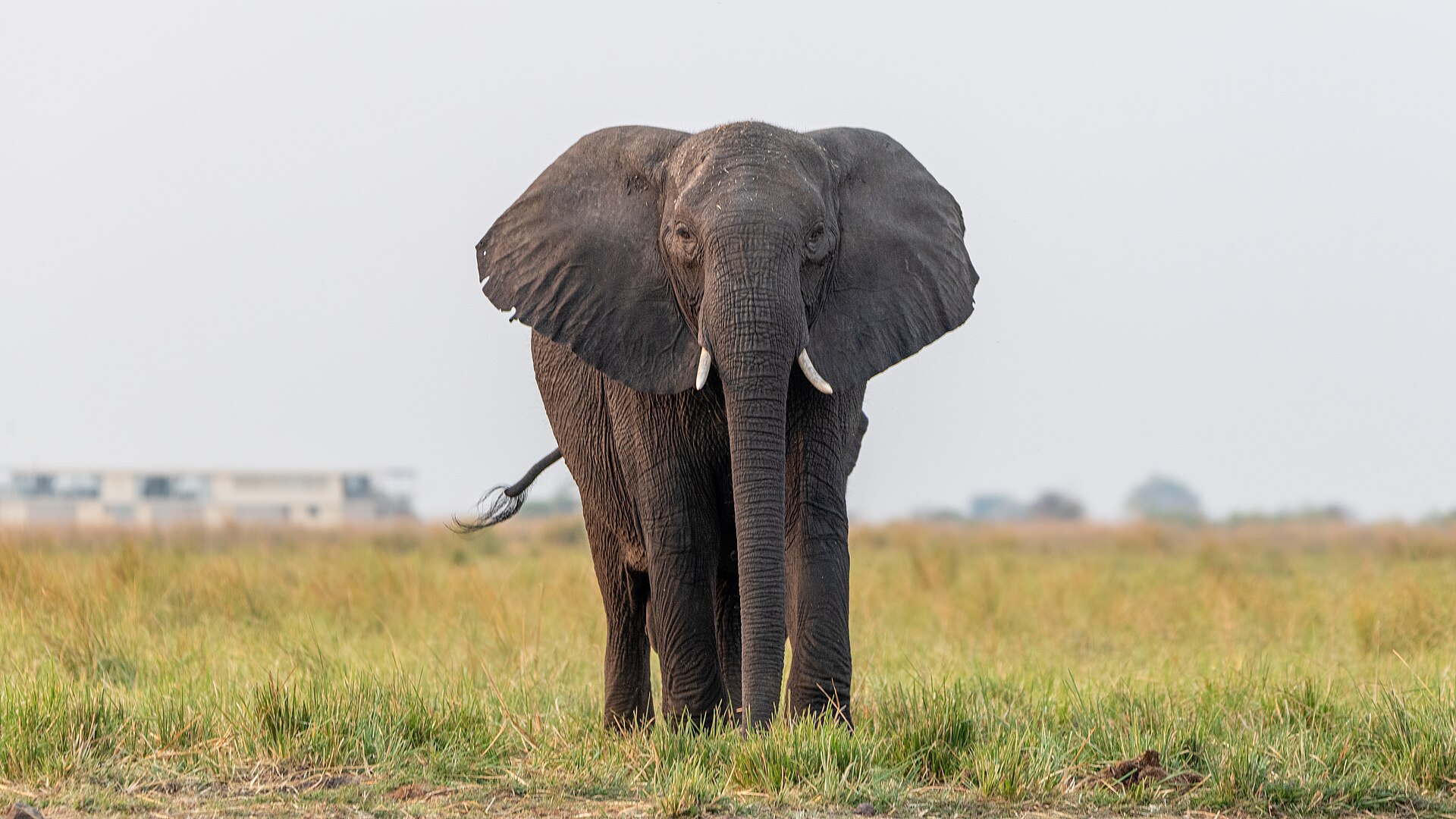
The Big Five in Botswana claim compresses a complicated wildlife picture into five names: lion, leopard, elephant, buffalo and rhinoceros. All five have been recorded in the country, but that national fact does not mean they are equally visible in one park or on one itinerary.
The phrase began as a hunting classification for animals considered difficult or dangerous to pursue on foot. It is now a marketing checklist. That history is useful because it explains why ecological significance, abundance and viewing quality were never the criteria.
Last checked
19 September 2026. Conditions, rules and operator arrangements can change. Confirm volatile details with the responsible authority or operator before travelling.
In this guide
Big Five in Botswana: Presence is not practical access
Elephant, buffalo, lion and leopard are widely associated with northern safari regions, though sightings still vary. Rhinoceros has a much more restricted and security-sensitive distribution.
A country can therefore contain all five while a normal visitor route has little or no realistic rhino access. Ask where and under what conditions a claim applies rather than accepting a national label as a trip promise.
Rhino changes the calculation
Botswana’s rhino populations have faced severe poaching pressure and management responses. Exact locations should not be demanded or published. Some sanctuaries and managed areas provide legitimate viewing opportunities.
BTO describes black and white rhino at Khama Rhino Sanctuary and white rhino at Mokolodi. Those experiences are geographically separate from many northern itineraries, so adding rhino can change the route materially.
Build the trip around habitats
Compare riverfront, Delta, Kalahari and sanctuary experiences instead of treating wildlife as one national checklist. A varied itinerary gives better context and more resilient expectations.
The label ignores Botswana’s strengths
Wild dogs, cheetahs, brown hyenas, wattled cranes, red lechwe and the Delta’s flood ecology can be more distinctive than completing a five-animal list. BTO itself highlights several of these threatened species.
A safari built only around the Big Five may rush through habitats and overlook behaviour. Botswana’s strongest experiences often come from time, space and the interaction between water and wildlife.
How to question a tour claim
Ask whether “Big Five safari” means all five occur somewhere in the country, have been seen historically in the operating area or are a realistic target on the named itinerary. Those are different claims.
Request recent, dated evidence without pressuring an operator to disclose sensitive rhino positions. A responsible answer uses probability and geography rather than certainty.
A better way to choose a safari
Choose habitats, activities and guiding quality first. A Chobe river stay, a Delta water-and-land camp and a Kalahari extension create ecological contrast even if they do not complete a checklist.
If the Big Five matters personally, build the route honestly and allocate enough time. Do not judge a guide, park or trip as a failure because one secretive or scarce species was not seen.
A sensible Big Five in Botswana plan keeps a clear fallback for changing conditions, timing or availability.
Big Five in Botswana: evaluate the claim before booking
A Big Five in Botswana claim should identify the geographic scope. A country-level statement means that all five species occur somewhere within national borders; it does not mean that one reserve, concession or itinerary regularly produces all five. Ask which species are resident in the area, which are occasional and whether rhino information is intentionally restricted for security reasons.
Compare a Big Five in Botswana promise with the trip’s real habitat and route. Chobe, the Okavango, the Kalahari and rhino-focused areas offer different assemblages and logistics. Moving long distances only to complete a checklist can remove time from the landscapes that make Botswana distinctive. If one species is a priority, ask about suitable habitat and honest recent patterns without demanding a guaranteed encounter.
Use Big Five in Botswana language as a prompt for better questions, not as a quality rating. A safari with wild dogs, sable, roan, cranes, desert-adapted animals or complex predator-prey behaviour can be exceptional without completing the traditional five. Responsible operators should describe what the area supports and how they manage viewing, rather than presenting a colonial hunting label as the only measure of success.
- Ask whether the claim refers to the country or one property.
- Separate resident species from occasional visitors.
- Respect security limits around rhino information.
- Compare habitat quality and guiding, not only a checklist.
- Treat Big Five in Botswana sightings as uncertain wildlife events.
Big Five in Botswana: practical checklist
- Ask what geographic area the Big Five claim describes.
- Treat rhino locations as security-sensitive.
- Do not expect every species in one park.
- Prioritise habitat, guiding and time in the field.
- Include Botswana’s distinctive non-Big-Five species.
Before relying on this guide for Big Five in Botswana, confirm the details that can change with the responsible authority or operator.
Sources for Big Five in Botswana
The main references used for this article were BTO Khama Rhino Sanctuary guide, BTO Mokolodi Nature Reserve guide, BTO wilderness overview. Where a source is old, incomplete or silent on an operational detail, the article says so instead of presenting an assumption as a rule.
Our wildlife guide helps plan by habitat and season rather than by checklist.
The Big Five in Botswana is a defensible statement only at the national scale. At itinerary scale, it needs dates, places and honest odds. That smaller, more precise claim is the useful one.