
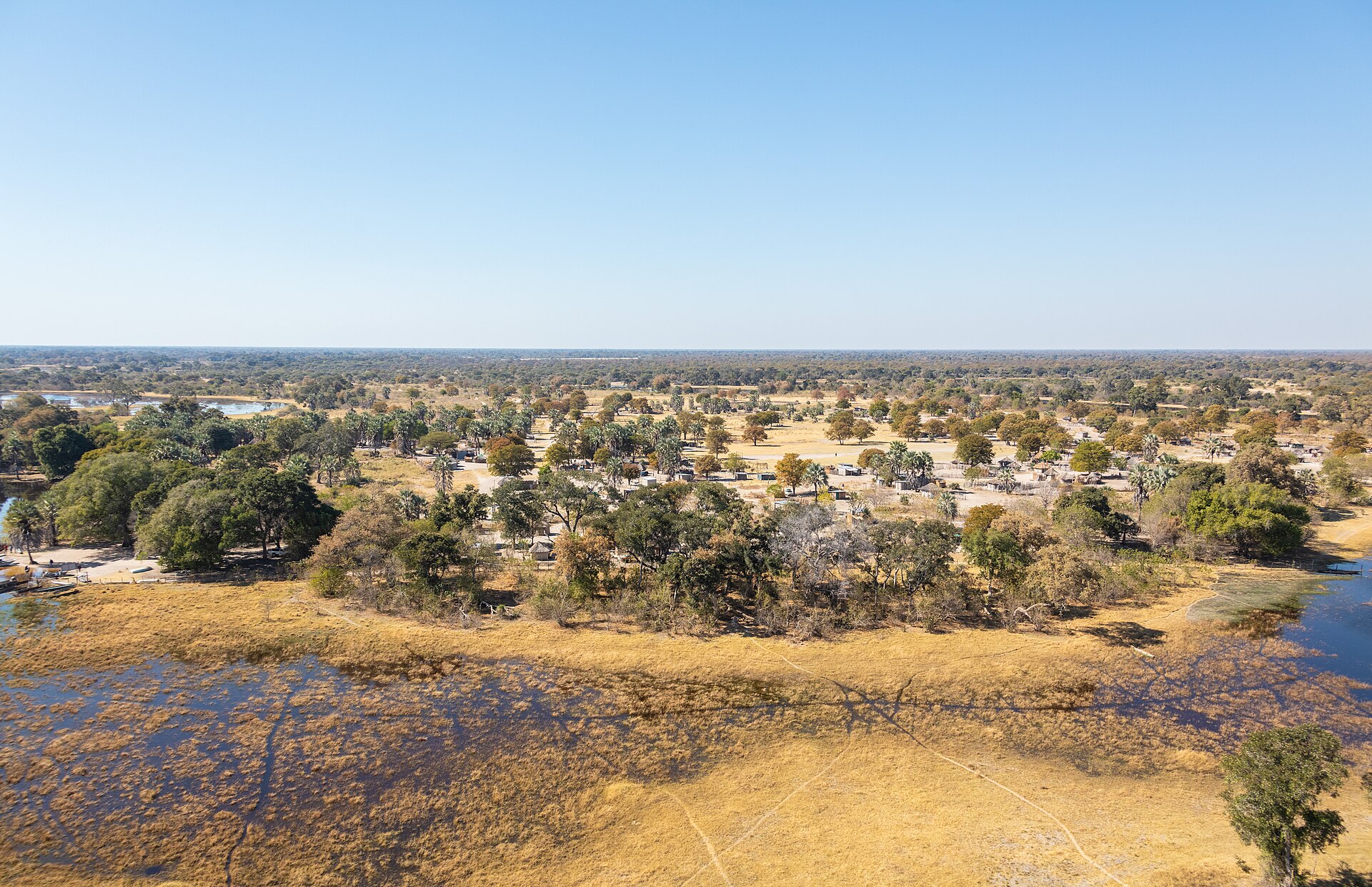
Okavango and Chobe belong naturally in one northern Botswana itinerary, but the map hides the cost of moving between them. Camps may require light-aircraft transfers, road sections can be seasonal, and a night in Maun or Kasane can be an essential connection rather than a destination stay.
The strongest combined trip usually gives each region at least three nights and limits the number of bases. Add the second region for contrast: floodplain and channels in the Delta, then the permanent river and accessible game-viewing network around Chobe.
Last checked
19 September 2026. Conditions, rules and operator arrangements can change. Confirm volatile details with the responsible authority or operator before travelling.
In this guide
Okavango and Chobe: Choose the order around flights and borders
Maun is the main gateway for the Okavango. Kasane serves Chobe and connects conveniently with Zambia and Zimbabwe. Start from the international flight pattern and any Victoria Falls extension rather than assuming one direction is always better.
An open-jaw plan that arrives through Maun and leaves through Kasane can avoid backtracking. Price the whole air journey before confirming camps, because a cheaper room is not a saving if it forces an extra charter or road day.
Give each region a clear job
Use the Okavango for the water-land mosaic, low-volume camps and activities that depend on the exact concession and season. Use Chobe for the riverfront, boat-and-vehicle combination and easier access from Kasane.
Avoid selecting two bases that provide nearly identical days. Ask each camp which activities operate in your month and what habitat a normal drive reaches. The point of a two-region trip is variety, not two different names on the same experience.
Compare the regions before choosing the camps
The useful decision is not simply Delta plus Chobe. It is which Delta habitat, which Chobe base and how the transfer works. Build the route from those details.
Pick one transfer strategy
Fly-in combinations reduce travel time but add luggage limits, small-aircraft logistics and weather sensitivity. BTO’s published guidance notes that light-aircraft transfers use soft bags and restrictive luggage allowances; confirm the current operator limit.
A road transfer can be rewarding but must be matched to route conditions. The Maun–Chobe corridor through Moremi and Savuti is not a routine road shortcut. It needs the right vehicle, confirmed access and multiple nights.
A realistic minimum shape
Three nights in one Okavango base and three nights near Chobe Riverfront form a workable core. Add a gateway night when flight schedules require it. With more time, add a second Delta habitat or Savuti only when it contributes something distinct.
One-night safari camps are usually poor value because arrival and departure compress the activity schedule. Two nights offer one full day; three nights create two full days and some resilience if weather disrupts a flight or boat activity.
Protect the final connection
Do not place a remote charter immediately before a separately ticketed international departure. Weather and operational delays happen. A final Kasane, Maun or regional gateway night is often the sensible buffer.
Keep travel insurance, emergency contacts and operator responsibilities clear. If one company has arranged the whole chain, confirm how it handles a missed connection caused by an earlier component.
A sensible Okavango and Chobe plan keeps a clear fallback for changing conditions, timing or availability.
Okavango and Chobe: protect time in both regions
An Okavango and Chobe itinerary works best when each region receives complete activity days, not only arrival and departure fragments. Count the nights after removing transfer time. A two-night stay usually offers one full day; weather or a late flight can then remove much of the intended experience. Add the second region only when the route still allows an unhurried morning, a realistic connection and a useful fallback.
Choose the Okavango and Chobe order around transport rather than a fixed idea of progression. Check the current flight or road connection, luggage rules, transfer windows and the location of the actual camps. A map pin in the Delta does not show the flying circuit, and “Chobe” may mean Kasane, the riverfront or a more remote concession. Door-to-door time is the number that belongs in the itinerary.
Keep the Okavango and Chobe experiences distinct. The Delta plan may emphasise channels, floodplain and mixed water-and-land activities, while the Chobe plan may use river and national-park access. Do not schedule identical activity formats simply to fill slots. If time is too short, choose one region well and leave the other for a later trip rather than paying for two rushed arrivals.
- Count full activity days after transfers.
- Confirm the exact camp and airstrip or road pickup.
- Check luggage limits before committing to flights.
- Use different activity strengths in each region.
- Drop one region if Okavango and Chobe cannot both breathe.
Okavango and Chobe: practical checklist
- Price flights and transfers before confirming accommodation.
- Give each region at least three nights where possible.
- Choose bases with genuinely different habitats or activities.
- Confirm light-aircraft luggage limits with the operator.
- Leave a buffer before the final international connection.
Before relying on this guide for Okavango and Chobe, confirm the details that can change with the responsible authority or operator.
Sources for Okavango and Chobe
The main references used for this article were BTO getting-there guidance, BTO Chobe National Park guide, UNESCO’s Okavango Delta documentation. Where a source is old, incomplete or silent on an operational detail, the article says so instead of presenting an assumption as a rule.
Use our Okavango Delta guide, Chobe guide and itinerary hub to compare the route.
Okavango and Chobe fit together when the transfer is treated as part of the design. Fewer bases and longer stays usually produce more time in the landscapes that justified the trip.