
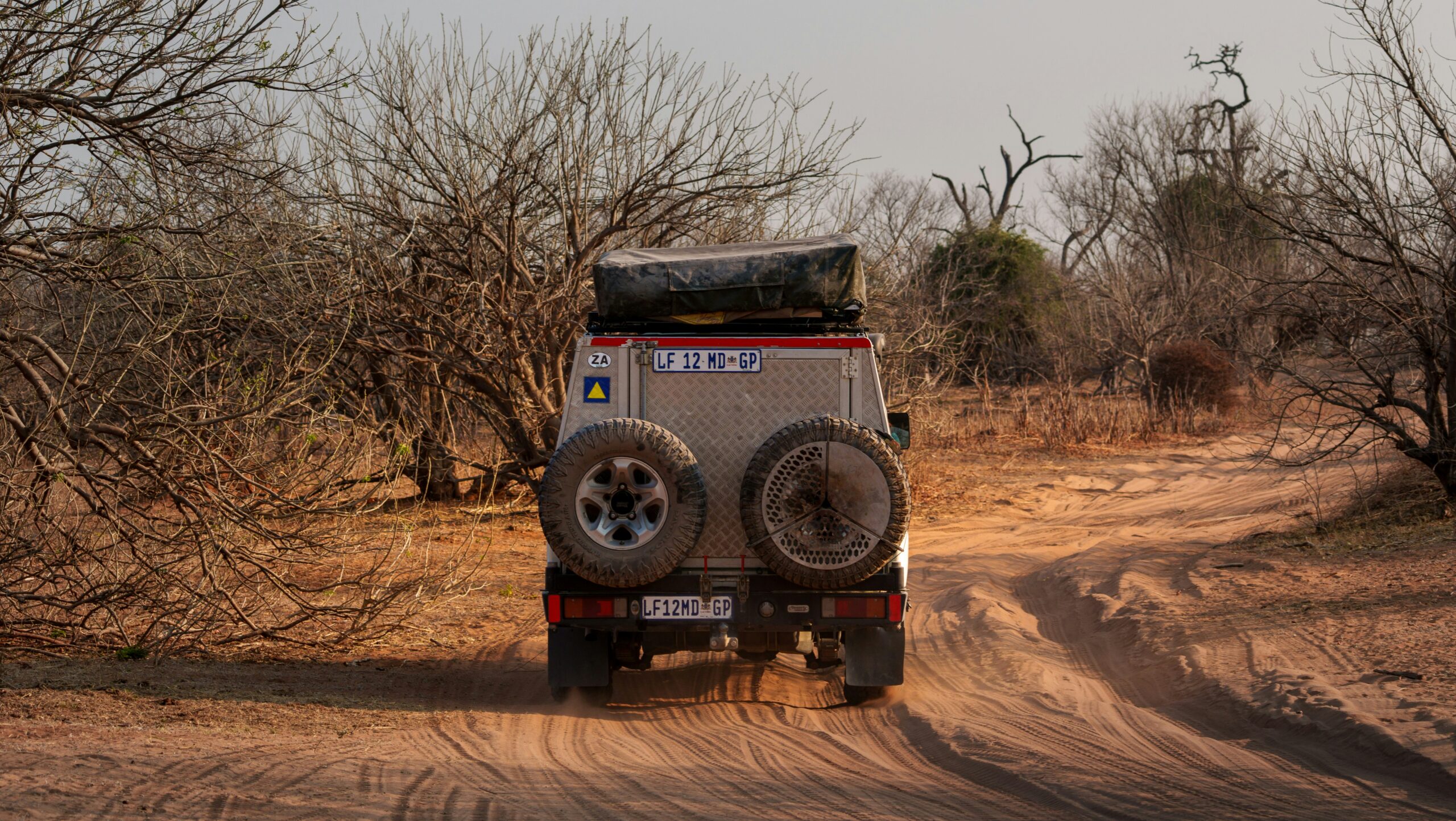
Deep sand driving is not about charging at an obstacle. It is about preparing the vehicle, reducing resistance, maintaining controlled momentum and stopping before heat or wheelspin turns a difficult patch into a recovery.
First-time drivers should learn the vehicle before reaching a remote park. Ask the rental company for a demonstration of four-wheel drive, low range, differential locks, jack points and recovery equipment, then practise only where it is legal and safe.
Last checked
19 September 2026. Conditions, rules and operator arrangements can change. Confirm volatile details with the responsible authority or operator before travelling.
In this guide
deep sand driving: Tyre pressure changes the footprint
Reducing tyre pressure lengthens the contact patch and can help the vehicle float over sand. There is no universal pressure for every tyre, load and speed. Use the rental company or tyre manufacturer’s guidance and carry an accurate gauge.
After deflating, drive slowly and avoid sharp steering that can unseat a tyre. Reinflate before sustained firm-road or tar driving. Heat builds quickly in an underinflated tyre at speed.
Use smooth momentum, not speed
Select the appropriate four-wheel-drive mode before the deepest section. Build steady momentum on the approach, keep steering inputs gentle and avoid abrupt acceleration. Spinning wheels dig holes.
If forward motion fades, ease off rather than burying the axles. Reverse along your tracks if possible, inspect the surface and change the plan. A second controlled attempt is better than repeated wheelspin.
Choose a route that fits the driver
Botswana offers self-drive itineraries with very different technical demands. Compare routes and stays before committing a first-time driver to deep sand every day.
Load and clearance matter
A roof-heavy vehicle leans more, handles worse and presses deeper into soft surfaces. Keep dense items low, secure every load and remove equipment that is not justified by the route.
Know the lowest points under the vehicle. Sand packed beneath the chassis can leave all four wheels with little grip. Stop early enough to clear sand safely instead of waiting until the vehicle rests on it.
Recovery starts with restraint
A shovel, traction boards, rated recovery points and correctly rated gear are useful only when the people involved understand them. Never attach a kinetic strap to a tow ball, and keep bystanders well clear.
Independent travellers should consider formal 4×4 training before remote routes. If a safe self-recovery is not clear, use communication equipment and wait for qualified help rather than escalating the hazard.
When to turn back
Turn back when the sand is worsening, tyre or transmission temperatures are rising, daylight is shrinking or the driver is fatigued. A second vehicle improves resilience but does not justify poor decisions.
Rain can change sand and create mud or water hazards beyond it. A track report should be current, and the vehicle contract must allow the route. The goal is to arrive without consuming the emergency margin.
A sensible deep sand driving plan keeps a clear fallback for changing conditions, timing or availability.
Deep sand driving: use a safe practice sequence
Before remote deep sand driving, practise the vehicle controls and recovery equipment somewhere legal, firm-edged and close to help. Confirm the rental company’s tyre-pressure range and learn where the compressor, jack points, towing eyes and recovery boards are stored. The exercise should include stopping, restarting, reversing in your own tracks and reinflating tyres; it should not include aggressive wheelspin or an improvised tow.
During deep sand driving, use smooth inputs and read the surface early. Select the appropriate four-wheel-drive mode before the vehicle is struggling, maintain steady momentum and avoid sharp steering. If progress slows, stop before digging the tyres into the chassis. Check tyre pressure, load, gear selection and the line ahead. A controlled correction uses less fuel and creates less damage than repeated high-rev attempts.
After a deep sand driving section, inspect the vehicle before returning to speed. Reinstate the road pressure recommended for the load, check tyre sidewalls, remove grass from hot areas if it is safe to do so and secure every recovery item. Note the fuel used against the plan. The objective is not simply to exit the sand; it is to reach the next stage with the tyres, cooling system and safety margin intact.
- Use only the rental company’s approved pressures and techniques.
- Stop before wheelspin buries the vehicle.
- Keep recovery gear accessible, not under the luggage.
- Reinflate before sustained firm-road speed.
- Never use another vehicle’s recovery point without confirming it.
deep sand driving: practical checklist
- Get vehicle-specific tyre-pressure guidance.
- Practise 4×4 controls before entering a remote area.
- Carry a gauge, compressor, shovel and rated recovery equipment.
- Secure the load low and within vehicle limits.
- Stop before repeated wheelspin, overheating or darkness.
Before relying on this guide for deep sand driving, confirm the details that can change with the responsible authority or operator.
Sources for deep sand driving
The main references used for this article were BTO self-drive camping guidance, BTO getting-there and driving guidance. Where a source is old, incomplete or silent on an operational detail, the article says so instead of presenting an assumption as a rule.
Our self-drive hub covers vehicle choice, fuel, water and route preparation in more detail.
Competent deep sand driving looks undramatic. The driver prepares early, uses gentle inputs, protects the tyres and turns around while the vehicle is still mobile.