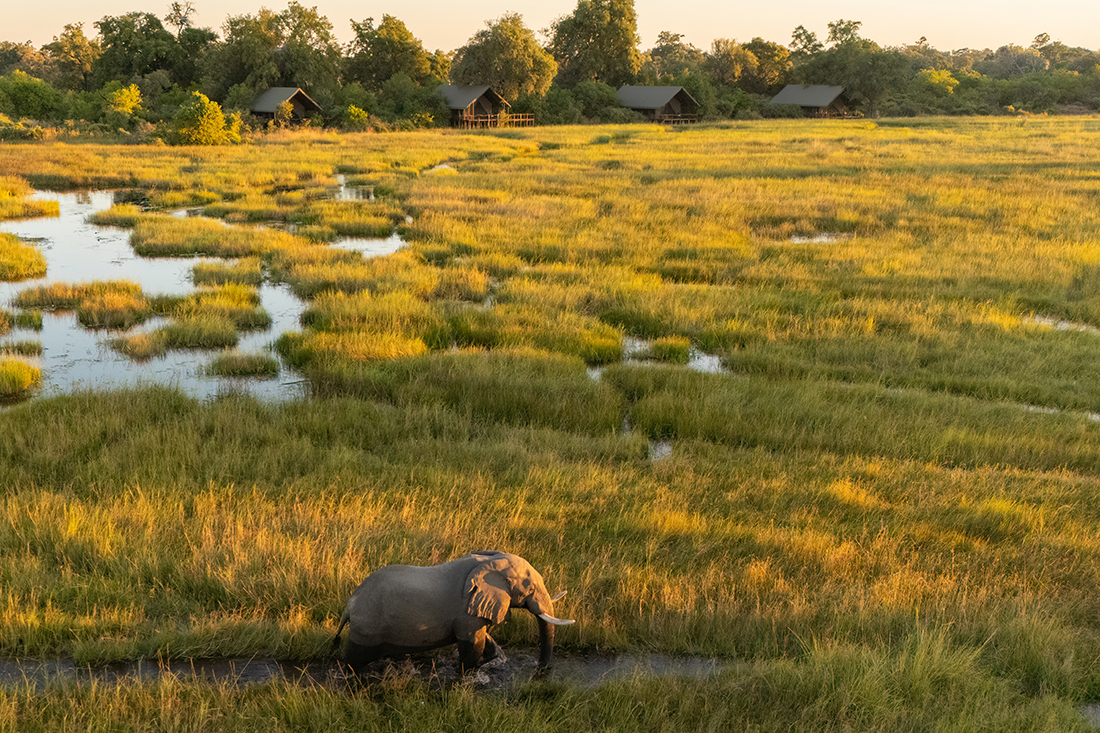
Where Duke’s Camp sits
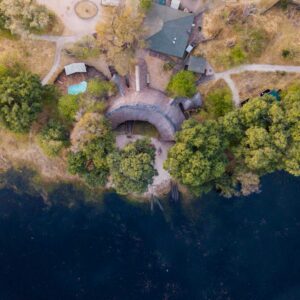
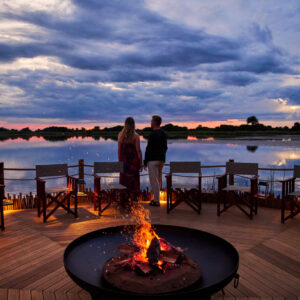
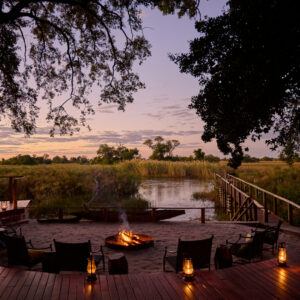
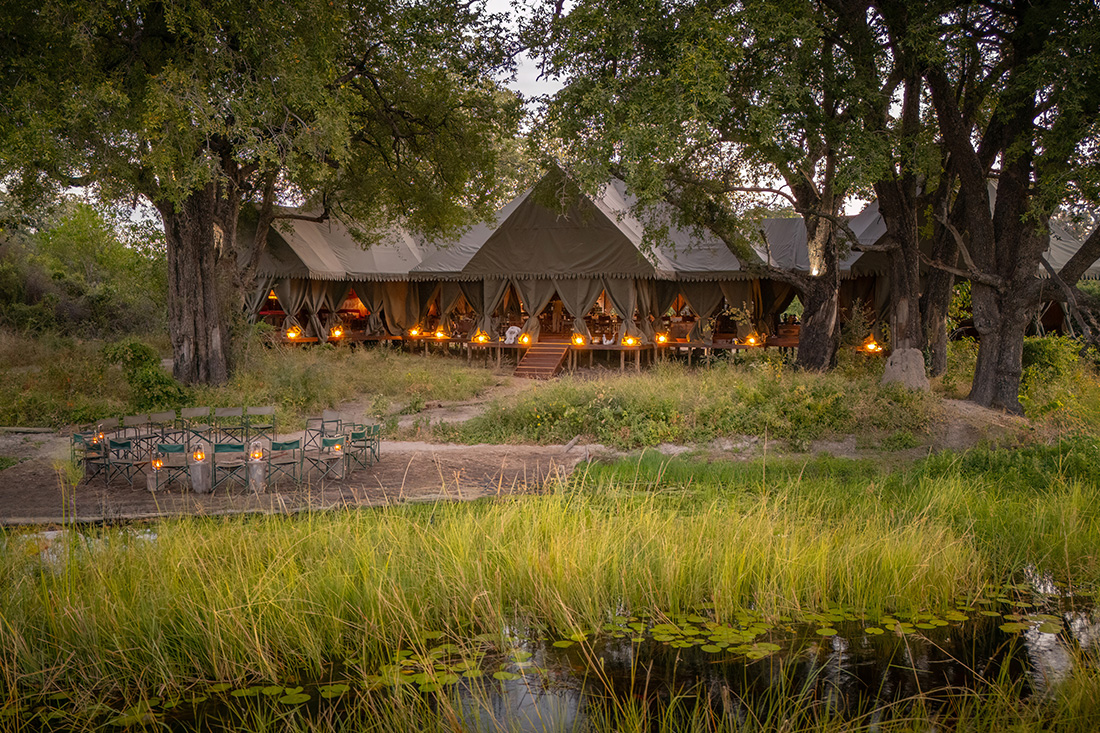
Duke’s Camp stands in the northern Okavango Delta, on a vast concession where the clear channels of the Delta wind around the camp. It is a permanent camp pitched on raised wooden decks beneath a canopy of ebony and leadwood trees, in the middle of a UNESCO World Heritage Site.
The lineage
The camp comes from the same family as Jack’s Camp on the Makgadikgadi Pans, which has been an icon of Botswana safari for more than thirty years and effectively invented under-canvas luxury in this country. Where Jack’s takes its cue from the desert, Duke’s takes its cue from the water — the same sensibility applied to an entirely different landscape.
The tents
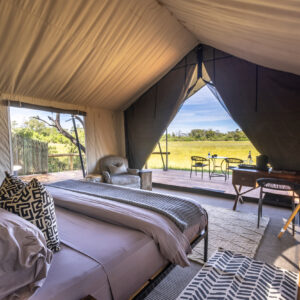
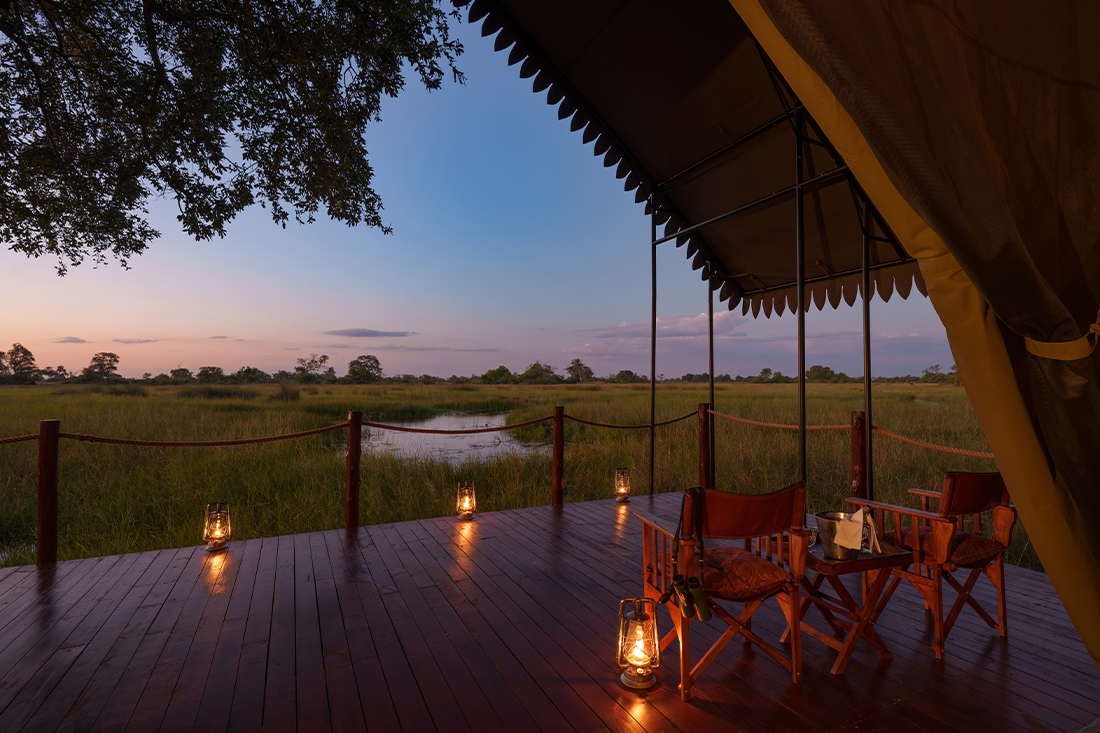
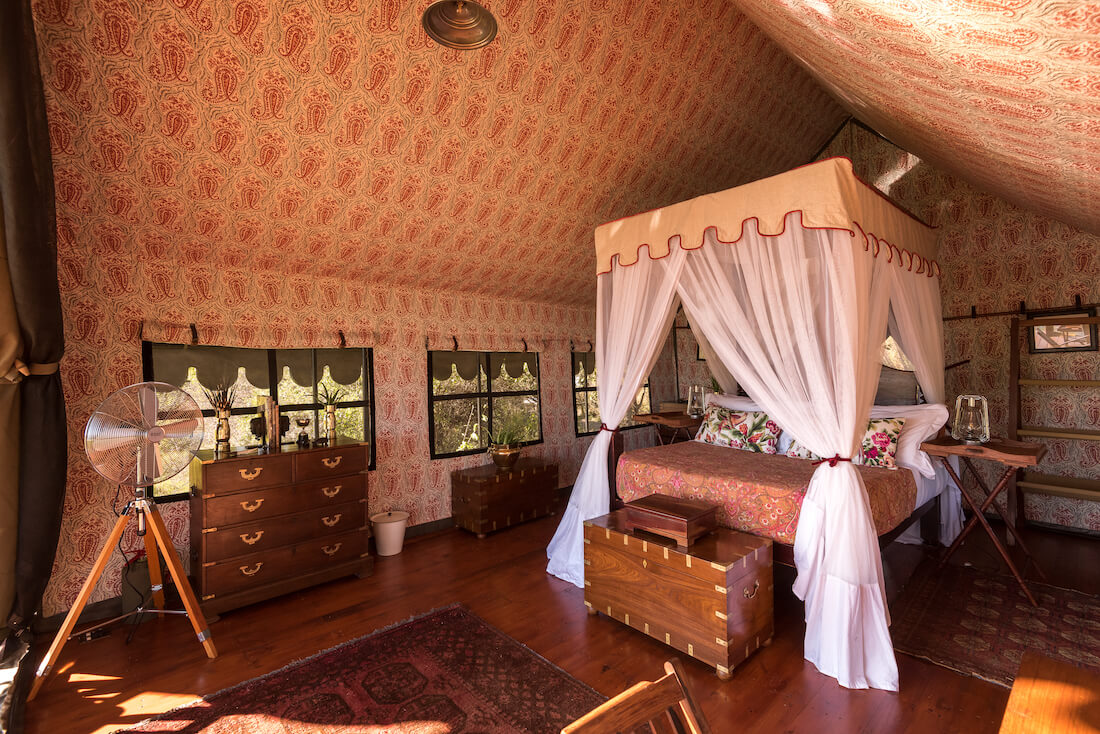
The safari tents sit on raised wooden decks under the trees, with hand-crafted four-poster beds and expansive views over the Delta. The style is deliberately rich and layered rather than minimal.
The mess and the Persian tea tent
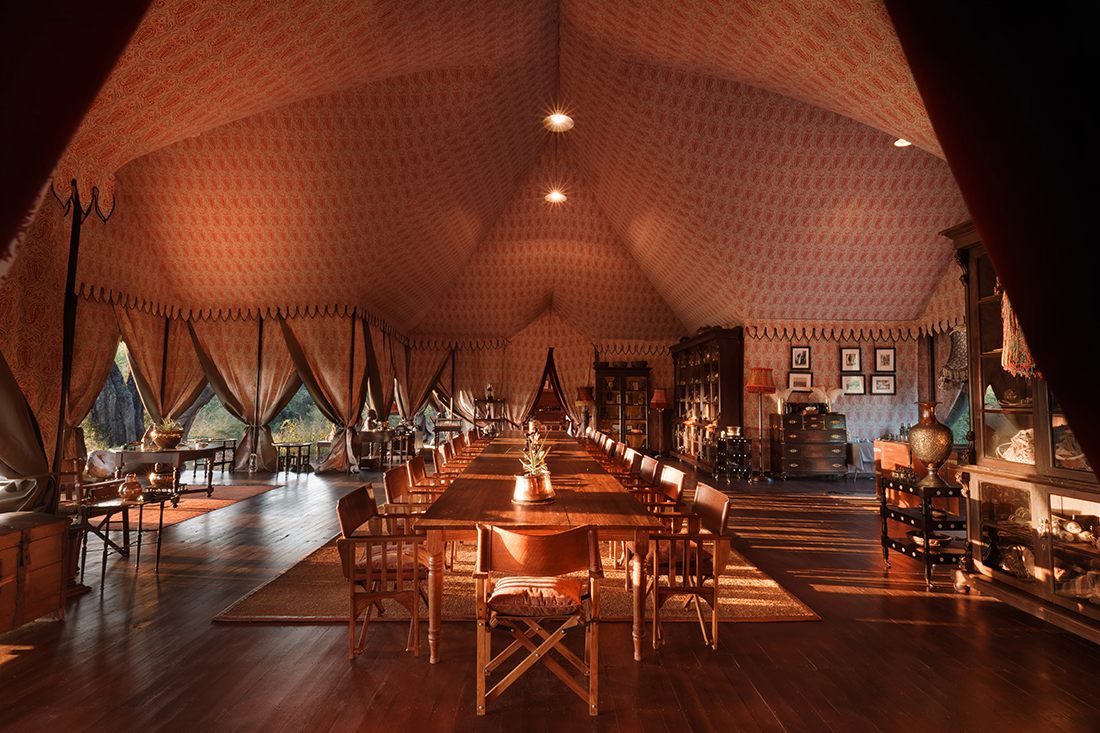
The camp has a mess tent, a lounge finished in rich textiles, a vintage dining table used for indoor meals, and a Persian tea tent — a distinctive touch that carries through from the Bousfield family’s other camps. There is also outside dining and a pool pavilion.
Guiding
Guides here are trained by Ralph Bousfield, and the guiding is the thing the camp puts forward first. In practice that means a stronger emphasis on bushcraft, tracking and Delta lore than on simply finding animals.
Game drives
Game drives run on a large, game-rich concession. The northern Delta carries elephant, buffalo, lechwe and the predators that follow them, including wild dog.
Mokoro and boat safaris
Mokoro excursions and boating safaris both run from camp on the surrounding channels. Because the camp sits among permanent water, the water activities are a core part of the offering rather than a seasonal extra.
Fishing, helicopters and rock art
Fishing trips, scenic helicopter flights and rock art visits are also offered. That is an unusually broad activity list for one Delta camp, and it means a stay of several nights does not repeat itself.
Conservation work
The concession sits on a crucial wildlife corridor where villages and predators are close together. The camp’s operator runs the Elephant Express project and supports communal herding programmes on the concession boundary, both aimed at reducing human-wildlife conflict.
When to visit
The camp is open year-round. The Delta’s flood generally peaks around the middle of the year, when the water activities are at their strongest; the green season is quieter and better for birds and newborn game.