
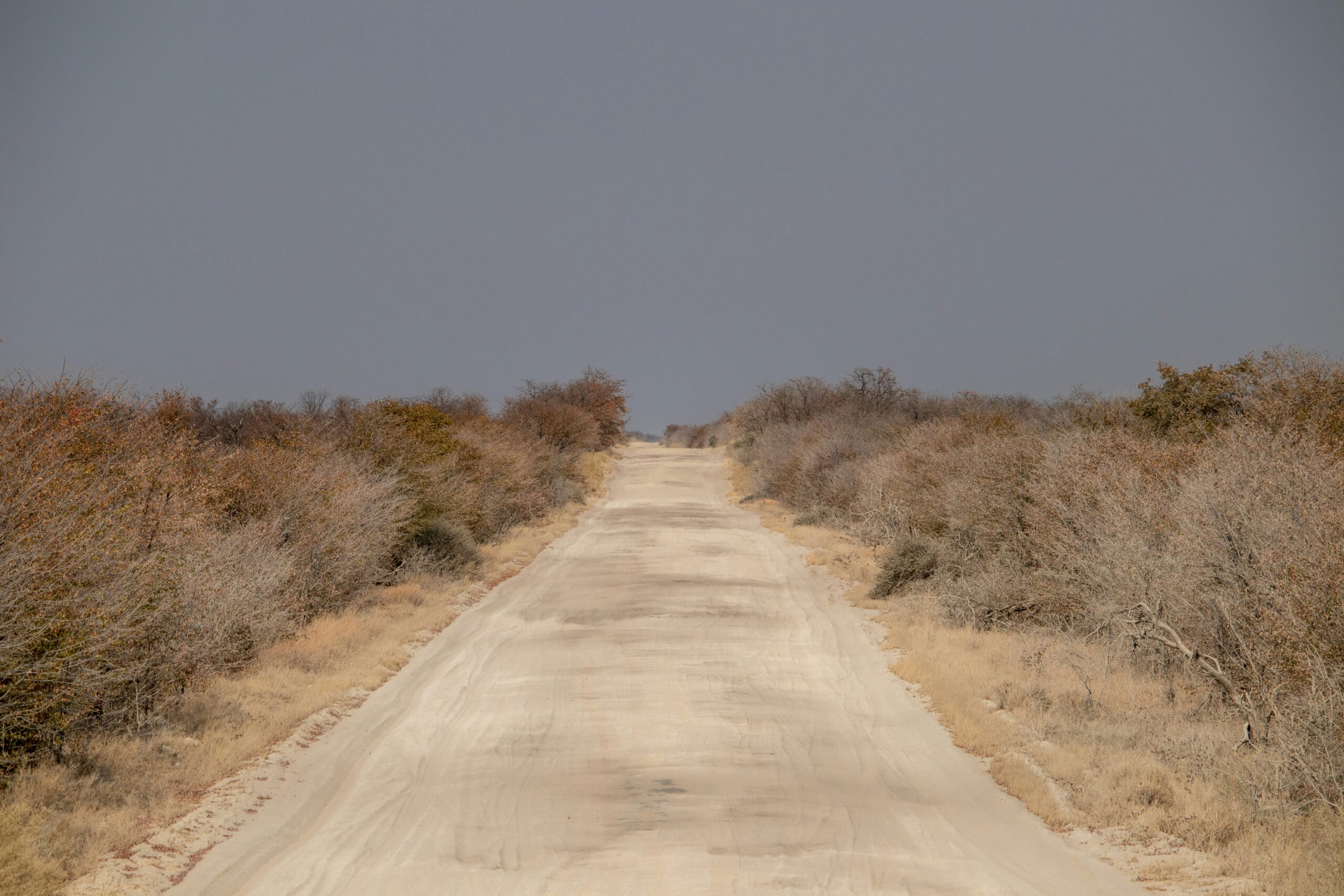
The Deception Valley route leads into one of Botswana’s most remote protected landscapes. The distances on a map are only the first calculation. Sand, corrugation, navigation, wildlife and the absence of services determine how long the journey actually takes.
A cautious plan treats Deception Valley as an expedition segment, not a detour from the tar road. The vehicle must be suitable, every traveller needs water, and the route must still work if progress is slower than expected.
Last checked
19 September 2026. Conditions, rules and operator arrangements can change. Confirm volatile details with the responsible authority or operator before travelling.
In this guide
Deception Valley route: Choose the gate and direction first
Your entry gate determines the approach, fuel plan and realistic arrival time. Confirm the current gate procedure and campsite location before calculating the day. Do not mix travel times from different entrances.
Ask the booking office or recent operators about track conditions for the exact approach. A general Central Kalahari report is too broad for a reserve with widely separated gates and routes.
Calculate fuel for slow sand
Fuel consumption rises in deep sand and with a heavily loaded vehicle. Base the calculation on the rental company’s conservative off-road figure, add a reserve and include internal game-viewing kilometres.
BTO advises remote self-drive campers to carry substantial fuel and water, but a generic quantity cannot replace a vehicle-specific range calculation. Confirm how spare fuel may be carried under the rental and border rules.
Book the remote nights before finalising the fuel plan
Campsite location determines daily distance and vehicle range. Compare Central Kalahari stays and route options before buying supplies around an itinerary that may not be available.
Treat water as a life-support system
Carry drinking water in more than one container so a leak does not remove the whole supply. Include cooking, basic washing and a delay margin. Protect containers from abrasion and secure them against movement.
Tell someone your route and expected exit. Satellite communication or an emergency beacon can shorten the consequences of a breakdown, but it does not make an unsuitable vehicle or thin water margin acceptable.
Drive for the track, not the clock
Lower tyre pressures only within the rental company’s guidance, use appropriate gearing and keep momentum smooth. Speed damages tyres and suspension and reduces the time available to see hazards.
Plan to finish well before dark. Wildlife, forks and a missed turn become more serious late in the day. If progress is poor, use the predetermined turnaround or contingency point.
What makes the visit worthwhile
Deception Valley is valued for scale, silence, open pans, grassland and the seasonal response to rain. Green-season conditions can transform the landscape, while dry periods emphasise distance and aridity.
Wildlife sightings remain unpredictable. The route should make sense even without a headline predator encounter. A slower plan leaves time to watch tracks, birds, antelope and the changing light rather than driving continuously.
A sensible Deception Valley route plan keeps a clear fallback for changing conditions, timing or availability.
Deception Valley route: set three go/no-go gates
For the Deception Valley route, set the first decision gate before leaving the last reliable fuel and supply point. Confirm the intended entrance, the campsite coordinates, the current track report and the vehicle’s realistic sand range. If any of those answers is missing, use the time to resolve it rather than allowing a prepaid night to push the vehicle into a remote section without a complete plan.
Set the second Deception Valley route gate at the reserve entrance or final communications point. Recheck tyre equipment, water containers, spare-wheel access and the time remaining before the planned campsite arrival. Share the route and expected check-in with a responsible contact. If conditions are slower than the planning assumption, shorten the day immediately; delays compound once darkness removes landmarks and safe recovery options.
The third Deception Valley route gate is the turnaround point. Choose it in advance using time, fuel and water, not frustration or distance already driven. Turning back while every system still has margin is competent remote travel. Pressing on until the only option is forward converts an ordinary slow track, puncture or navigation mistake into an emergency.
- Confirm the exact gate and campsite coordinates.
- Calculate fuel using a conservative sand-consumption figure.
- Set a latest arrival and turnaround time.
- Keep water in more than one container.
- Treat the Deception Valley route as an expedition segment.
Deception Valley route: practical checklist
- Confirm the exact gate, campsite and current track report.
- Calculate fuel with a sand-driving consumption allowance.
- Split drinking water across secure containers.
- Carry two spares or the rental company’s approved equivalent.
- Set check-in, turnaround and daylight limits.
Before relying on this guide for Deception Valley route, confirm the details that can change with the responsible authority or operator.
Sources for Deception Valley route
The main references used for this article were BTO self-drive camping guidance, Botswana Government tourism services. Where a source is old, incomplete or silent on an operational detail, the article says so instead of presenting an assumption as a rule.
Use our self-drive guide and Central Kalahari guide for the full preparation framework.
The Deception Valley route rewards self-reliance, but only when self-reliance includes the discipline to carry margin, slow down and turn back before a manageable delay becomes an emergency.