
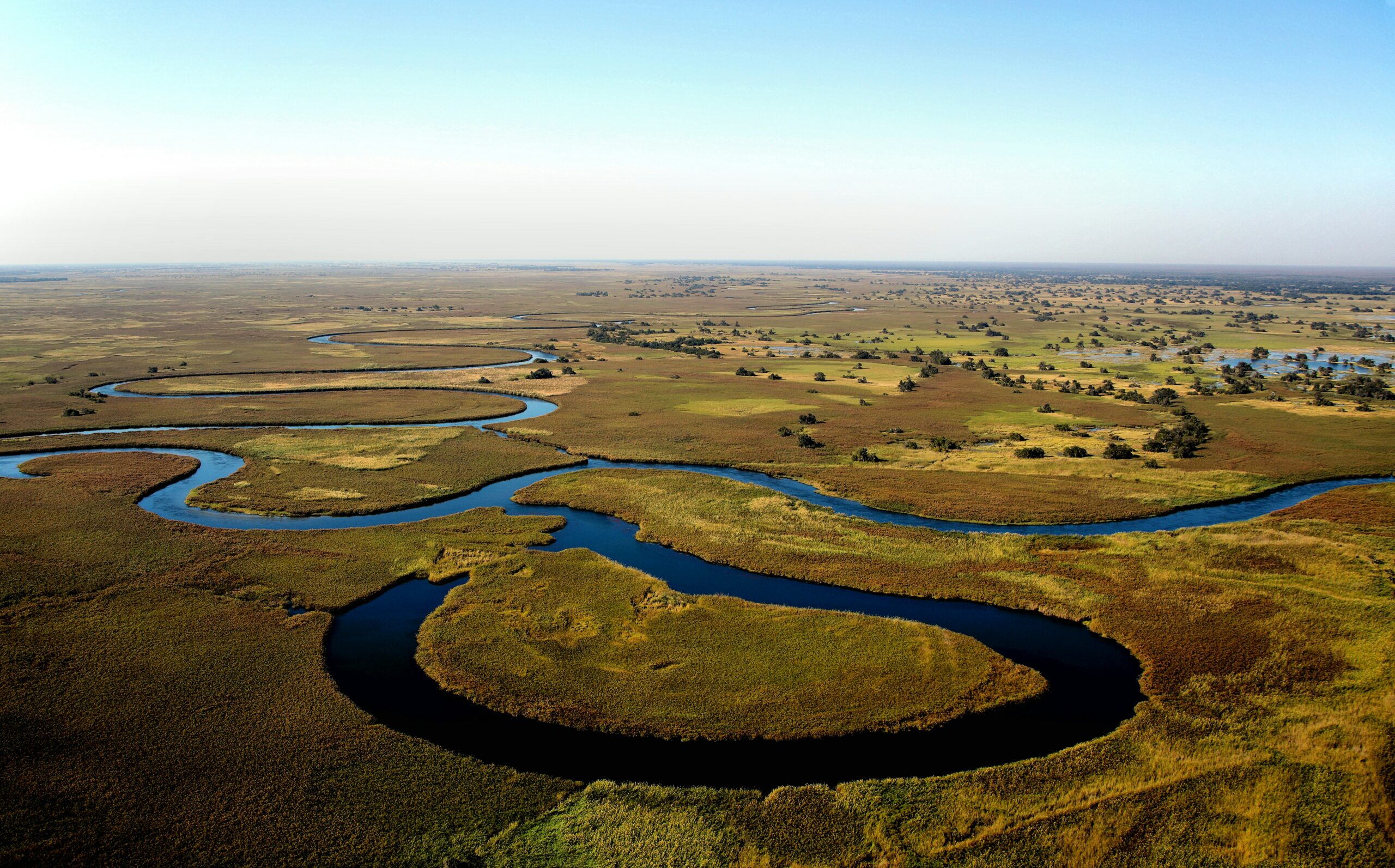
Fly-in Delta camps are not interchangeable points in one wetland. A camp beside permanent water can offer a different year-round activity mix from one on a seasonal floodplain, while a camp with productive land habitat may be stronger for drives than for boating.
Choose the base from habitat, activities and transfer logic. Room design matters, but the safari day is determined by where the camp sits, which rights the operator holds and what the water is doing in your month.
Last checked
19 September 2026. Conditions, rules and operator arrangements can change. Confirm volatile details with the responsible authority or operator before travelling.
In this guide
fly-in Delta camps: Start with permanent versus seasonal water
Ask whether the camp has permanent water access, seasonal water access or primarily land-based activities. “In the Okavango” does not answer the question.
Request the usual activity pattern for your month and the fallback when water is too low or too high. A flexible mixed camp can be valuable on a first visit, while a specialist water camp may suit a repeat traveller.
Understand the land rules
Private concession, community area and reserve locations can have different permissions for night drives, walking and off-road driving. BTO notes that public parks and reserves prohibit night driving and off-roading while private concessions may allow them in moderation.
Ask where activities actually go, not merely what appears on the list. A long transfer to reach productive habitat can reduce time in the field.
Compare the whole Delta stay
Accommodation, charter sectors and activity rights need to be evaluated together. Start with the habitat and month, then compare the camps that genuinely fit.
Airstrip logistics shape the day
Confirm the flying time, number of possible stops, airstrip-to-camp transfer and baggage rules. A quoted sector may be part of a shared circuit rather than a direct flight.
Soft luggage is standard on small aircraft. BTO has published restrictive weight and size guidance, but operators set current limits and may differ by aircraft. Obtain the limit in writing before packing.
Compare inclusions carefully
Rates may include meals, local drinks, laundry, activities and airstrip transfers, but not always conservation levies, premium drinks, private vehicles or flights. Ask for an itemised inclusion list.
Single supplements and child policies can change the result sharply. Compare the whole stay and transfer chain in one currency, then check cancellation terms and travel-insurance coverage.
One camp or two
Three nights in one camp provides two full safari days. With six or more nights, two contrasting bases can justify the additional flight or boat transfer. With four nights, changing camp may consume too much of the stay.
Select a second camp only when it adds a different habitat, activity or region. Moving from one similar Delta property to another for décor alone is rarely the best use of a short trip.
A sensible fly-in Delta camps plan keeps a clear fallback for changing conditions, timing or availability.
Fly-in Delta camps: compare the door-to-door journey
When comparing fly-in Delta camps, request the complete transfer chain rather than only a quoted flight time. The journey can include hotel pickup, airport check-in, one or more intermediate airstrip stops, a road or boat transfer and a wait for other guests. Ask for the likely sequence, the earliest and latest operating window and the contingency when weather or an aircraft change affects the circuit.
Luggage rules at fly-in Delta camps are operational limits, not a suggestion. Confirm the weight allowance, bag shape, camera-equipment treatment and whether excess luggage can be stored securely. Weigh the packed bags before leaving home. Tell the operator about mobility restrictions and any concern about small-aircraft access, because airstrip surfaces, steps and transfer vehicles differ between camps.
Judge fly-in Delta camps by the habitat and activity mix reached from the bed, not by the flight alone. Ask which activities normally operate in your month, how water level changes access and whether the camp shares traversing areas with many vehicles. A longer stay at one well-matched base may create more useful field time than adding a second flight for a camp with a similar setting.
- Map every transfer from hotel to camp.
- Confirm soft-bag dimensions and total luggage weight.
- Disclose mobility and medical needs before payment.
- Ask which activities operate in the intended month.
- Choose fly-in Delta camps for habitat contrast and usable time.
fly-in Delta camps: practical checklist
- Classify each camp as permanent-water, seasonal-water or land-led.
- Confirm activity permissions and normal operating area.
- Get luggage limits and flight routing in writing.
- Compare all inclusions, levies and transfers.
- Add a second camp only for meaningful contrast.
Before relying on this guide for fly-in Delta camps, confirm the details that can change with the responsible authority or operator.
Sources for fly-in Delta camps
The main references used for this article were BTO game-drive guidance, BTO air-travel and luggage guidance, UNESCO’s Okavango Delta documentation. Where a source is old, incomplete or silent on an operational detail, the article says so instead of presenting an assumption as a rule.
Read our accommodation guide and Okavango Delta guide before comparing individual properties.
The best fly-in Delta camps are not those with the longest feature list. They are the ones whose habitat, activities and transfer plan match the traveller’s month and priorities.