
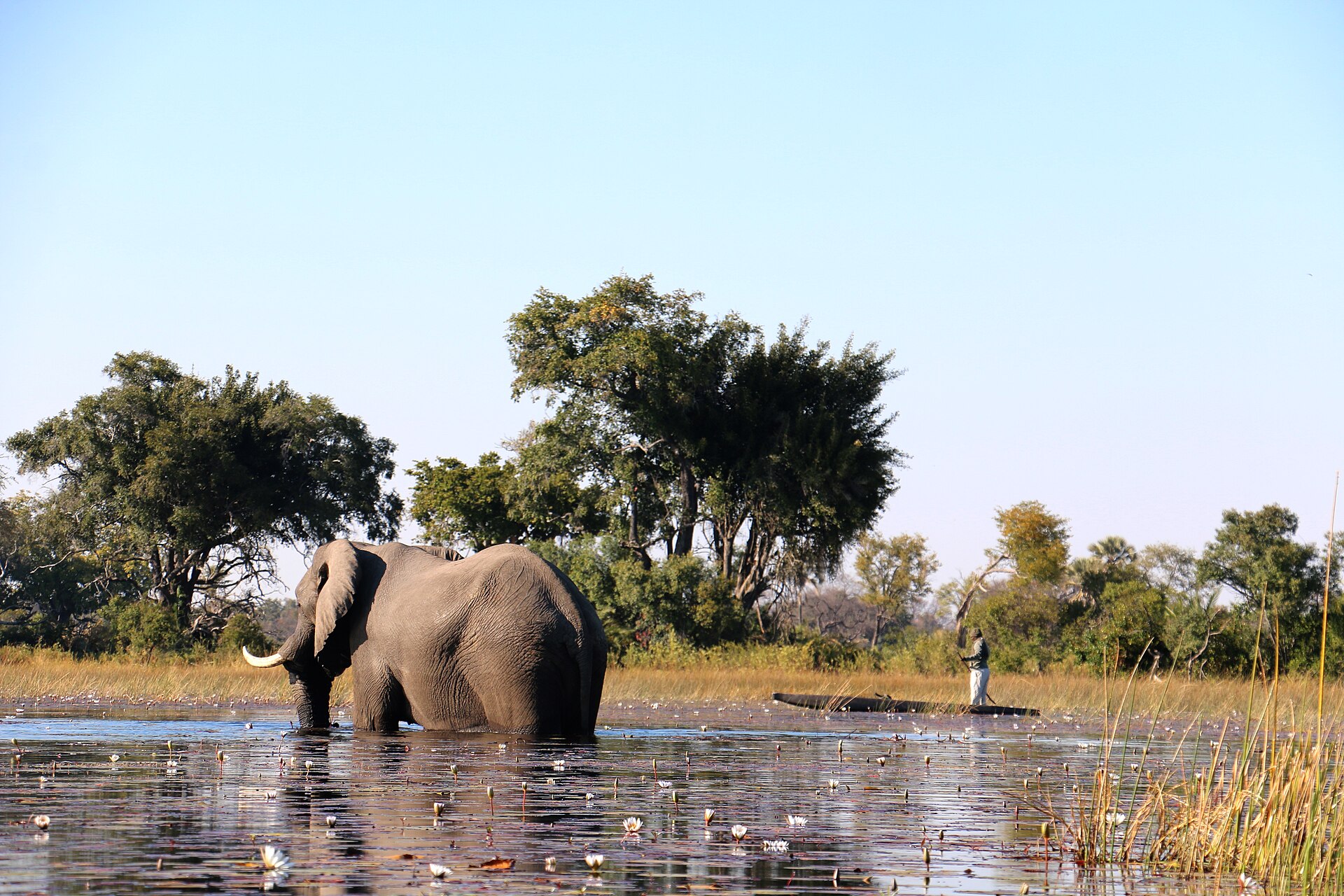
Mokoro excursions range from a short outing near Maun to a camp activity or multi-day journey with island walks. The craft may look similar, but duration, transfer, water depth, guiding and the surrounding habitat change the experience substantially.
Choose the format by comfort, season and purpose. A mokoro is quiet and close to the water. It is not a substitute for every other Delta activity, and it should never be sold as a guaranteed route past large animals.
Last checked
19 September 2026. Conditions, rules and operator arrangements can change. Confirm volatile details with the responsible authority or operator before travelling.
In this guide
mokoro excursions: Short outings from Maun
A day or half-day excursion can introduce the shallow channels without the cost of a fly-in camp. Confirm how much of the day is road or boat transfer to the launch point and how long is actually spent in the mokoro.
Ask whether the operator works through a recognised polers’ organisation, what is included and whether a guided island walk forms part of the plan. Water levels determine which launch points operate.
Camp-based mokoro activities
At a Delta camp, mokoro travel is often one option among game drives, boats and walks. The advantage is flexibility: guides can choose the activity that suits current water and wildlife conditions.
Confirm whether mokoro is seasonal or year-round at the exact camp. A property may market a water setting while the usual mokoro route becomes too shallow or too distant in some months.
Match the activity to the Delta base
Some camps are water-led, some are land-led and others change through the year. Compare the exact activity mix before booking around the word “mokoro”.
Safety and the briefing
A proper briefing should cover sitting position, balance, boarding, personal items and what to do if wildlife is encountered. Follow the poler’s instruction and keep movements slow.
Hippos and crocodiles are present in the Delta. Responsible operators manage route and distance; travellers should not request a closer approach. Wear sun protection and secure cameras against water without tying yourself to equipment.
Walking and overnight formats
Longer community or mobile trips may combine mokoro travel with island walks and simple camping. Ask about guide qualifications, tents, toilets, drinking water, food, emergency communication and the weight of luggage.
Understand who carries equipment and how weather or water changes the route. A rustic format can be excellent when expectations are explicit; it is a poor surprise when a traveller expected lodge facilities.
Choose for observation, not distance
Mokoro travel is slow. Its value is the low viewpoint, soundscape, reeds, frogs, dragonflies, tracks and birds. A short route can be rich when the guide interprets it well.
If large-mammal viewing is the only priority, combine mokoro with a drive or motorboat rather than demanding that one activity do everything. The best Delta stay uses each mode for what it reveals.
A sensible mokoro excursions plan keeps a clear fallback for changing conditions, timing or availability.
Mokoro excursions: ask the operator these questions
For mokoro excursions, first establish where the activity starts and how guests reach the launch point. A short lodge activity, a community-run day trip and a mobile overnight journey can involve very different transfers, water conditions and comfort. Ask how long participants are actually in the canoe, whether walking is included and what happens when wind, water level or wildlife makes the planned route unsuitable.
Safety on mokoro excursions depends on the operator’s local system as well as the craft. Ask how polers are trained, what briefing is given, whether life jackets are carried or worn, how luggage is protected and how the group communicates with support. Disclose mobility concerns, medical needs and children’s ages before booking. A low, narrow canoe requires stillness and careful balance; it is not the place to discover that the format feels inaccessible.
Choose mokoro excursions for quiet, close-to-water observation rather than speed or a species checklist. Binoculars, a small camera, sun protection and a dry bag are usually more useful than bulky equipment. Follow the poler’s instructions, keep hands inside the craft and avoid demanding a closer approach to wildlife. The right excursion leaves room for reeds, tracks, frogs, birds and landscape, not only large animals.
- Confirm launch point, transfer and time on the water.
- Ask about poler training and the safety briefing.
- Disclose age, mobility and medical constraints.
- Carry minimal gear in a dry bag.
- Choose mokoro excursions for the format, not a guarantee.
mokoro excursions: practical checklist
- Ask how long is spent in the mokoro versus transferring.
- Confirm the launch point and current water level.
- Choose a recognised operator and listen to the full briefing.
- Protect sun, water and loose camera gear.
- Clarify walking, camping and toilet arrangements on longer trips.
Before relying on this guide for mokoro excursions, confirm the details that can change with the responsible authority or operator.
Use mokoro excursions as a planning framework, then match it to your dates, route and realistic travel margin.
Sources for mokoro excursions
The main references used for this article were UNESCO’s Okavango Delta documentation, Botswana government feature on Okavango polers and safety briefings, Botswana Tourism Organisation. Where a source is old, incomplete or silent on an operational detail, the article says so instead of presenting an assumption as a rule.
Our safaris and activities guide compares mokoro, boating, walking and game drives across Botswana.
The right mokoro excursion is the one whose transfer, water, guiding and comfort level are clear before departure. Once those details fit, the simplicity of the craft becomes the strength of the day.