
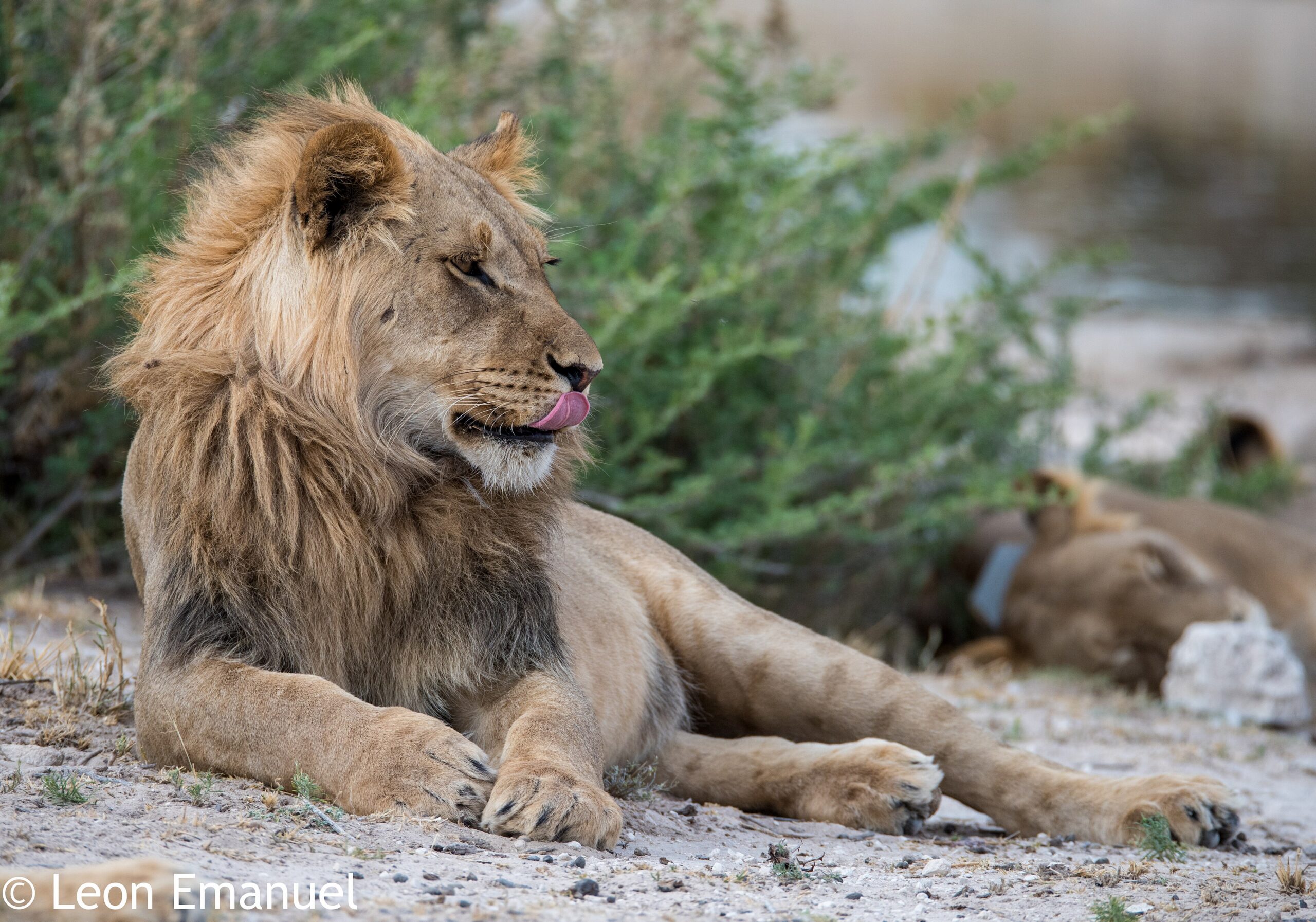
Khutse Game Reserve
2,500 km² of pans and fossil dune, unfenced against the Central Kalahari — and 240 km from Gaborone.
Central KalahariAll parks and reservesA male lion resting in bush in Khutse Game Reserve, Botswana. Photo: Leon Emanuel, CC BY-SA 4.0, via Wikimedia Commons.
Khutse Game Reserve is the Kalahari you can reach from Gaborone. It is 2,500 km² of grassland, fossil dune and pan on the southern boundary of the Central Kalahari, and it is the reserve that makes a Kalahari trip possible for people who are not starting with a flight to Maun.
- Where
- Southern Kalahari, on the northern edge of Kweneng
- Area
- 2,500 km² (Botswana Tourism Organisation)
- Declared
- 1971
- From Gaborone
- 240 km, via Molepolole
- Adjoins
- Central Kalahari Game Reserve, unfenced
- Vehicle
- 4×4 essential, fully self-sufficient
Where Khutse Game Reserve is, and why that matters
Botswana Tourism puts Khutse Game Reserve 240 km from the capital, on a route that runs through Kalahari villages including Molepolole. That distance is the whole argument for the place.
Every other Kalahari experience in Botswana begins with a long drive from Maun or a flight into the north. Khutse begins with a morning out of Gaborone. For a resident, a business traveller with a weekend, or anyone whose trip is anchored to the south-east rather than the delta, it is the only realistic way to spend a night in this country without rearranging the entire itinerary.
Do not read accessible as easy. The reserve has no fences on its northern side, no fuel, and no reason to expect help quickly. Close to a city is not the same as close to anything.
One ecosystem, two names
Khutse Game Reserve shares its northern boundary with the Central Kalahari Game Reserve, and Botswana Tourism is explicit that there are no fences separating the two.
That single fact is worth more than any species list. Animals move between the reserves according to rain and grazing rather than administration, which means Khutse is not a small reserve with a small reserve’s wildlife. It is the accessible corner of a 55,000 km² system.
It also means the two are best planned together. A trip that enters at Khutse and works north is a different proposition from a trip that flies to Maun and enters the Central Kalahari at Matswere, and the southern approach is the cheaper of the two by a wide margin. We cover the northern reserve on Central Kalahari Game Reserve.
The pans
Botswana Tourism describes Khutse as combining most Kalahari habitat types: rolling grasslands, dry riverbeds, fossil dunes, and grassed and bare pans. The named pans are Motailane, Moreswa and Molose, and the tourism authority notes that wildlife congregates at them particularly following good rains.
The pans are the reason to have a plan rather than a route. In a good wet season they concentrate animals in a way the open grassland does not, and the difference between a rewarding day and a long empty one is often simply which pans you worked and when.
Wildlife in Khutse Game Reserve
Botswana Tourism lists springbok, often in abundance, and gemsbok as typical, alongside giraffe, wildebeest, hartebeest, kudu, black-backed jackal, steenbok and duiker.
The predator list is better than the reserve’s size suggests: lion, leopard, cheetah, smaller cats, and the endangered brown hyena. Brown hyena are a genuine Kalahari speciality and are seen far less often than they are present; if one crosses in front of you here, that is the sighting of the trip whatever else happens.
What the list does not include is elephant, buffalo or anything that needs permanent water. Khutse Game Reserve is dry-country wildlife on open ground, and the pleasure of it is watching animals at distance in good light rather than working a riverbank.
When to visit Khutse Game Reserve
The tourism authority ties the congregations at the pans to good rains, which puts the best game viewing in the summer months. Rain in Botswana falls almost entirely in summer and peaks in January and February; winter accounts for less than ten per cent of the annual total.
Summer is also the hardest time to be here. Shade temperatures reach 38 °C and above and occasionally 44 °C, and there is no water to sit beside. Winter reverses it: cold nights, frost inland, sparser game and the clearest skies of the year. Neither is wrong. We set the seasons out in full on when to visit Botswana.
Khutse is close enough to Gaborone to tempt a single overnight. It is worth two. Arriving in the afternoon, working the pans at first light and leaving after a second morning is a different trip from driving in, sleeping and driving out.
Khutse as a first Kalahari trip
Most people meet the Kalahari on their third or fourth visit to Botswana, if at all. The north has the river and the delta, the marketing is built around them, and the sand country gets treated as something for people who have already done the rest.
Khutse Game Reserve inverts that, and it is worth taking seriously as a first Kalahari trip rather than a consolation. Two nights here will tell you honestly whether you enjoy dry-country game viewing — long sightlines, patient driving, animals that are magnificent rather than numerous — before you commit a week and a great deal of money to the Central Kalahari.
It is also the cheapest way to find out. There is no charter flight, no fly-in camp and no minimum stay; there is a drive from Gaborone, a campsite and your own vehicle. If the answer turns out to be no, you have lost a weekend rather than a holiday. If it turns out to be yes, the reserve immediately to the north is 52,800 km² of the same thing.
Access and what you need to drive
The route to Khutse Game Reserve from Gaborone runs through Molepolole and a string of Kalahari villages, and the tar does not go all the way. Inside Khutse Game Reserve the tracks are sand, and Botswana Tourism describes loop trails running from 24 km to 120 km as round trips.
Read those loop distances carefully when you plan a day. A 120 km round trip on Kalahari sand is not a 120 km drive; it is most of the daylight. The requirement is a properly equipped 4×4 with high clearance and low range, and the reasoning is set out on our 4×4 and vehicle requirements page.
Carry all your fuel, water and recovery gear in from Gaborone. There is nothing to buy inside the reserve, and the unfenced northern boundary means it is possible to drive out of Khutse and into the Central Kalahari without meeting anyone at all.
Declared in 1971, on tribal land
Botswana Tourism records that Khutse was officially declared a protected area in 1971, and that it was the second game reserve established on tribal land in Botswana — Moremi Game Reserve in the Okavango was the first.
That is not a footnote. It means the reserve was created on land held under customary tenure rather than carved out of state land, and it puts Khutse in the same lineage as Moremi rather than in the lineage of the fenced national parks. The distinction between land categories in Botswana decides a great deal about what is permitted where, and we set it out on our parks and reserves page.
The tourism authority also records that the San and Bakgalagadi peoples, whom it describes as the Kgalagadi’s original inhabitants, live in small villages on the reserve’s edge, and that traditional arts and crafts are available to buy. Nature walks with the Basarwa are among the activities it lists, alongside game drives and wilderness drives.
Where to stay
Camping is the main option inside the reserve, and campsites should be booked before you leave rather than arranged at the gate. Outside the boundary, Botswana Tourism names the Khutse Kalahari Lodge, which it places about 10 km from the reserve entrance.
Because the reserve is approached through Molepolole, the practical bed stock for a Khutse trip sits in that town and along the road to Letlhakeng — we list seven licensed properties in Molepolole, including Kutse Guesthouse at Letlhakeng. That is where most self-drive parties sleep the night before an early gate, rather than inside the reserve.
We publish no rates, no availability and no ratings of our own; what we can tell you is what a property is and where it sits.
Where to stay before a Khutse trip
Licensed properties in Molepolole, the town the reserve is approached through.
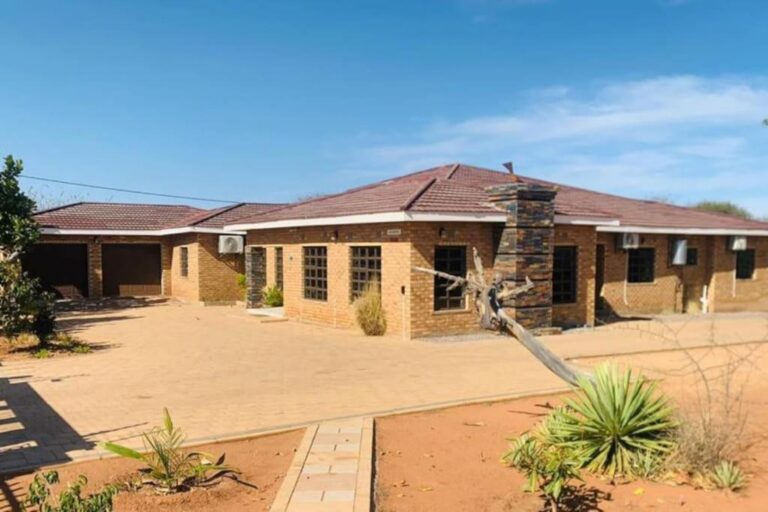
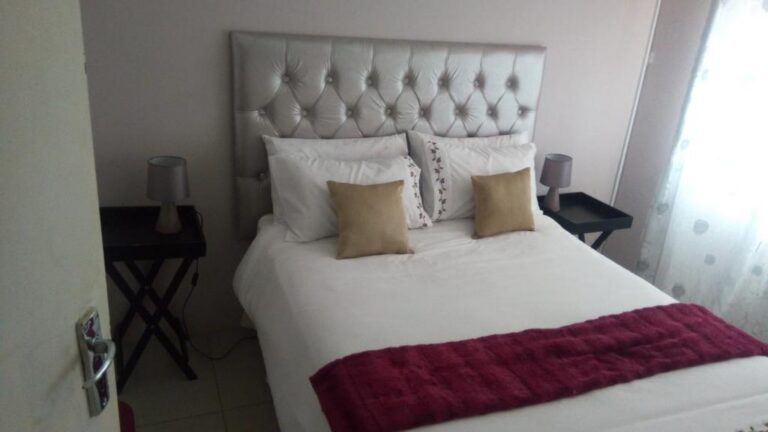

View all 3 Molepolole propertiesAll Gaborone and South-East accommodation
Every card opens our own property page first. We publish no rates, no availability and no ratings of our own.
Khutse is a camping reserve in practice: see camping in Botswana for how the sites are run and booked. Most parties stage out of Gaborone.
Sources and references
- Botswana Tourism Organisation — Khutse Game Reserve (area, 1971 declaration, tribal-land status, distance from Gaborone, habitats, named pans, wildlife, loop trails, lodge, communities)
- Botswana Tourism Organisation — Climate (seasons, temperatures, rainfall distribution)
- List of protected areas of Botswana (designation as a game reserve)
Reviewed August 2026. Reserve areas, gate arrangements and booking rules change; if something here is out of date, tell us.
Plan the rest of your trip
Khutse Game Reserve is the southern door into the Kalahari. These are the pages that decide what you do once you are through it.
The reserve on the other side of the unfenced boundary, and what it asks of you.
Open →The KalahariThe wider region, what the sand actually is, and how the reserves fit together.
Open →4×4 and vehicle requirementsSand, recovery gear and what “properly equipped” means before you leave the tar.
Open →The Kalahari, from Gaborone.
Khutse Game Reserve is the one Kalahari reserve you can reach in a morning. That makes it easy to underestimate, not easy to visit.
When to visit BotswanaAll parks and reservesKgalagadi Transfrontier ParkFurther south-west again, across the border, and a different kind of Kalahari trip.
Open →