

Serowe
The Bangwato village that produced Botswana’s first president — and the museum, the church and the cemetery that go with it.
Khama Rhino SanctuaryEastern BotswanaTents pitched on red sand among thorn trees at a cattle post near Serowe, Botswana, photographed in December 2021. Photo: Ttakhwiri, CC BY-SA 4.0, via Wikimedia Commons.
Serowe is where modern Botswana’s story is kept. It is the Bangwato village that produced Sir Seretse Khama, the country’s first president, and it holds the museum, the church and the royal cemetery that go with that. It is also, for most travellers, a short detour off the A1 that turns a long drive into something worth remembering.
- Where
- Central Botswana, west of the A1 between Gaborone and Francistown
- People
- The Bangwato; the duiker (phuti) is the totem
- Known for
- Sir Seretse Khama’s birthplace and the Khama family legacy
- Main sight
- Khama III Memorial Museum
- Nearby
- Khama Rhino Sanctuary
- Typical stay
- Half a day, or a night with the sanctuary
- Vehicle
- Ordinary car
In this guide
- Why Serowe matters
- Khama III Memorial Museum
- The royal cemetery, and asking first
- The London Missionary Society church
- Crafts and the Boithselo project
- Khama Rhino Sanctuary
- Visiting Serowe well
Why Serowe matters
Botswana Tourism records Serowe as the birthplace of the country’s founding father and first president, Sir Seretse Khama. That single fact carries most of the village’s significance, but not in the way a plaque would suggest.
Seretse Khama’s marriage to Ruth Williams was politically explosive in the late 1940s, and the tourism authority notes plainly that the resulting upheaval played out here, in this village. Serowe is not a monument to a settled national story; it is where an unsettled one was argued out, and it is more interesting for that.
It is also simply large. Serowe is among the biggest traditional villages in Botswana, a working place of cattle posts and households rather than a heritage site with a village attached.
Khama III Memorial Museum
The museum occupies a restored red Victorian building and is named for Seretse’s grandfather, Khama III. Botswana Tourism describes a collection of furniture, uniforms, correspondence and photographs chronicling the Khama family legacy and the history of Serowe.
Correspondence and photographs are the point. This is a documentary museum rather than a display of artefacts, and an hour spent reading here explains the twentieth century in Botswana better than anything else on the A1. Khama III is the same chief who travelled to London in 1885 with Sebele I and Bathoen I — the journey commemorated by the Three Chiefs Monument in Gaborone.
The royal cemetery, and asking first
Seretse Khama and Ruth Williams are buried in the royal cemetery, near the Ngwato totem, the duiker — phuti in Setswana.
Botswana Tourism is explicit that permission is required to visit the graves. This is a working royal burial ground, not a public attraction. Ask at the museum or the kgotla first, accept a refusal gracefully, and do not photograph without asking.
The London Missionary Society church
The London Missionary Society church, with its tall steeple, remains an important landmark in Serowe. The LMS presence here is the same missionary thread that runs through Kolobeng and Livingstone’s work further south, and it is part of why the Khama family’s history and the church’s history are hard to separate.
Crafts and the Boithselo project
At the Boithselo project, Bakgalagadi and San makers produce what Botswana Tourism describes as attractive and unique products. As with the craft shop at the Supa Ngwao Museum in Francistown, buying here puts money directly into the hands of the people who made the thing.
Khama Rhino Sanctuary
The reason many travellers stop at Serowe at all is the sanctuary a short distance away. It is a community trust, it holds both black and white rhino, and it is the most reliable rhino viewing in Botswana.
Botswana Tourism’s two pages disagree on how far it is — the Serowe page says 40 km north, the sanctuary’s own page says 20 km — and on when it was founded. We set out both readings on Khama Rhino Sanctuary rather than picking one.
Taken together, Serowe and the sanctuary make a genuinely good day: a morning in the museum and an afternoon or dawn drive with rhino, on a road most people treat as dead mileage.
Visiting Serowe well
Serowe sits west of the A1, a modest detour between Gaborone and Francistown. Roads are tar and an ordinary car is fine.
Treat the village as a village. It is large, busy and residential, the kgotla is a working institution, and the courtesies that apply elsewhere in Botswana apply here with more force because so much of what visitors come to see is family history rather than public heritage. Ask before photographing people, and ask before the graves.
Accommodation is limited in the village itself, with more at the sanctuary. We publish no rates, availability or ratings — start at accommodation in Botswana. On timing, the seasonal logic that matters here is the sanctuary’s rather than the museum’s, and it is set out on best time to visit Botswana.
Serowe has no airport and no through traffic of its own: it is reached on the A14, which leaves the A1 at Palapye about 50 km east. That makes Palapye the practical overnight base for anyone arriving late, and the reason many visitors see Serowe as a day out rather than a stay. The A1 corridor guide covers the drive that gets you to the junction.
Where to stay near Serowe
The sanctuary itself has chalets and a campsite; the nearest full-service hotel is an hour east at Selebi-Phikwe.
Where to stay
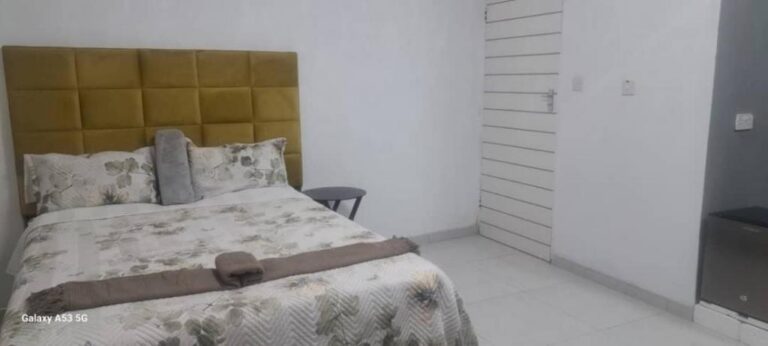

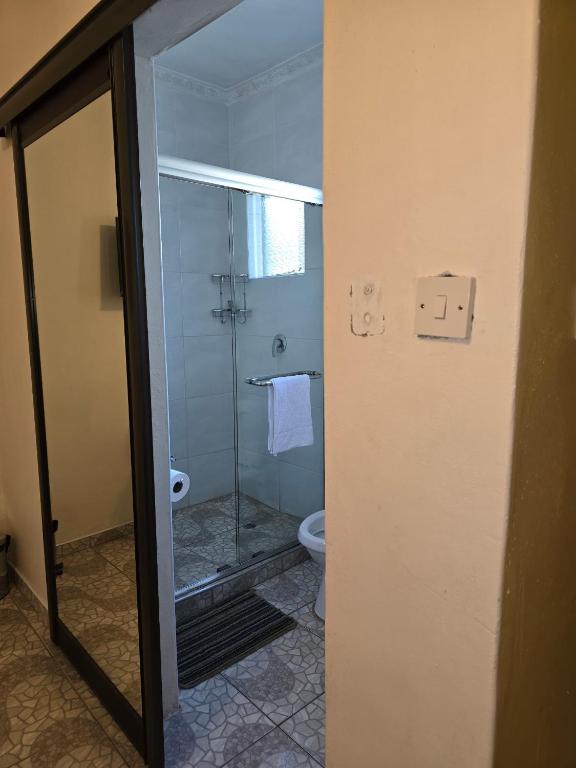
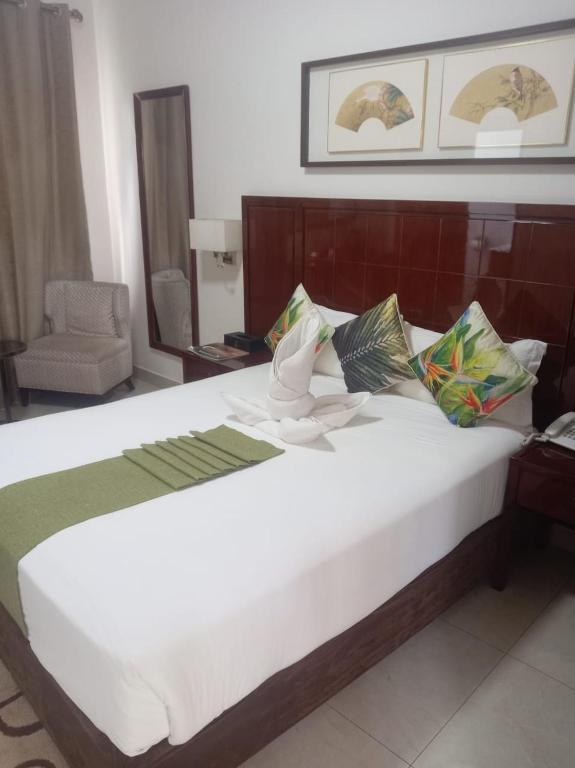
View all 14 Serowe propertiesAll eastern Botswana accommodation
Every card opens our own property page first. We publish no rates, no availability and no ratings of our own.
View all accommodation in Serowe — 14 in the town and around the rhino sanctuary, or everything in Eastern Botswana — 104 properties we have checked. We publish no rates, no availability and no ratings of our own.
Sources and references
- Botswana Tourism Organisation — Serowe (Seretse Khama’s birthplace, the Ruth Williams marriage and its local impact, the royal cemetery and the duiker totem, permission to visit, Khama III Memorial Museum, the LMS church, the Boithselo project, the sanctuary)
- Botswana Tourism Organisation — Climate (seasons and rainfall)
Reviewed August 2026. Museum hours and access to the royal cemetery change; if something here is out of date, tell us.
Plan the rest of your trip
Serowe is half a day. These are the pages that make it a stop rather than a detour.
Gaborone to Francistown: leg distances, timings and where to break the drive.
Open →Khama Rhino SanctuaryThe community trust up the road, and the reason to stay the night.
Open →Eastern BotswanaThe wider region: the A1 corridor, Tuli, the Tswapong Hills and the eastern towns.
Open →GaboroneThe capital down the A1, and the Three Chiefs Monument that starts this story.
Open →History that is still somebody’s family.
Serowe rewards visitors who arrive curious and ask permission. It does not reward the ones who arrive with a camera and assumptions.
Khama Rhino SanctuaryAll destinationsView all accommodation in Serowe — every property we have published there, each with our own write-up before any booking route.