
Khama Rhino Sanctuary
A community trust near Serowe, and the most reliable rhino viewing in Botswana.
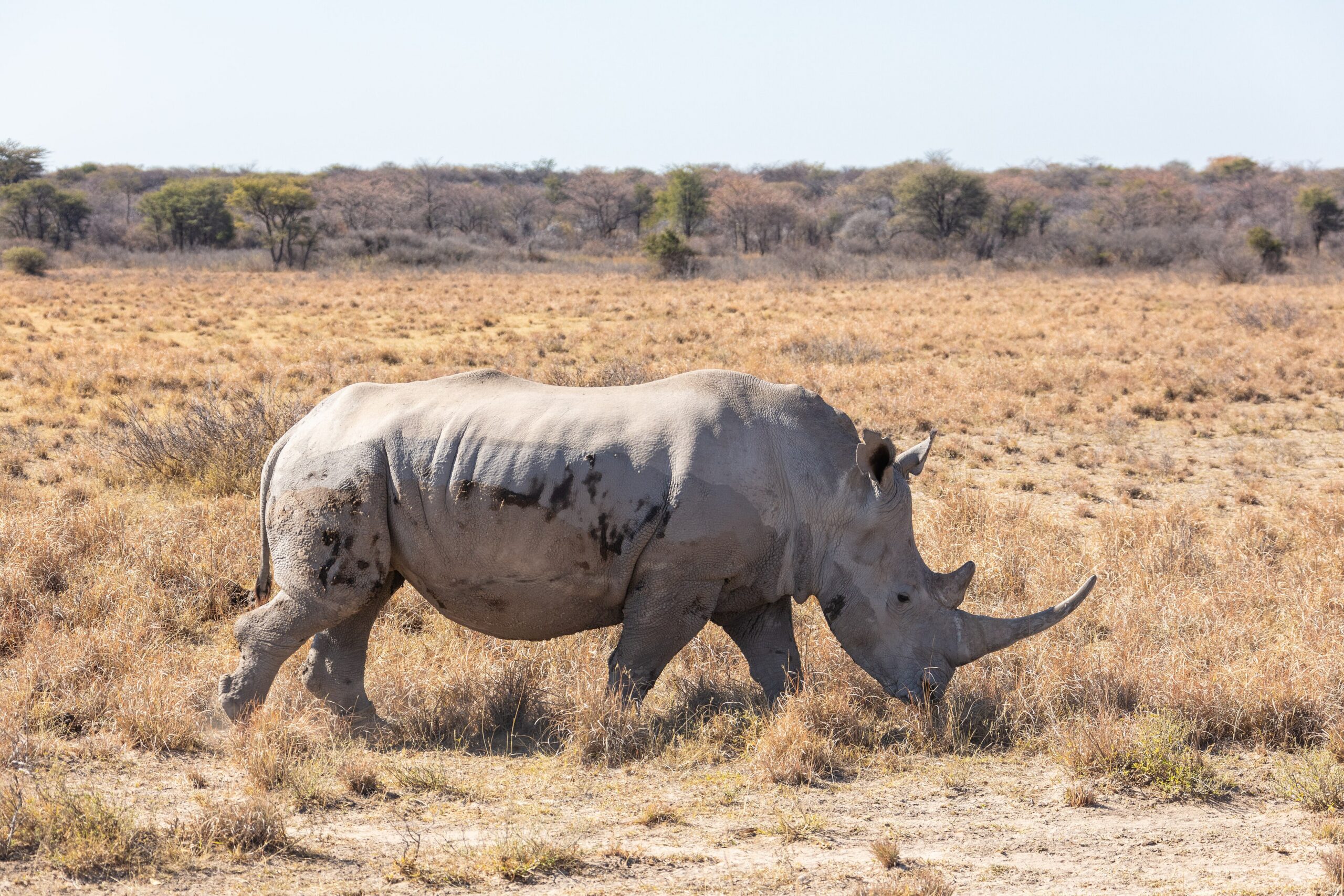
SeroweAll parks and reservesA white rhino standing in dry grass and thorn scrub at Khama Rhino Sanctuary, Botswana, photographed in August 2018. Photo: Diego Delso, CC BY-SA 4.0, via Wikimedia Commons.
Khama Rhino Sanctuary is a community conservation project near Serowe, and it is the most reliable place to see rhino in Botswana. That sentence carries more weight than it looks: rhino viewing in this country is not a given, and the sanctuary exists precisely because it stopped being one.
- Where
- Central Botswana, near Serowe, off the A1 corridor
- Distance from Serowe
- 20 km or 40 km, depending which Botswana Tourism page you read
- Established
- 1989 or 1993 — the sources disagree
- Run by
- A community trust, managed and staffed by local residents
- Rhino
- Black and white rhino; we publish no counts
- Activities
- Game drives, birding, bush walks, crafts
- Vehicle
- Accessible; ordinary care needed rather than a hard 4×4 route
Staying at the sanctuary
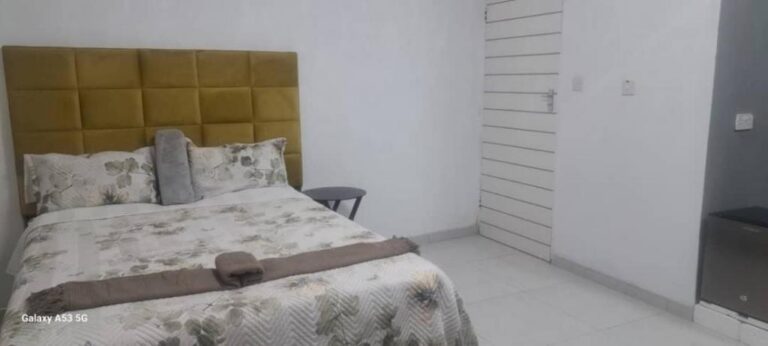
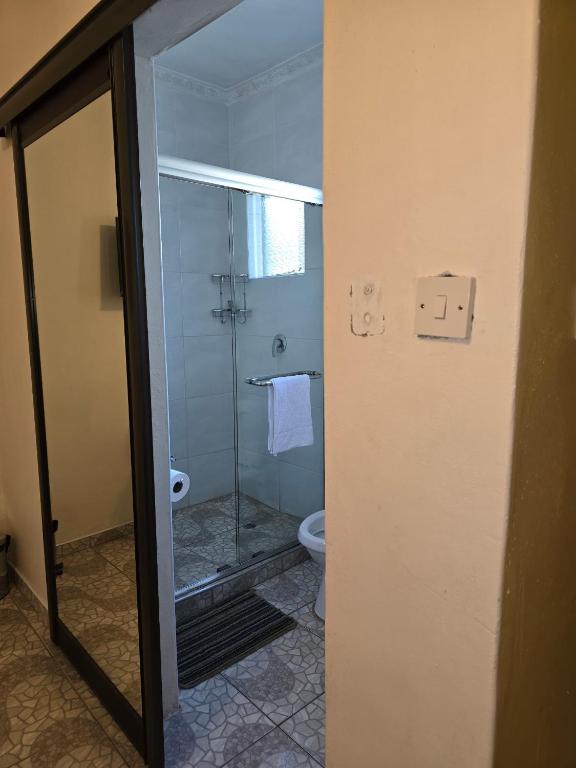
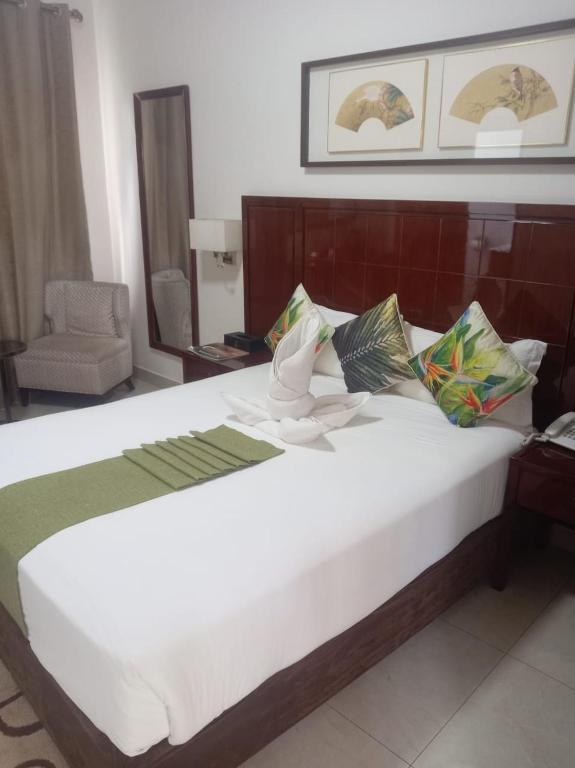
Accommodation is run by the sanctuary trust and booked directly with them. We list it as a single property.
Where to stay near Khama Rhino Sanctuary
Licensed properties in Serowe, the town the sanctuary is reached through.

View all 14 Serowe propertiesAll eastern Botswana accommodation
Every card opens our own property page first. We publish no rates, no availability and no ratings of our own.
View all Eastern Botswana accommodation — 104 properties we have checked. We publish no rates, no availability and no ratings of our own.
In this guide
- Why Khama Rhino Sanctuary exists
- A community project, not a park
- The rhino, and what we will not tell you
- What you do at Khama Rhino Sanctuary
- The dates and distances do not agree
- Getting to Khama Rhino Sanctuary, and staying
- Best time to visit
Why Khama Rhino Sanctuary exists
Botswana Tourism records that Khama Rhino Sanctuary was established out of growing concern at the escalating prevalence of rhino poaching in Botswana. It is a conservation response, not a tourism product that later acquired a conservation story, and that ordering explains everything else about the place.
Khama Rhino Sanctuary is now a source population: Botswana Tourism describes it as a source for the reintroduction of white rhino to other reserves. Black rhino were introduced in 2002, and the first black rhino calf was born there in 2008. Animals bred behind a fence near Serowe have gone on to repopulate wilder ground elsewhere.
Protection is taken seriously. Alongside sanctuary staff, the Botswana Defence Force patrols the perimeter constantly. A visitor should read that as the cost of the thing they came to see.
A community project, not a park
This is not a national park and not a private reserve. Botswana Tourism describes Khama Rhino Sanctuary as a community tourism project, managed and staffed by local village residents, established as a trust by residents and community leaders.
The distinction matters for what you may expect and for where your money goes. Land categories in Botswana decide a great deal about rules, fees and who benefits, and we set that out on our parks and reserves page. Here the short version is that visiting is itself the conservation mechanism.
There is also an education centre, where children from across Botswana come for environmental education. A sanctuary that teaches Batswana children about their own wildlife is doing something a fenced game farm does not.
The rhino, and what we will not tell you
Both black and white rhino are present. Botswana Tourism publishes a current white rhino figure and the Serowe page publishes a different total.
We do not republish rhino counts, and we do not publish locations within any reserve. Botswana suffered serious rhino poaching, survivors were moved to sanctuaries from 2021, and detailed public numbers and positions are of more use to the wrong reader than to you. This is a standing rule across this site rather than a decision about this page.
What you need to plan a visit is simpler: both species are here, sightings are likely rather than guaranteed, and this remains the honest recommendation for anyone whose trip has rhino on it.
Do not post precise sighting locations, GPS points or route details from any rhino area, here or elsewhere in Botswana. It is the one piece of trip-reporting that can do direct harm.
What you do at Khama Rhino Sanctuary
Botswana Tourism lists game drives, birding, bush walks, and arts and crafts shopping. Beyond rhino, it describes an abundance of other wildlife species.
The bush walk is the thing to prioritise. Walking is rare in Botswana’s big parks and common here, and being on foot in rhino country with a guide who lives in the next village is a different experience from a game drive — quieter, slower, and more instructive about tracks, plants and how the animals actually use the ground.
The dates and distances do not agree
Two Botswana Tourism pages describe Khama Rhino Sanctuary and they contradict each other.
- The sanctuary’s own page gives 1989 as the year it was established, and puts it 20 km from Serowe.
- The Serowe page gives 1993, describes it as established as a trust by residents and community leaders, and puts it 40 km north of Serowe.
We are not going to pick a winner between two pages published by the same authority. Both readings are plausible — a conservation initiative can begin years before it is formally constituted as a trust, and the two distances may measure from different points. If the exact founding date or distance matters to you, confirm it with the sanctuary directly.
The practical consequence is small: allow for something between twenty and forty kilometres off the Serowe road, and do not plan the day to the minute.
Getting to Khama Rhino Sanctuary, and staying
The sanctuary sits just off the A1 corridor, which is how almost everyone reaches it. Beds outside the sanctuary are in the two towns either side of it: accommodation in Serowe, the town the sanctuary is reached through, and Palapye at the A1 junction.
Botswana Tourism describes the sanctuary as highly accessible for travellers, which by Botswana standards it genuinely is. It sits a short run from Serowe, which is itself a modest detour west of the A1 between Gaborone and Francistown.
That location is the sanctuary’s quiet advantage. It turns the long, dull A1 drive — the one almost every overland trip has to do — into a day with rhino in it. Very little else on that road does anything comparable.
There is accommodation and camping inside Khama Rhino Sanctuary, booked through the trust rather than through us. Outside the gate, the practical bed stock is in Serowe — 34 licensed properties on our list — and, if you are breaking the drive rather than making a detour, in Palapye at the A1 junction where the road to Serowe leaves. We publish no rates, no availability and no ratings of our own.
Best time to visit
The dry months, roughly May to August, concentrate animals at water and make viewing easier, with warm days and cold nights. The summer months are hot, with rain peaking in January and February, and greener, thicker bush that makes spotting harder.
Unlike the pans or the Kalahari, this is not a place whose whole character flips with the season, so fit it around the rest of the trip rather than the other way round. The national picture is on best time to visit Botswana.
Sources and references
- Botswana Tourism Organisation — Khama Rhino Sanctuary (establishment and purpose, community management, distance from Serowe, black and white rhino, 2002 introduction and 2008 birth, activities, education centre, BDF patrols)
- Botswana Tourism Organisation — Serowe (the differing founding date and distance)
- Botswana Tourism Organisation — Climate (seasons and rainfall)
Reviewed August 2026. Access, fees and camping arrangements change; if something here is out of date, tell us.
Plan the rest of your trip
The sanctuary turns the A1 into a day worth having. These are the pages either side of it.
The Khama village next door: the museum, the royal cemetery and the history.
Open →FrancistownThe northern crossroads up the A1, and where the road divides.
Open →Parks and reservesLand categories, what each permits, and how community trusts differ.
Open →The one place rhino are a reasonable expectation.
Everywhere else in Botswana, rhino are luck. Here they are the point, and the community that protects them is the reason.
Eastern BotswanaAccommodationNorthern Tuli Game ReserveThe other eastern reserve, further south at the Limpopo confluence.
Open →