
Gaborone
Botswana’s capital and main air gateway — a working city most safari itineraries skip, and what it is actually good for.
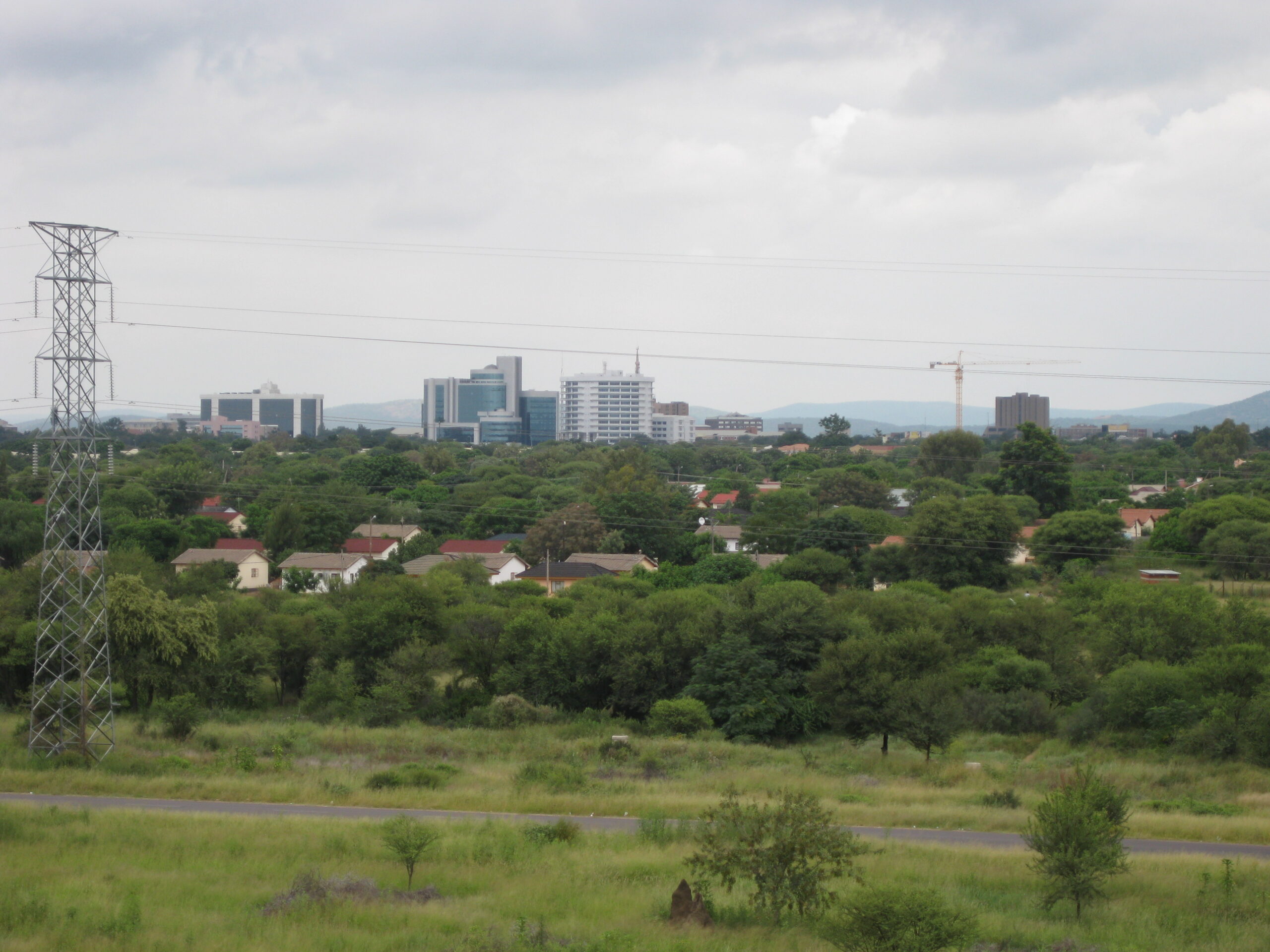
South-East BotswanaAll destinationsThe skyline of Gaborone, Botswana, seen across low green bush. Photo: Iulus Ascanius, Public domain, via Wikimedia Commons.
Gaborone is the capital of Botswana, the seat of government and the country’s principal international air gateway — and it is not on most safari itineraries. That is worth saying first, because the gap between what Gaborone is and what visitors expect of an African capital is the main thing that shapes a stay here.
- Where
- South-east Botswana, near the Tlokweng border with South Africa
- Population
- About 246,000 (2022 census)
- Airport
- Sir Seretse Khama International (GBE), 15 km north of the centre
- Named after
- Kgosi Gaborone of the Batlokwa
- Best for
- Arrival, resupply, history and culture, a bush day at Mokolodi
- Typical stay
- One or two nights
- Vehicle
- Ordinary car; tar throughout
In this guide
- Where Gaborone is, and why travellers use it
- Arriving: the airport, and what it is not
- Who should spend time in Gaborone
- What to see in the city
- Gaborone Game Reserve
- Mokolodi, the bush day
- Where to stay, and how long
- Getting around and driving
- Onward travel
Where Gaborone is, and why travellers use it
The city sits in the far south-east, close enough to the Tlokweng border post that a great many arrivals here are road arrivals from Gauteng rather than flights. It is named after Kgosi Gaborone, leader of the Batlokwa, who moved from the Magaliesberg and settled in the Tlokweng area in 1881; Botswana Tourism translates the name as it does not fit badly.
Travellers use Gaborone for four things: to land, to hire a vehicle, to buy what the rest of the country will not sell them, and to sleep before or after something else. It is a comfortable, low-drama place to do all four. Botswana Tourism describes a buzzing and growing city with hotels, cinemas, casinos and a varied restaurant and live-music scene, and that is a fair account of a modern working capital.
Arriving: the airport, and what it is not
Sir Seretse Khama International Airport (GBE) lies roughly 15 km north of the centre. It opened in 1984, is managed by the Civil Aviation Authority of Botswana, and is Air Botswana’s hub. It is the busiest airport in the country: around 408,000 passengers and 10,755 aircraft movements in 2024.
Those numbers are the useful part. This is a modest regional airport, not a safari hub. Air Botswana connects Gaborone to Francistown, Maun and Kasane domestically, and to Johannesburg, Cape Town, Harare and Lusaka internationally; other carriers serve Johannesburg. Routes change, so confirm when booking.
The country’s main airport is not the country’s main tourist entry point. Maun handles the light-aircraft traffic that actually delivers people into the Delta. If your trip is a fly-in safari, Gaborone will not appear on your ticket at all.
Who should spend time in Gaborone
Be honest with yourself about which of these you are, because it decides whether one night is generous or insufficient.
- Business, conference and government travellers. The city is built for you, and a spare day here is genuinely pleasant.
- Overland self-drivers from Gauteng. Gaborone is your first and last Botswana town, and the best place to sort the vehicle, the SIM and the shopping.
- Travellers interested in history and culture. The monuments, the museum and the heritage sites out in the region are the real reason to give this corner a day.
- Kalahari-bound self-drivers. This is where a Khutse or Central Kalahari trip gets outfitted.
If you are none of those and your trip is the Delta and Chobe, Gaborone is a place you will skip, and skipping it is a reasonable decision rather than a loss.
What to see in the city
Gaborone rewards a half day of deliberate looking rather than a hunt for landmarks. Four places carry most of it.
The Three Chiefs Monument commemorates Khama III, Sebele I and Bathoen I, who travelled to London in 1885 to petition Joseph Chamberlain, then Secretary of State for the Colonies. Their mission led to the establishment of the Bechuanaland Protectorate — which is to say, to the survival of Botswana as a distinct country rather than an annexed part of something else. The monument was unveiled in 2005, and Botswana Tourism notes that a guided tour from a local historian is available. Take it; the statues do not explain themselves.
The National Museum, near the old town centre, holds collections of traditional crafts and southern African fine art.
Thapong Visual Arts Centre occupies the former magistrate’s house of 1902 and runs exhibitions and children’s art courses. It is the most alive of the four and the one most likely to surprise you.
The University of Botswana was established in 1982, has nine faculties, and is known locally as Mma-Dikolo, the mother of universities.
Gaborone Game Reserve
There is a game reserve inside the city, and it is small: Botswana Tourism gives it as five square kilometres. It holds zebra, eland, gemsbok, red hartebeest, blue wildebeest, impala, kudu, steenbok, vervet monkey, warthog and rock dassie, along with birdlife.
Set expectations accordingly. This is an hour before dinner, not a safari, and it is remarkable mainly for existing at all inside a capital city. Anyone who has come to Botswana for game viewing should treat it as a curiosity and save their expectations for the north.
Mokolodi, the bush day
About 10 km south of the city on the Lobatse road, Mokolodi Nature Reserve is the easiest bush escape from any Botswana city and the best single day out from Gaborone. It was founded in 1994 by the Mokolodi Wildlife Foundation, a private not-for-profit.
It offers game drives, guided walks and horseback outings, plus a reptile park, a sanctuary for orphaned and disabled animals, and a schools education programme with its own centre, museum and library. Wildlife includes kudu, zebra, giraffe, blue wildebeest, impala, springbok, baboon and vervet monkey, with leopard present but rarely seen. Camping, chalets and dormitories are available inside, including the Alexander McCall Smith Traditional Rest Camp.
Its published size is disputed — Botswana Tourism gives five square kilometres, other references around 30 km². We use the tourism authority’s figure and note the disagreement rather than picking a winner.
Where to stay, and how long
By kind rather than by street: hotels for arrival and departure nights, bed and breakfasts and guesthouses on the residential plots, and self-catering apartments for a stay measured in weeks. Gaborone holds more of all four than anywhere else in the country.
Accommodation in Gaborone is city-shaped rather than safari-shaped: hotels and guesthouses aimed at business and government travel, with camping and chalets available out at Mokolodi for anyone who would rather wake up in bush than in a business district.
We publish no rates, no availability and no ratings of our own; what we can tell you is what a property is and where it sits. Start at accommodation in Botswana.
On length: one night if Gaborone is a hinge between a flight and a drive, which is the common case. Two if you intend to see the monuments and the museum properly, or to give a day to Mokolodi. More than two only if you are here for work, or using the city as a base to reach the heritage sites and villages set out on the South-East Botswana region page.
Where to stay
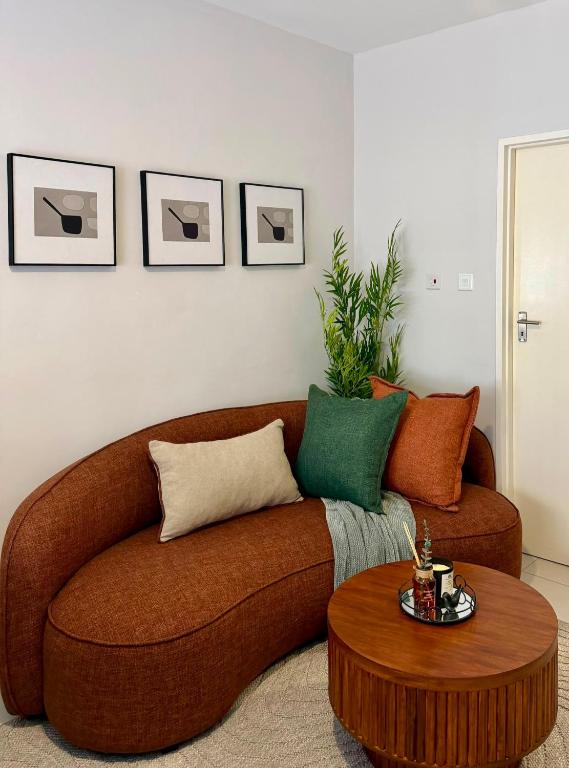
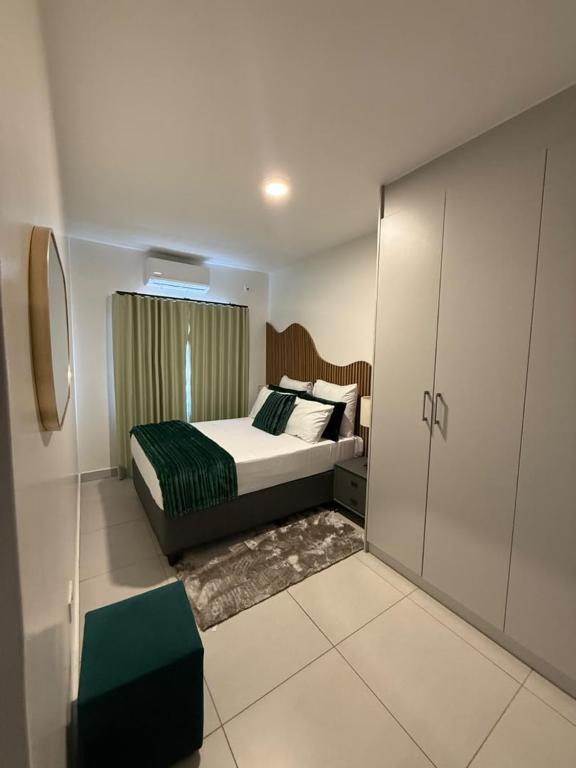
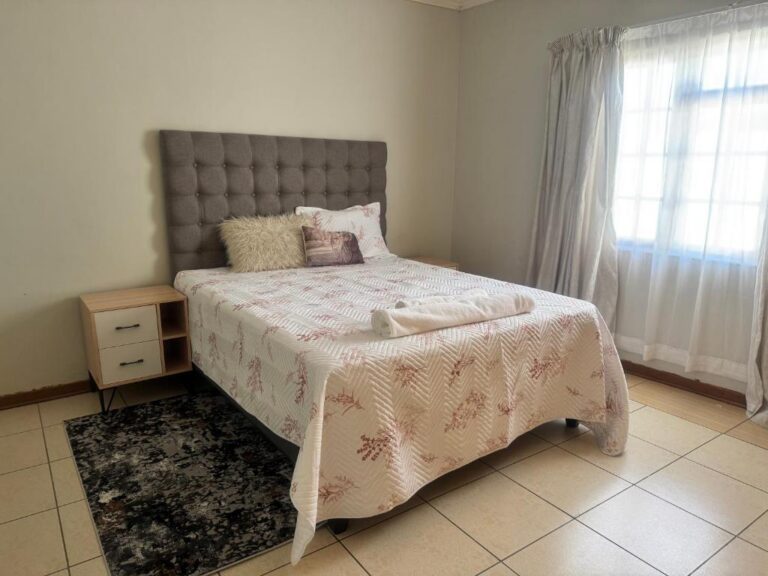
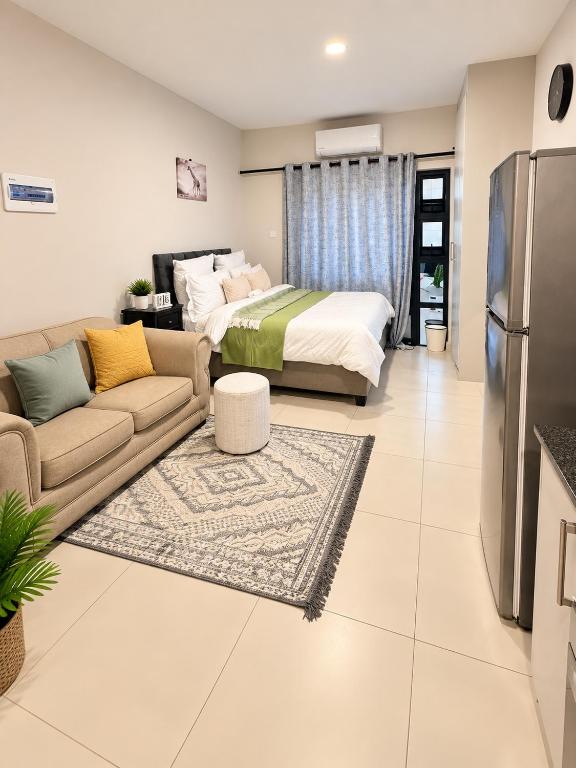
View all 306 Gaborone propertiesAll accommodation in Gaborone
Every card opens our own property page first. We publish no rates, no availability and no ratings of our own.
Greater Gaborone spills well past the city boundary. Mogoditshane on the Molepolole road and Tlokweng towards the border both hold substantial bed stock, and both are a short drive from the centre. They are suburbs of the capital rather than destinations of their own.
View all accommodation in Gaborone — 306 properties in the city itself that we have checked. For the wider region — Tlokweng, Mogoditshane, Molepolole, Kanye, Lobatse, Jwaneng and the rest — see accommodation across Gaborone and the South-East.
Getting around and driving
Gaborone is compact and the driving is easy by Botswana standards: tar throughout, reliable fuel, and an ordinary car is entirely sufficient. Driving is on the left, with a 120 km/h limit on tar and 60 km/h through built-up areas and the large villages around the city.
This is the city where most self-drive trips collect their vehicle, and it is worth using the time well: check the spare, the jack and the tyre pressures here rather than discovering a problem on sand two days north. What a vehicle actually needs beyond the tar is set out on our 4×4 and vehicle requirements page.
If you are crossing to or from South Africa at Tlokweng, a hire vehicle needs cross-border paperwork from the rental company, and that is arranged before you travel rather than at the barrier. See Botswana entry requirements.
Onward travel
Almost everyone leaves Gaborone in one of four directions, and the choice shapes the rest of the trip.
- North on the A1 towards Francistown, and on to the eastern route into Zimbabwe or across to the pans.
- West on the A2, the Trans-Kalahari Highway, through Kanye and Jwaneng to Ghanzi and the Namibian border at Mamuno.
- North-west through Molepolole to Khutse Game Reserve and the Central Kalahari — the one genuinely wild thing within reach of the capital.
- By air to Maun or Kasane, which is how most people who start here reach the safari north.
Which of those makes sense depends heavily on the month, and we set the seasonal logic out on best time to visit Botswana.
Sources and references
- Botswana Tourism Organisation — Gaborone (naming and Kgosi Gaborone, city character, Three Chiefs Monument, National Museum, University of Botswana, Thapong, Gaborone Game Reserve and its wildlife list)
- Botswana Tourism Organisation — Mokolodi Nature Reserve (founding in 1994, activities, wildlife, accommodation, published area)
- Civil Aviation Authority of Botswana (airport management and traffic figures)
- Air Botswana — destinations (domestic and regional routes from Gaborone)
- Botswana Tourism Organisation — Ports of Entry (Tlokweng and the regional border posts)
Reviewed August 2026. Air routes, opening hours and museum arrangements change; if something here is out of date, tell us.
Where to stay
357 Gaborone properties are written up in our catalogue — two city hotels and self-catering inside a game reserve:
A 199-room resort hotel on Chuma Drive, 4 km from the city centre.
Open →Five self-catering bush chalets and five campsites in a reserve with white rhino, 15 km south.
Open →See all 357 Gaborone properties, or use the accommodation finder at the top of any page to search by property name. We publish no rates, no availability and no ratings of our own.
Plan the rest of your trip
Gaborone is a hinge. These are the pages that decide what it hinges onto.
Gaborone to Francistown: leg distances, timings and where to break the drive.
Open →South-East BotswanaThe wider region: Lobatse, Kanye, Molepolole, Jwaneng and the three border posts.
Open →Khutse Game ReserveThe Kalahari from the capital, 240 km north-west through Molepolole.
Open →Botswana itinerariesWhere a trip that starts in Gaborone can realistically go.
Open →A city to use, not to tour.
Gaborone does the practical work of a Botswana trip well. Judge it on that, and it rarely disappoints.
South-East BotswanaAccommodationView all accommodation in Gaborone — every property we have published there, each with our own write-up before any booking route.