
Botswana 21 Day Itinerary
North, pans and Kalahari — the only length at which the Central Kalahari fits without wrecking the rest of the trip.
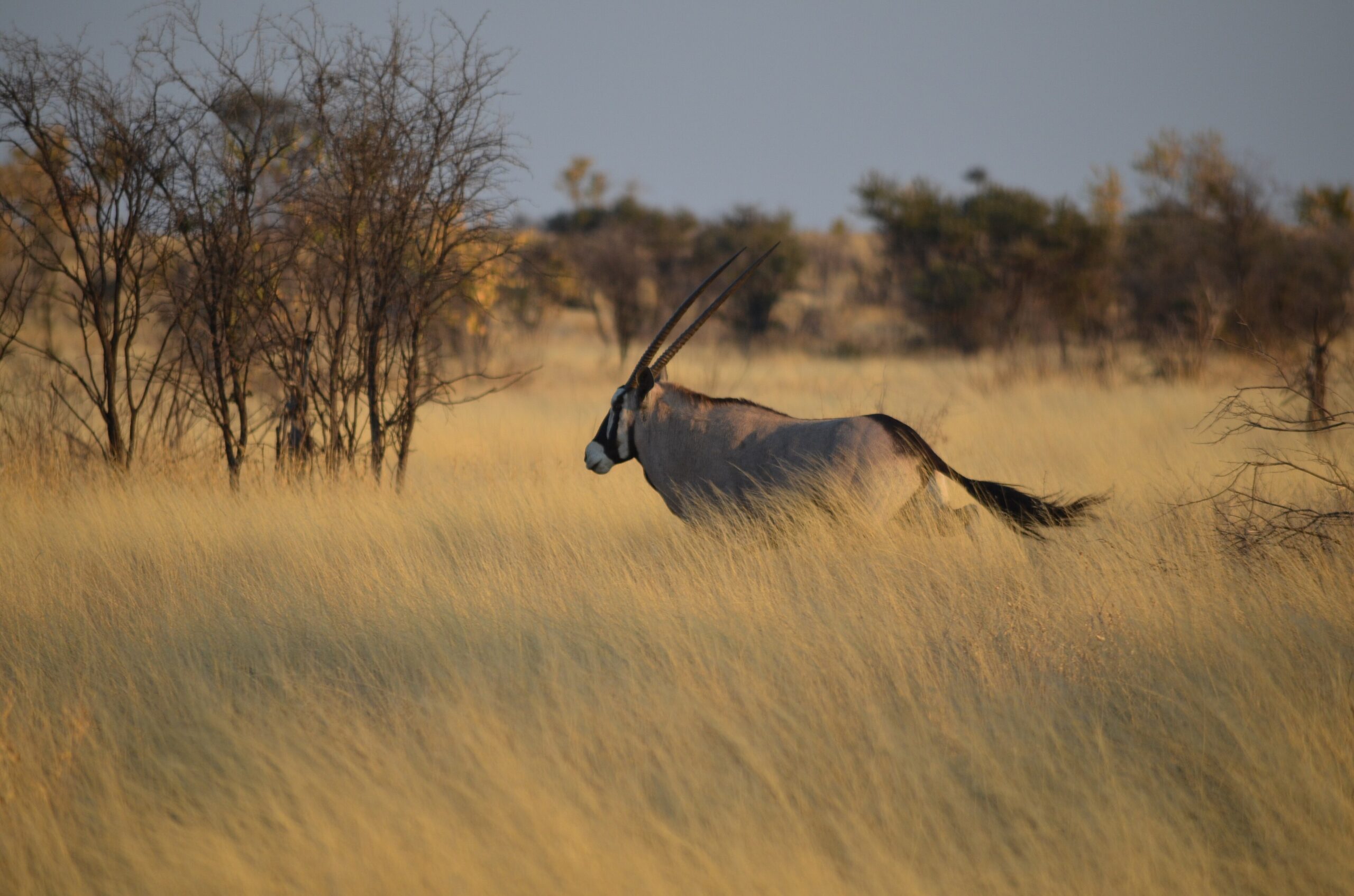
All Botswana itinerariesSelf-drive BotswanaA gemsbok running through tall golden grass in Botswana. Photo: Benjamin Hollis, CC BY 2.0, via Wikimedia Commons.
A Botswana 21 day itinerary exists for one reason: the Kalahari. Every shorter route in the country can be justified without it, and every attempt to squeeze it into a fortnight ends up damaging the rest of the trip. Three weeks is the point at which the Central Kalahari Game Reserve becomes an addition rather than a compromise.
The structure is the 14-day loop with a second expedition bolted on: north from Maun through the Delta and Chobe, south through the pans, back to Maun to re-provision completely, and then south again into the Kalahari. The re-provisioning stop is not padding. The Central Kalahari is 52,800 km², the largest reserve in Botswana and the least forgiving, and you do not enter it on the tail end of a fortnight’s supplies.
- Shape
- Two loops from Maun: north and pans, then the Kalahari
- Nights
- 20 (north 13 · Maun re-provision 1 · Kalahari 4 · Maun 1 · buffer 1)
- Central Kalahari
- 52,800 km², Matswere Gate on the eastern side
- Vehicle
- 4×4 essential and fully self-sufficient; two vehicles conventional for remoter routes
- Best for
- Experienced self-drivers, and anyone who wants the country rather than the highlights
- Not for
- A first African safari, or a party without recovery gear and desert experience
In this guide
- Who this itinerary suits
- The route at a glance
- Day by day
- Why the Kalahari needs its own leg
- When to do this trip
- What to cut if you lose days
- Where this route extends
Who this Botswana 21 day itinerary suits
Three weeks suits experienced self-drivers who are comfortable being genuinely remote, and travellers who would rather understand a country’s range than photograph its greatest hits. The Delta, the Chobe river, the salt pans and the Kalahari are four different places, and this is the only itinerary length at which all four get enough time to register.
It suits you less if this is a first safari. The Kalahari leg in particular is unforgiving: a dry-season drive across the middle of the reserve can be a long way between sightings, and that is normal rather than bad luck. If a trip’s success depends on a steady rate of animals, the 14-day route is the better buy.
It also suits people who can be flexible about the final week. The Kalahari leg is the part of this itinerary most exposed to vehicle trouble, weather and closed tracks, and building it at the end means a problem there costs you the Kalahari rather than the whole trip.
The route at a glance
| Night | Base | Region | Why it is there |
|---|---|---|---|
| 1 | Maun | Hinge | Arrival, vehicle, first provisioning |
| 2–3 | Moremi | Okavango | Delta habitat you can drive into |
| 4–5 | Khwai | Okavango | Night drives and walking |
| 6 | Savuti | Chobe | Open predator country |
| 7–9 | Kasane | Chobe | Riverfront, boat cruise, recovery |
| 10 | Nata | Makgadikgadi | The junction and Sowa Pan birdlife |
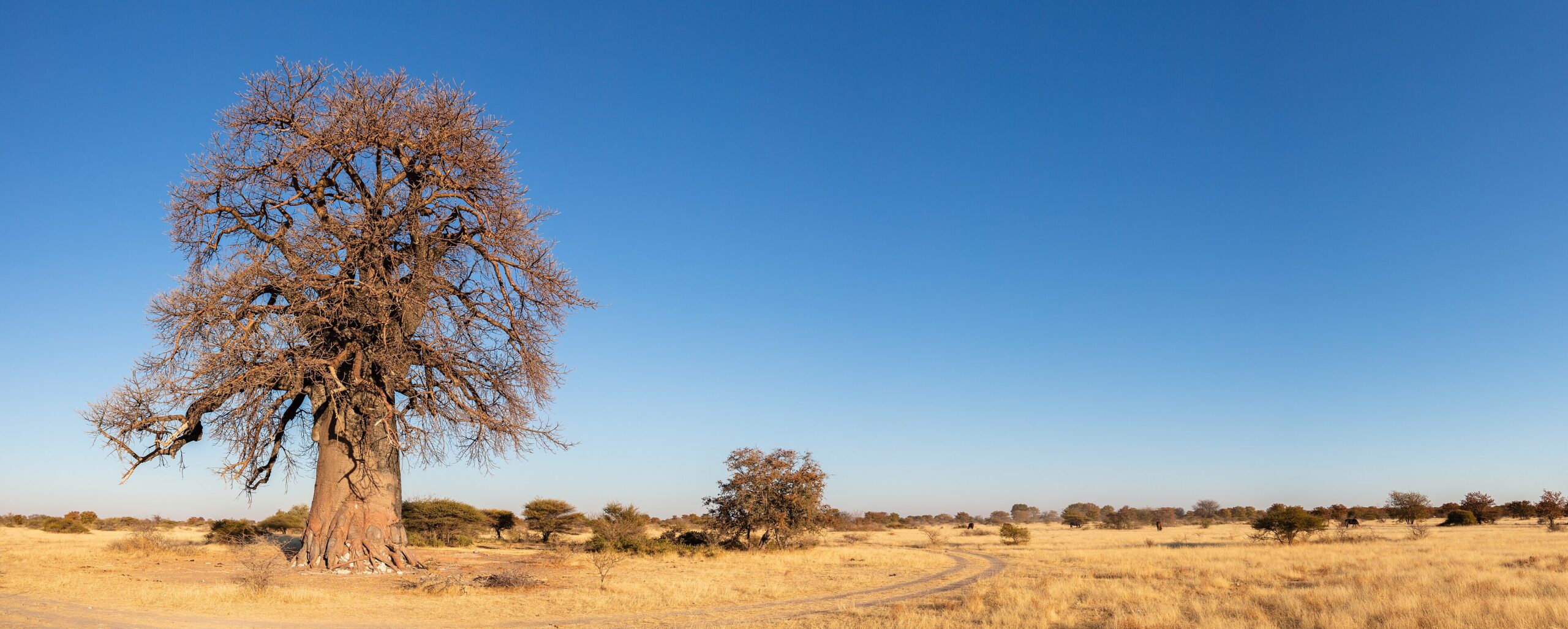
| 11–12 | Nxai Pan | Makgadikgadi | Grassland, waterholes, Baines Baobabs |
| 13 | Gweta area | Makgadikgadi | Pan-surface activities |
| 14 | Maun | Hinge | Full re-provision, laundry, vehicle check |
| 15–18 | Central Kalahari | Kalahari | Deception Valley and the fossil valleys |
| 19 | Maun | Hinge | Return, clean up, hand back |
| 20 | Maun | Buffer | The night that absorbs a bad day |
| 21 | — | — | Depart Maun |
Day by day
Days 1–13 — The northern loop and the pans
These two weeks follow the 14-day itinerary exactly: Maun, two nights in Moremi, two in Khwai, one in Savuti, three at Kasane on the Chobe riverfront, then south on the A33 about 300 km to Nata, two nights at Nxai Pan, and one in the Gweta area for the pan-surface activities.
The one change at this length is psychological rather than logistical: you are not driving back to Maun to go home, you are driving back to start again. That makes the Kasane nights function as a genuine mid-trip rest rather than the climax.
Day 14 — Maun, properly
This is the most important non-wildlife day in the itinerary. Maun is the last dependable fuel, cash and provisioning point, and the Kalahari leg demands far more of a vehicle than anything before it. Botswana Tourism’s advice to self-drive campers is blunt: carry at least 100 litres of fuel in long-range tanks or metal jerry cans, at least 20 litres of water per person and 50 to 100 litres for desert destinations, and spare parts including at least one spare wheel.
Use the day for all of it: refuel and fill the jerry cans, restock water to desert levels, replace anything broken, check tyres properly, and confirm every campsite booking. Nothing on the Kalahari leg can be fixed from inside it.
Days 15–18 — Central Kalahari Game Reserve
Botswana Tourism names Matswere Gate on the eastern side, with Xade and Tsau gates on the far side of the reserve. Four nights is the practical minimum for a reserve this size: at 52,800 km² the distances between camps are the itinerary, and a two-night visit is mostly driving to and from a gate.
Deception Valley is the usual centre of gravity, and the fossil river valleys are what the reserve is known for. Expect long stretches between sightings and treat that as the character of the place rather than a failure of the trip. Two vehicles travelling together is the conventional rule for the remoter routes, and the reserve is large enough that help is measured in days rather than hours.
Days 19–20 — Return to Maun, and the buffer
Come out the way you went in unless conditions say otherwise, and give yourself a night in Maun to clean the vehicle, sort the gear and hand back without a deadline. The twentieth night is deliberately unallocated. On a three-week self-drive across four regions, something will take longer than planned; this is the night that absorbs it instead of your flight.
If nothing has gone wrong, spend it on the Okavango Delta and Maun side of town, or take a scenic flight over the Delta as a closing view of where the trip started.
Day 21 — Depart
Maun is a port of entry, though its published immigration hours look narrower than the airport working day, which is worth confirming on an unusual routing.
Why the Kalahari needs its own leg
The temptation on a long trip is to thread the Kalahari into the loop somewhere between the pans and Maun, saving a day. It does not work, for three reasons.
The first is supply. Desert destinations need 50 to 100 litres of water rather than the 20 per person that covers the north, and no route through the pans passes a restock point adequate to that. The second is vehicle condition: the Kalahari is the most demanding self-drive country in Botswana and the least forgiving, and entering it on two-week-old tyres and an unchecked spare is how a holiday becomes an incident. The third is scale. At 52,800 km² the reserve simply does not fit a passing visit; a dry-season crossing of the middle is a long way between anything.
Treating it as a separate expedition from a full resupply is the difference between the Kalahari being the best week of the trip and being the week that went wrong.
Where you actually sleep: the long route touches Maun, Kasane, Nata, Ghanzi and Gaborone — or browse every town archive.
When to do this trip
This route crosses four regions whose best seasons do not coincide, so three weeks always involves a compromise. The northern half is at its most reliable in the dry months, when animals concentrate around remaining water and the tracks are predictable. The Kalahari is the opposite: it is best known for wet-season grassland game, when the rains bring grazing and the herds follow.
The practical resolution is usually to accept the dry season for the north and the river, and treat the Kalahari leg as a landscape and space experience rather than a density one. Travellers who want the Kalahari at its best should consider running this itinerary in the green season and accepting harder game viewing in Chobe. Our best time to visit Botswana page sets out the regional trade-offs in full.
What to cut if you lose days
Cut from the Kalahari leg first, not from the north. Three nights in the Central Kalahari still works; two does not, and one is a long drive to a campsite. Below three nights, drop the Kalahari entirely and run the 14-day loop with a slower pace instead — a relaxed fortnight beats a rushed three weeks.
Never cut the Maun re-provisioning day or the buffer night. They are the two days that make the rest of the itinerary safe.
Where this route extends
South from the Central Kalahari, Khutse Game Reserve adjoins the reserve and extends the desert leg without a long repositioning drive. West of Maun, the A2 Trans-Kalahari Highway runs 762 km from Mamuno on the Namibian border via Ghanzi, Jwaneng, Kanye and Lobatse to Pioneer Gate on the South African side — the standard overland route for anyone continuing beyond Botswana.
From Kasane, Victoria Falls is 80 km away, and the Kazungula crossing puts Zambia on the doorstep. Cross-border routes of that kind are a different planning problem, and we cover them separately from the domestic itineraries.
The tar leg between Nata and Kasane is the one that catches people out on this route: it is about 300 km on the A33 through the eastern edge of the Chobe ecosystem, and it is not a drive to be finishing in the dark. Our Francistown to Kasane corridor guide sets out the legs and the fuel decision at Nata.
The Maun–Nata leg on this route is 300 km of tar with a national park on each side of it: our Maun to Nata guide sets out the fuel points, the Nxai Pan turn-off and the decision waiting at the junction.
If you are entering or leaving Botswana on the western side rather than from South Africa, the Namibia to Maun via Ghanzi guide covers the Mamuno border, the Trans-Kalahari leg and where to break it.
If the Chobe is on your route, the choice between a river cruise and a game drive is not a coin toss — see Chobe river cruise or game drive for what each shows and why the drive should go first.
Route stops on a three-week loop
Three weeks adds the Kalahari leg, which means the Trans-Kalahari road and the A3 both need a planned stop.
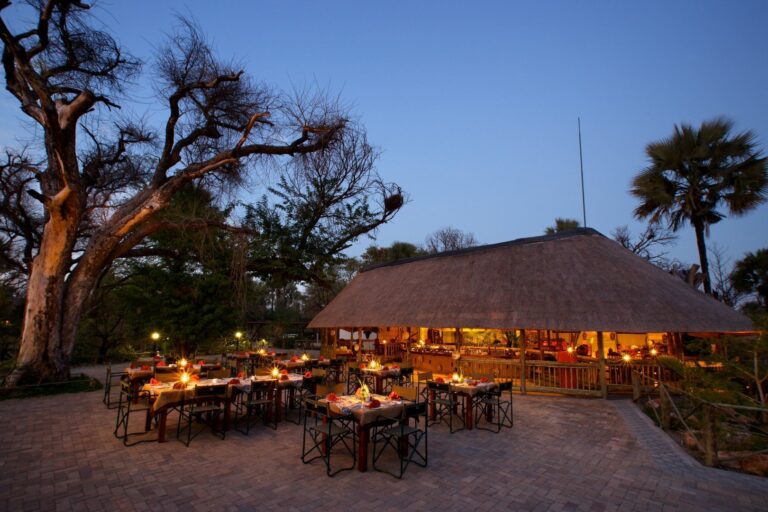
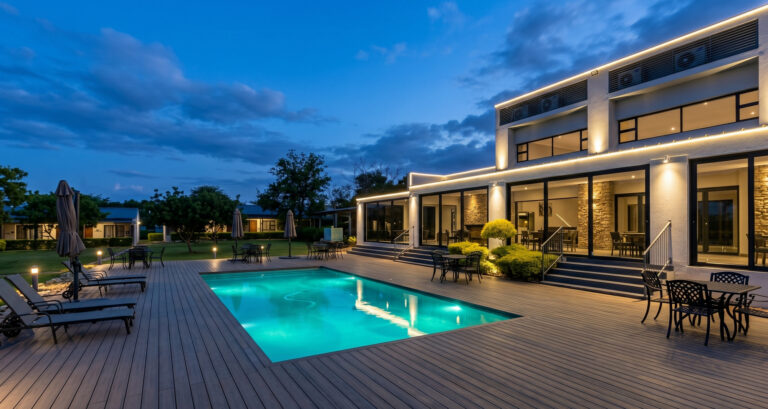
Where to stay on the Kalahari leg
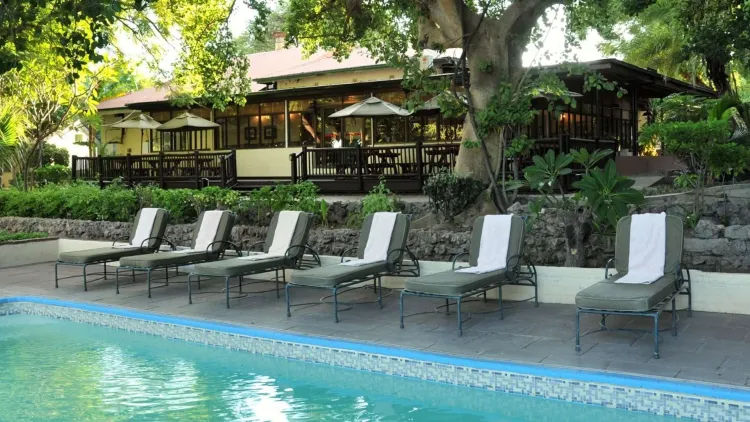
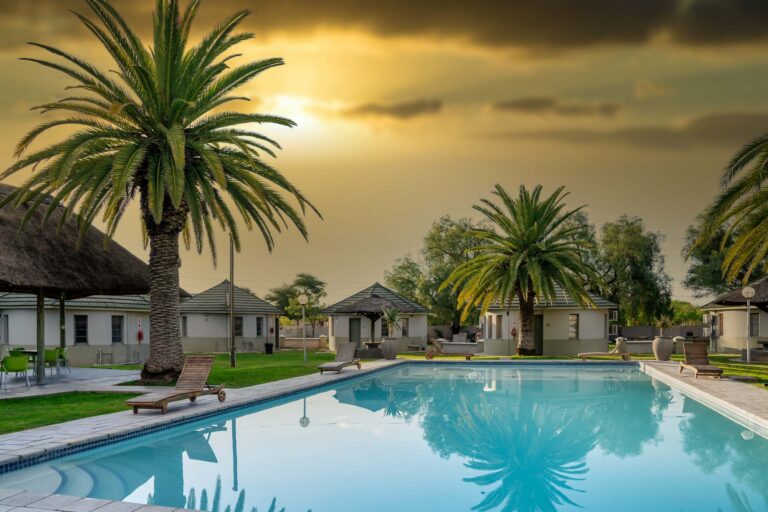
The private reserves on the Central Kalahari edge and the road stops at Ghanzi, all written up here.
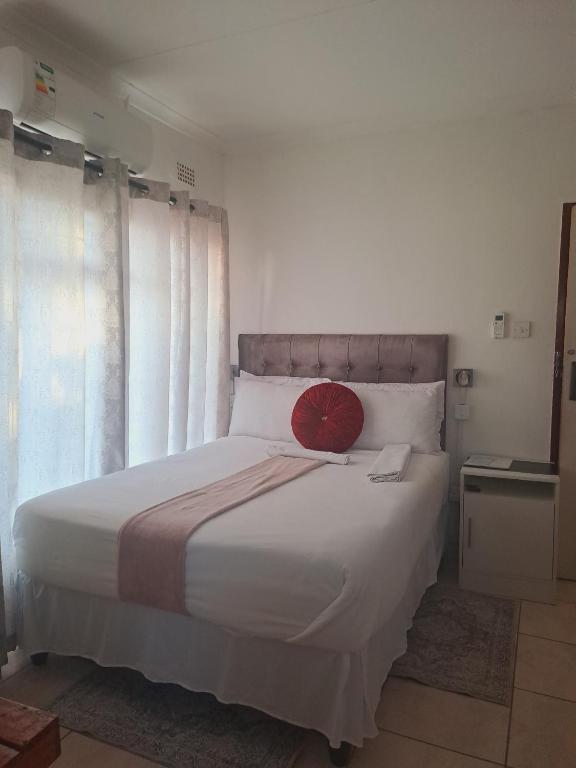
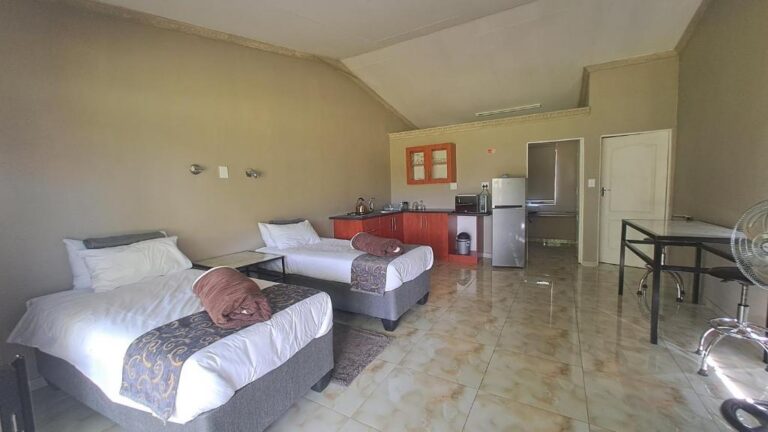
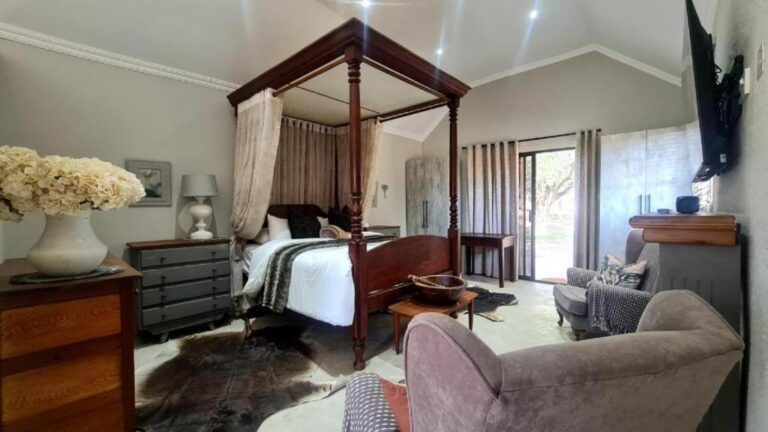
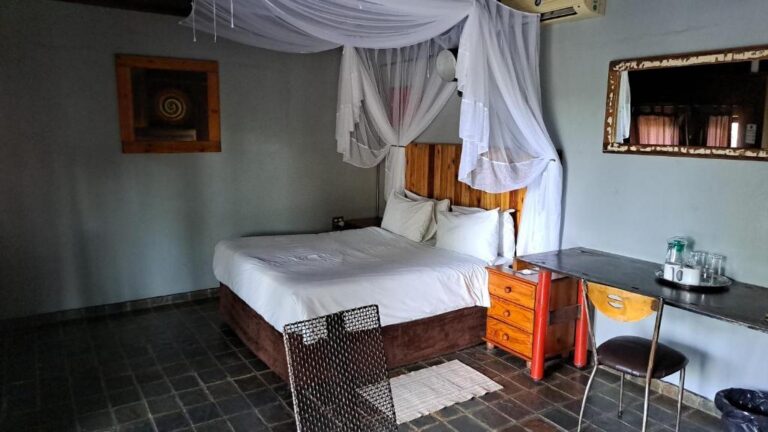
View all 20 Ghanzi and the Kalahari propertiesAll Ghanzi and Kalahari accommodation
Every card opens our own property page first. We publish no rates, no availability and no ratings of our own.
Plan the next stage
- Central Kalahari Game Reserve — gates, scale, and what the reserve demands of a vehicle.
- 4×4 and vehicle requirements — fuel, water and spares, with Botswana Tourism’s own figures.
- The Kalahari — the wider region beyond the reserve.
- Travel planning — visas, money, health and connectivity.
Sources and references
- Botswana Tourism Organisation — Central Kalahari Game Reserve (area and gates)
- Botswana Tourism Organisation — self-drive advice (fuel, water and spares for desert destinations)
Reviewed August 2026. Park access, gate times, track conditions and fuel availability change; if something here is out of date, tell us.